Which bacteria is explicitly linked to city pigeons as a potential human contaminant carried in their droppings?
Answer
E. coli
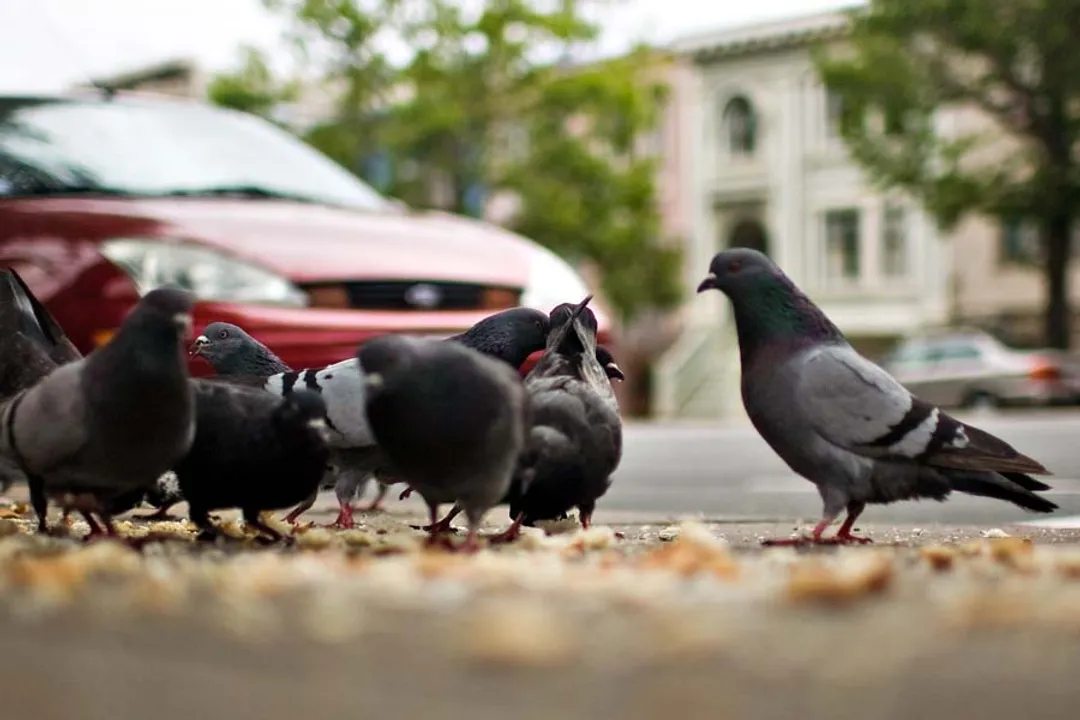
Wild, city-dwelling pigeons are recognized as vectors for various pathogens that pose a public health risk to municipalities. Among these contaminants specifically listed are bacteria such as E. coli and Salmonella, which birds can acquire through foraging habits amidst urban detritus. The primary transmission concern arises when their droppings contaminate surfaces, leading to potential human illness through environmental contact rather than necessarily through the consumption of properly cooked meat.
Related Questions
What specific term denotes young domestic pigeons raised solely for meat production?Which bacteria is explicitly linked to city pigeons as a potential human contaminant carried in their droppings?What respiratory condition is associated with the pigeon contaminant Histoplasma capsulatum?What factor causes the safety profile of eating pigeon meat to shift dramatically based on origin?Exposure risks involving which agent can potentially lead to psittacosis in humans?What handling rigor should be applied to a harvested wild pigeon carcass when preparing it for consumption?What creates the significant psychological barrier preventing people from eating pigeon meat, even if it is farm-raised?When eating a wild pigeon, what dual exposure pathway increases the criticality of the handling phase compared to eating squab?Besides bacteria like E. coli and Salmonella, what other category of microorganism is linked to pigeon droppings?What variable, introduced by the diet of urban detritus, is eliminated when consuming birds fed formulated feed like squab?