What specific component differentiates a crispy Dosa from an Idli, potentially making the Dosa heavier on a troubled stomach?
Answer
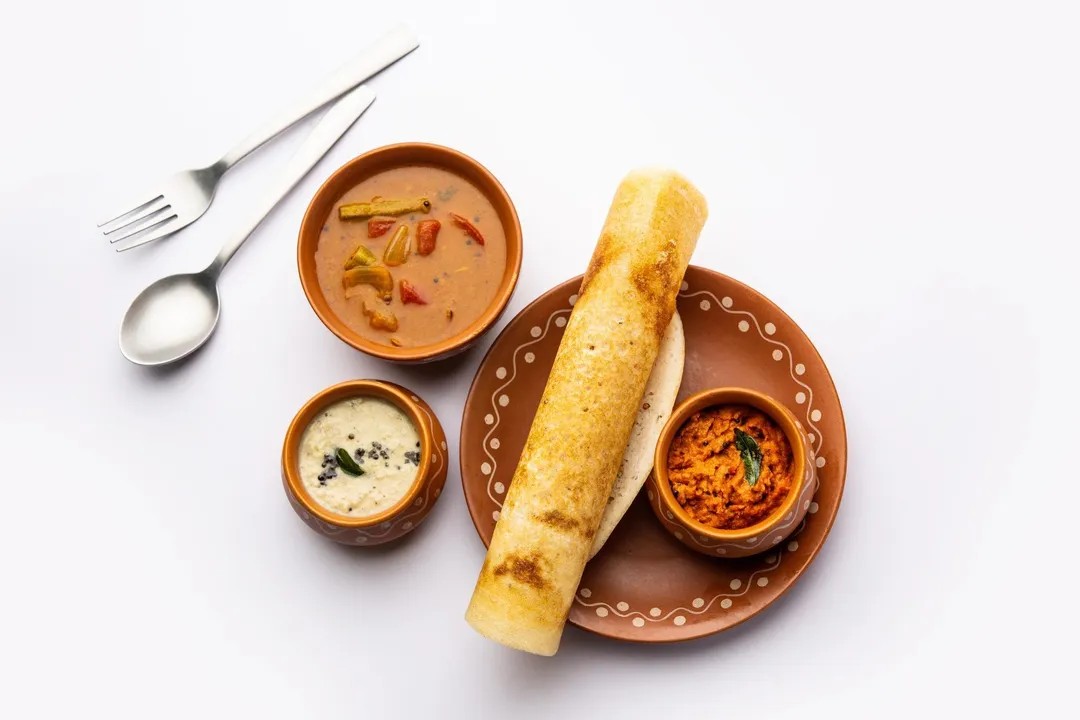
The dosa requires being spread thinly on a griddle and is almost always served with a generous amount of oil or ghee for crispness.
Although both idli and dosa share the same fermented batter foundation, their preparation methods diverge significantly regarding fat intake. To achieve the desired thinness and crisp texture on a griddle, a dosa preparation necessitates the addition of a substantial amount of fat, usually oil or ghee. This added lipid component constitutes a significant difference, transforming the dosa into a heavier meal compared to the nearly pure, fat-free steamed carbohydrate matrix that constitutes the idli.
Related Questions
Why is Idli often suggested for immediate relief when the digestive system is experiencing distress?How does the Steam Cooking method used for Idli prevent added fat content in the final product?What crucial biological process elevates Idli batter beyond a simple steamed rice cake, aiding digestion?What Ayurvedic principle links the light nature of Idli to its preparation method?What specific component differentiates a crispy Dosa from an Idli, potentially making the Dosa heavier on a troubled stomach?Why is consuming a cold, refrigerated Idli considered less ideal than a freshly steamed, warm Idli during digestive recovery?For individuals managing severe IBS or IBD, what substance, increased by fermentation, might cause gas or bloating when consuming Idli?What practical advantage does the Idli's high moisture content offer when a person is fighting an illness involving potential fluid loss?What is the primary guideline for serving Idli initially to ensure the base ingredients are tolerated by a very sensitive stomach?Which food item listed in the comparison chart receives a Moderate ranking for Digestibility when dealing with an upset stomach?