What is a practical consideration regarding the hard rind of butternut squash when preparing it?
Answer
The skin is entirely edible once cooked until very tender.
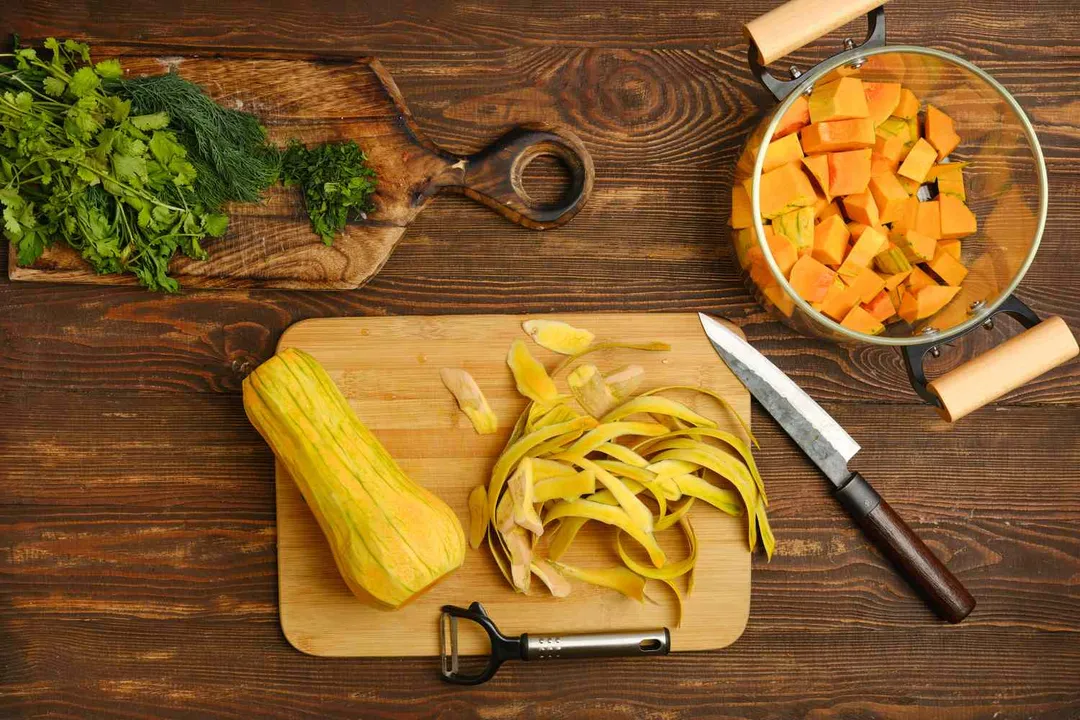
Although butternut squash is a winter squash characterized by a hard rind designed for preservation, this exterior layer is not inherently inedible. If the squash is prepared using methods that involve prolonged, thorough cooking, such as roasting or baking until the flesh becomes extremely soft, the rind itself will soften substantially. Once sufficiently tenderized, the skin can safely be consumed, offering the added advantage of incorporating extra fiber and nutrients into the meal. This contrasts with peeled squash, which results in a smoother texture, whereas skin-on preparation yields a slightly heartier bite.
Related Questions
What compound gives butternut squash its orange hue and converts to Vitamin A upon consumption?How can the body's ability to absorb valuable beta-carotene from butternut squash be dramatically increased?What specific role does the soluble fiber found in butternut squash play concerning the gut microbiome?Which mineral, provided in significant amounts by butternut squash, helps regulate healthy blood pressure by counteracting sodium?How does the glycemic response of baked butternut squash compare to baked white potato when consumed by volume?What structural protein in the skin relies on Vitamin C supplied by butternut squash for its synthesis?What is a practical consideration regarding the hard rind of butternut squash when preparing it?Which specific group of carotenoids present in the squash are suggested to help decrease the risk of age-related macular degeneration (AMD)?Under which conditions should a whole, unblemished butternut squash be stored to maximize its longevity?In relation to bone structure, what essential supporting role does Magnesium in butternut squash play alongside other minerals?