How do pesticides enter the human body?
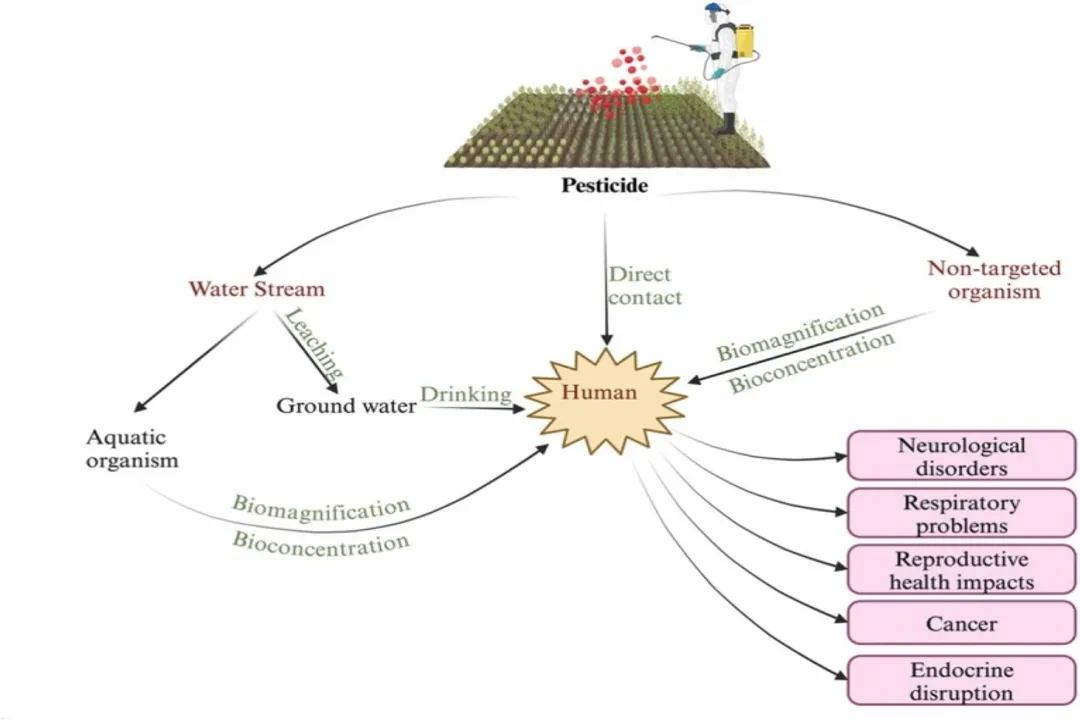
Pesticides are chemical agents designed to control pests, and while they serve important roles in agriculture, public health, and household maintenance, understanding how they gain entry into the human body is essential for managing associated risks. [4][6] The pathways are remarkably consistent across various settings, whether you are a professional applicator managing a large field or a homeowner spraying weeds on a patio. Generally, exposure occurs through three main routes: contact with the skin, breathing in particles or vapors, or accidentally swallowing contaminated substances. [4][7]
# Skin Contact
Dermal exposure, contact with the skin, is frequently cited as the most common route of occupational pesticide exposure. [6][7] This occurs when the chemical directly touches the skin, either through splashes, spills, contact with contaminated tools or clothing, or simply brushing against treated vegetation. [7] The risk isn't uniform across the body; some areas absorb chemicals much more readily than others. [5] For instance, the skin on the abdomen or scrotum may allow for faster absorption than the thick skin on the palms of the hands. [5]
The capacity for a pesticide to penetrate the skin depends heavily on the chemical's physical properties, such as its lipophilicity (its ability to dissolve in fats), and the formulation it comes in. [1] Water-based sprays might evaporate quickly, but oil-based concentrates or emulsifiable concentrates, often used by professionals, can remain on the skin longer, increasing the window for absorption. [1][7] Furthermore, skin that is broken, cut, or irritated—a common occurrence in manual labor settings—provides an almost direct route for the chemical to enter the bloodstream because the skin’s natural barrier is compromised. [5] Even after an application is complete, residues left on non-porous surfaces or tools remain a hazard until properly cleaned. [6]
# Breathing Risks
Inhalation represents a rapid pathway into the body’s internal systems. [6] When pesticides are applied via spraying, dusting, or fogging, they create fine airborne droplets, mists, or vapors that can be easily inhaled. [4][7] Once these microscopic particles reach the lungs, they are absorbed very quickly into the circulatory system, often bypassing the initial metabolic defenses that the digestive system provides. [4]
The hazard level associated with inhalation is directly related to the application method and the distance between the source and the person breathing. [7] Applicators using high-pressure equipment, especially in enclosed or poorly ventilated areas, face the highest risk of acute inhalation poisoning. [7] For those less directly involved, such as bystanders near a treated area, exposure might come from drift—the process where wind carries spray particles away from the target zone. [7] Even chemicals that are not volatile (do not easily turn into gas) can still present an inhalation risk if they become airborne as dust during mixing or loading dry formulations. [6]

# Swallowing Contamination
Accidental ingestion is another clear route of entry, though it is less common in controlled occupational settings than dermal or inhalation exposure, it remains a significant concern for the general public and children. [6][8] The most obvious form of ingestion involves consuming food or water contaminated with pesticide residues. [4] While regulatory bodies set tolerance levels for residues on produce, the cumulative effect of consuming many treated items over time is a topic of ongoing public health review.
More direct ingestion often happens indirectly through poor hygiene practices. [6] If a person handles a freshly treated surface, or mixes a pesticide, and then eats, smokes, or touches their mouth without first thoroughly washing their hands, they are effectively ingesting the chemical residue. [6] Children are particularly vulnerable to this pathway; they spend more time on the floor or ground, are more likely to put contaminated hands or objects into their mouths, and their lower body weight means that a small amount of ingested substance results in a higher relative dose compared to an adult. [8]
# Internal Movement
Once a pesticide manages to cross the skin barrier, enter the lungs, or pass through the gastrointestinal tract, it enters the bloodstream. [9] This step is called absorption. [9] From the blood, the chemical is distributed throughout the body’s tissues and organs. [9]
The body immediately begins a defense process, primarily in the liver, which attempts to chemically modify (metabolize) the pesticide into forms that are easier to excrete. [9] Following metabolism, the waste products are typically eliminated via the kidneys into the urine or through bile into the feces. [9] The speed and efficiency of these processes dictate the severity of any toxic effect. If the exposure dose overwhelms the body’s ability to break down and eliminate the chemical, the pesticide or its active metabolites can accumulate in fatty tissues or critical organs, leading to symptoms of poisoning or chronic health issues. [9] Certain pesticides are designed to specifically target nerve function—like organophosphates—meaning that even a rapid entry into the blood can cause immediate neurological disruption before the liver has a chance to fully neutralize the threat. [9]
In residential contexts, the risk often shifts from acute, high-level exposure to chronic, low-level intake over long periods. [8] For example, residues can settle on carpets, upholstery, and toys, providing a slow, continuous source of dermal and incidental ingestion exposure, particularly in homes where pets or recent service technicians have tracked in material. [8]
In many agricultural or landscaping environments, the way equipment is prepared and cleaned adds an often-overlooked dimension to exposure tracking. For instance, mixing or loading concentrates often generates the highest short-term exposure risk, even more so than the act of applying the spray itself, because the user is handling the chemical in its least diluted form. [7] This highlights a crucial point: the highest concentration exposure doesn't always align with the highest total exposure volume over a season, but acute risk is often tied to concentration handling. [7]
Considering the residential environment, the concept of carry-home exposure becomes a quiet but significant factor in overall public health risk assessment. Workers in sectors like lawn care or professional agriculture often transport residues clinging to their boots, outer work clothes, or equipment into their personal vehicles and homes. [8] This creates a significant secondary dermal exposure pathway for non-working family members, especially young children who crawl on floors and frequently touch contaminated surfaces or objects. This indirect route, which occurs long after the initial application is complete, can contribute substantially to the total long-term body burden accumulated by susceptible household members. [8]
A vital, often under-emphasized part of personal protection involves the decontamination routine after the work day concludes. Creating a hard barrier against dermal transfer to home environments starts with immediate, systematic clothing management. A simple, actionable procedure involves removing all outer work garments before stepping inside the living space or entering the family vehicle, and sealing those contaminated items separately. [6][7] Following this, a thorough cleansing using soap—rather than just a quick rinse with water—is necessary to break down and wash away the oily or surfactant-laden residues that cling to the skin. This dedicated post-exposure cleaning dramatically reduces the accumulation of chemicals that happens through subtle, ongoing skin absorption throughout the duration of the workday. [6][7]

# Factors Influencing Risk
Several factors interact to determine whether an exposure event translates into actual harm. Age is a major differentiator; children possess higher metabolic rates and greater water content relative to their size, meaning that if they absorb a chemical, it might be processed differently or cause greater immediate impact compared to an adult. [8] Similarly, older adults may have slower metabolic rates or reduced organ function, which means the chemical stays in their system longer, increasing the potential for toxicity from a dose that might otherwise be deemed minor. [8]
The duration and frequency of contact are also critical variables. A one-time, brief contact with a low-residue item carries a different risk profile than an individual who works daily handling concentrated product for hours on end. [7] Professionals are trained to mitigate this through Personal Protective Equipment (PPE), such as chemical-resistant gloves, respirators, and coveralls, which serve as the final line of defense against the three main entry points. [7] However, the effectiveness of PPE is completely dependent on its proper selection, fit, maintenance, and diligent use. [6] A tear in a glove or a poorly sealed respirator renders the protection nearly useless, turning a controlled environment into an immediate hazard zone.
Related Questions
#Citations
A systematic review of pesticide exposure, associated risks, and ...
[PDF] What happens when pesticides enter the body? Most people are ...
[PDF] How pesticides enter our bodies?
Human Health Issues Related to Pesticides | US EPA
Recognizing the Health Effects of Pesticides
Pesticides - Health Effects - CCOHS
Competency Area 8: Protecting Humans from Pesticide Exposure
Older Adults and Pesticides Fact Sheet
Pesticide Applicator Certification Series: Toxicity of Pesticides