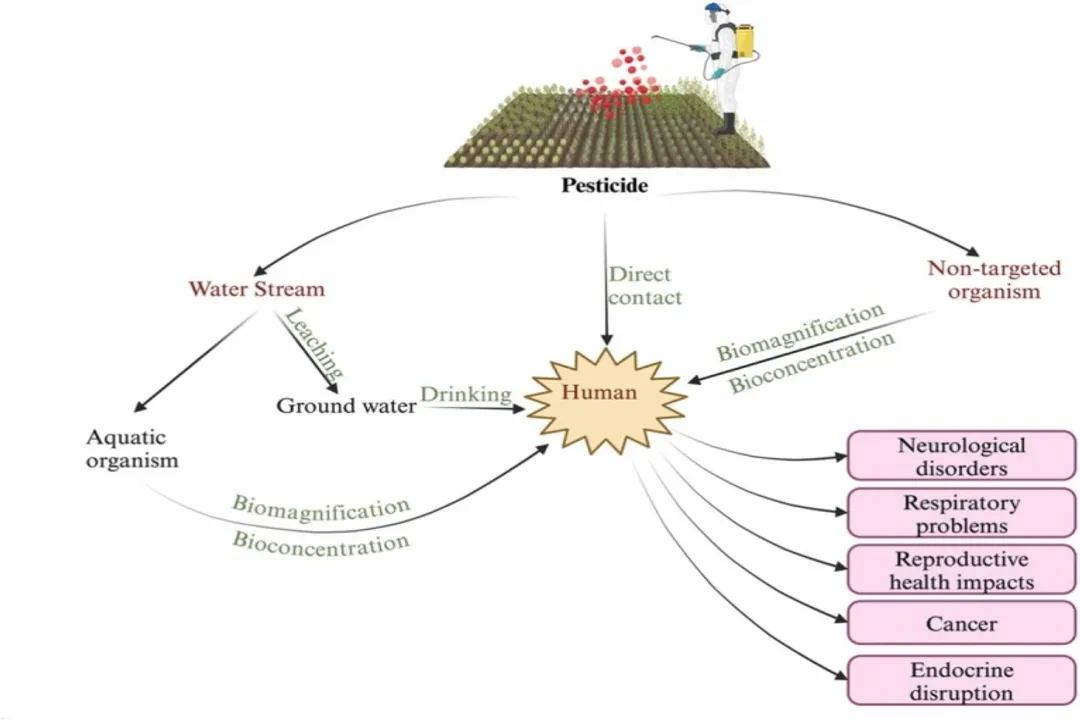
What are the three main routes for pesticide entry into the human body?
Contact with the skin, breathing in particles or vapors, or accidentally swallowing contaminated substances
Exposure to pesticides generally occurs consistently across different settings through three primary pathways. The first is dermal exposure, which involves direct contact of the chemical with the skin. The second route is inhalation, which occurs when fine airborne particles or vapors generated during application processes, such as spraying or dusting, are breathed in. This method leads to rapid absorption into the circulatory system via the lungs. The final route is accidental ingestion, which can happen either by consuming contaminated food or water, or more commonly in occupational settings, indirectly through poor hygiene practices like touching the mouth with contaminated hands after handling substances without thorough washing. These three mechanisms represent the standard ways chemical agents gain entry into the human system.