Which scientific genus does the water apple, or chambakka fruit, scientifically belong to?
Answer
Syzygium
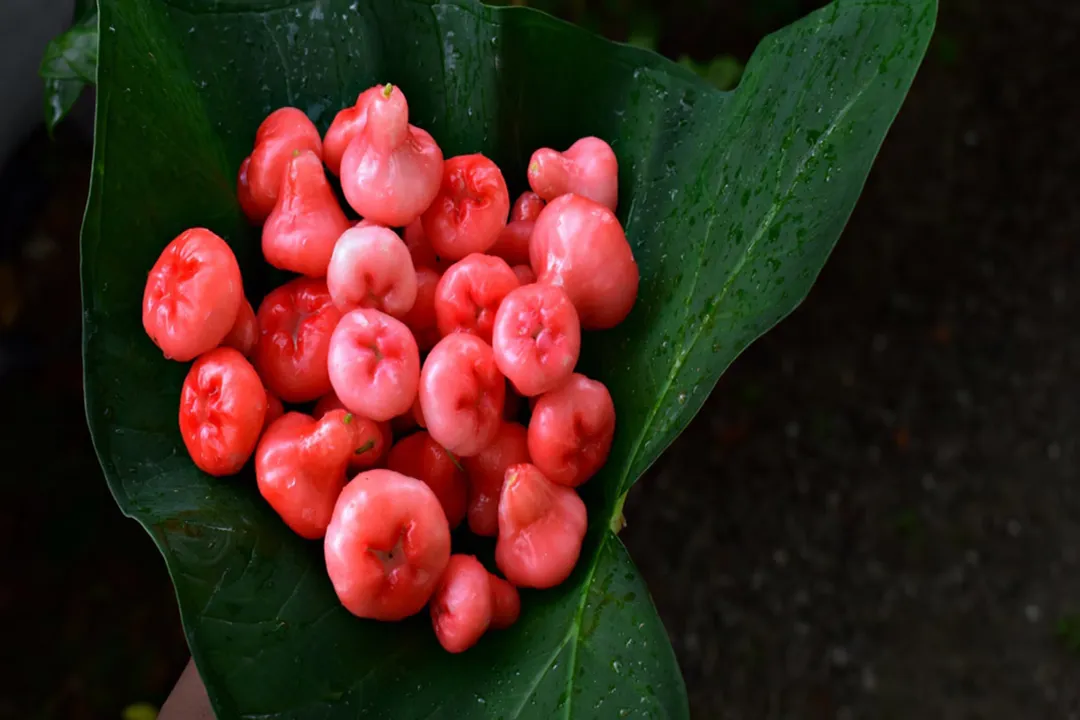
The scientific classification explicitly places the water apple, also known as the rose apple or chambakka fruit, within the Syzygium genus. The text further specifies potential varieties such as Syzygium samarangense or Syzygium jambos. This genus grouping is fundamental to understanding the fruit botanically. While specific species names are provided, the overarching classification shared by these variations is Syzygium, distinguishing it from other fruit-bearing genera like Citrus or Hibiscus, which possess entirely different characteristics and profiles.
#Videos
Get glowing skin by eating Rose Apple / health benefits ... - YouTube
Related Questions
Which scientific genus does the water apple, or chambakka fruit, scientifically belong to?What simple addition to thinly sliced chambakka submerged in cool water is recommended to enhance its cooling property for afternoon consumption?What characteristic regarding blood sugar management causes the rose apple to be noted for supporting stable glucose metabolism?What vital structural role does Vitamin C inherent in the chambakka fruit play concerning skin health?In traditional systems like Ayurveda, why is the water apple frequently recommended during periods of fever or high internal heat?How does the dietary fiber present in the water apple contribute to goals related to maintaining a healthy weight?Which pair of important minerals is specifically identified as being present in the water apple to support electrolyte balance?Relative to its volume, how does the typical water apple compare in caloric load when contrasted with a standard commercial apple or orange?What must consumers confirm they are not confusing the Syzygium samarangense group with, as it is an entirely different fruit with unique properties?Besides water content, what key macronutrient is noted in the composition of the rose apple that assists in digestive regularity?