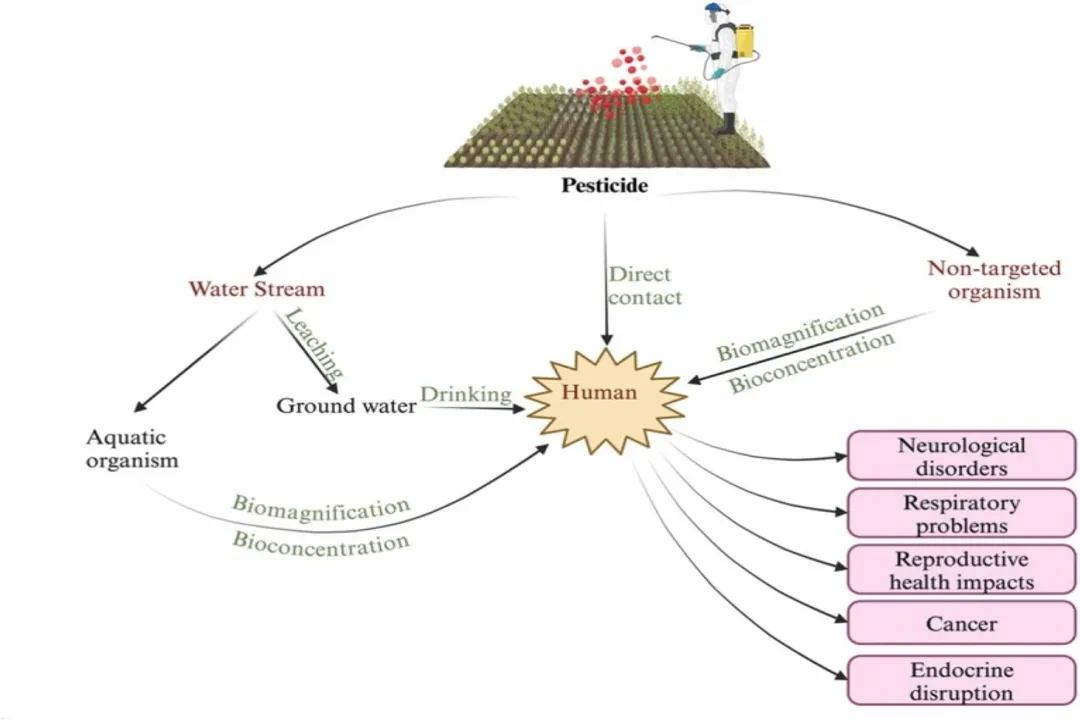
Why is inhalation a rapid pathway for pesticides to enter the body's internal systems?
Microscopic particles reach the lungs and are absorbed very quickly into the circulatory system, bypassing digestive defenses.
Inhalation exposure represents an exceptionally rapid route for chemical agents to gain systemic access because of the physiological structure of the lungs. When pesticides are applied via methods that create fine airborne droplets, mists, or vapors, these microscopic particles are readily drawn deep into the lung tissue. Once deposited in the lungs, the extensive surface area and thin membranes facilitate the very fast absorption of the chemical directly into the bloodstream and circulatory system. This direct entry is crucial because it allows the pesticide to bypass the initial metabolic defenses and processing steps that the digestive system would normally impose on ingested substances, leading potentially to quicker systemic effects.