What is the process called when a pesticide enters the bloodstream after crossing internal barriers?
Answer
Absorption
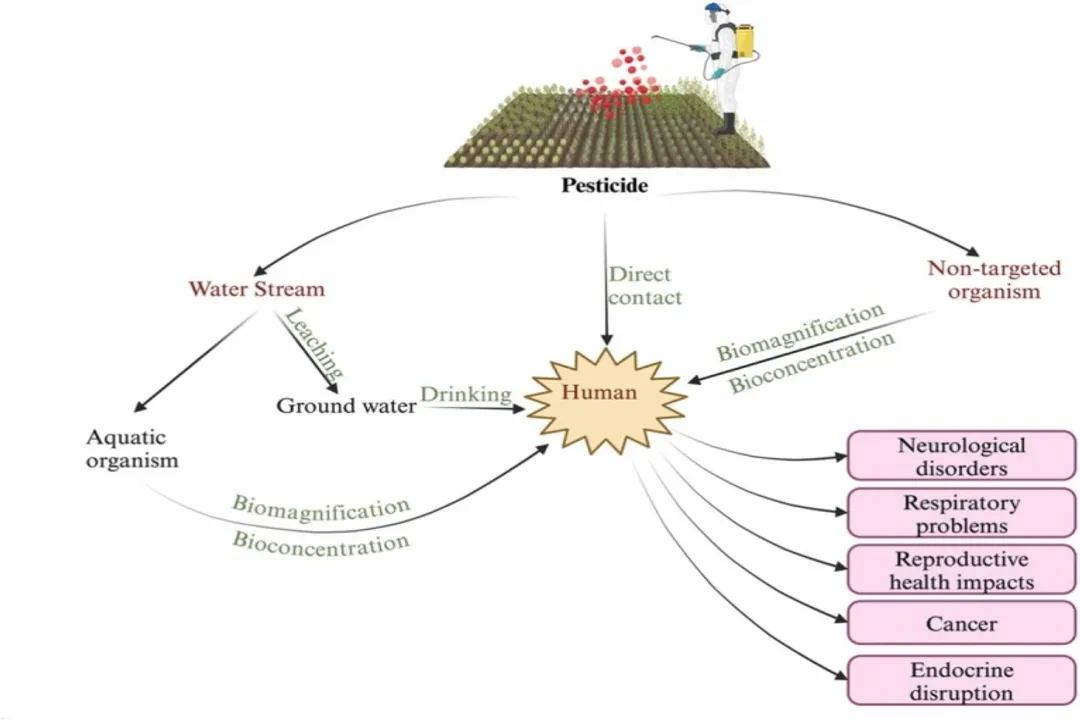
Once a pesticide successfully navigates past the body's initial barriers—whether that barrier is the skin (dermal route), the lung tissue (inhalation route), or the gastrointestinal lining (ingestion route)—the next critical internal step is its entry into the general circulation. This process of gaining entry into the blood is precisely defined as absorption. Following absorption, the chemical is then distributed throughout the body's various tissues and organs. Absorption itself is distinct from the body's subsequent attempts to neutralize the chemical (metabolism, primarily in the liver) or the final removal of the substance or its byproducts from the system (excretion, via kidneys or bile).
Related Questions
What are the three main routes for pesticide entry into the human body?Which areas of the body absorb pesticides more readily than the thick skin on the palms?How do oil-based concentrates influence the dermal absorption window compared to water-based sprays?Why is inhalation a rapid pathway for pesticides to enter the body's internal systems?What application scenario creates the highest risk of acute inhalation poisoning for applicators?What specific hygienic failure leads to indirect accidental ingestion of pesticide residue?What is the process called when a pesticide enters the bloodstream after crossing internal barriers?What is the primary role of the liver regarding pesticides once they have been absorbed into the body?What term describes residues transported from work environments into homes via boots or clothing?What crucial step in post-exposure decontamination reduces dermal transfer to the home environment?