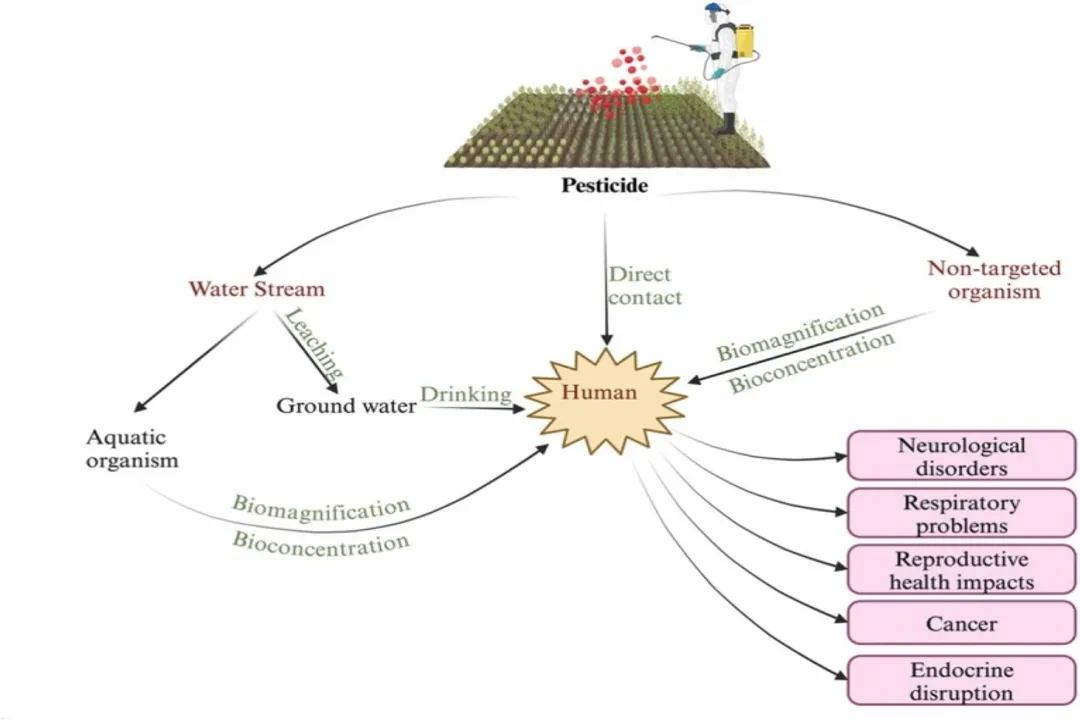
What is the primary role of the liver regarding pesticides once they have been absorbed into the body?
To chemically modify (metabolize) the pesticide into forms that are easier for the body to eliminate.
The body initiates a vital defense mechanism immediately after a chemical agent is absorbed into the bloodstream, with the liver serving as the primary site for this detoxification effort. The liver's main function in this context is metabolism, which involves chemically altering the structure of the absorbed pesticide. This modification process transforms the original compound into metabolites that are generally less toxic and, crucially, more water-soluble. This increased water solubility makes the compounds suitable for subsequent elimination from the body, typically through the urine processed by the kidneys or through bile excreted into the feces. If this metabolic capacity is overwhelmed by a large dose, accumulation and toxicity can occur.