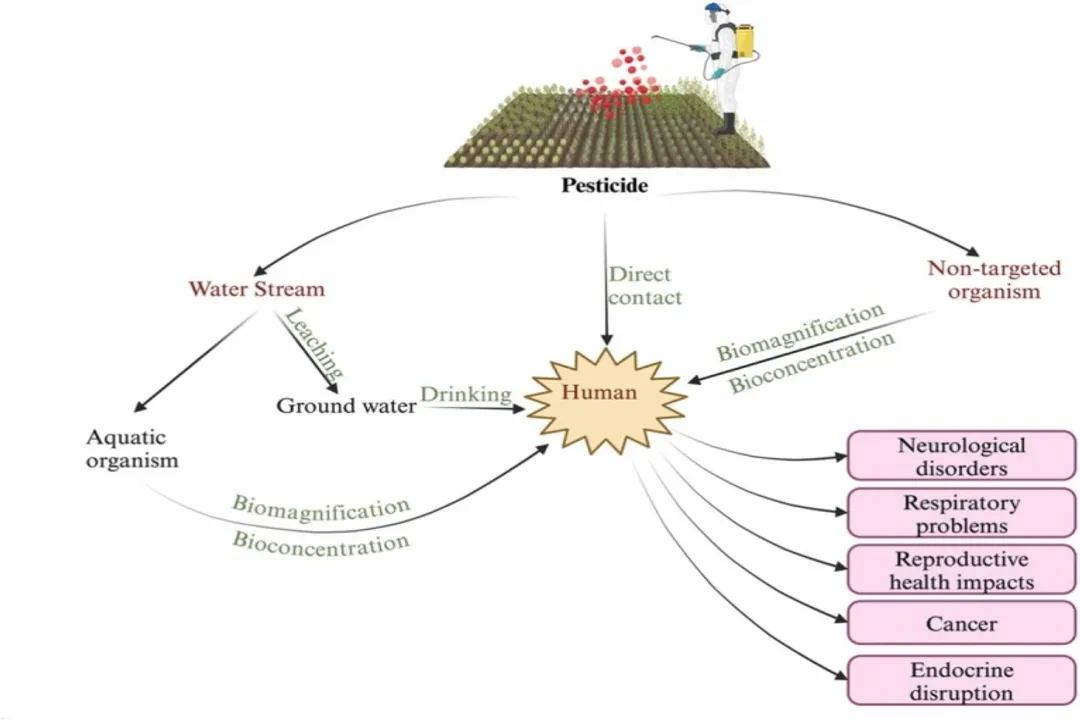
What specific hygienic failure leads to indirect accidental ingestion of pesticide residue?
Handling a treated surface or mixing, and then eating, smoking, or touching the mouth without thorough hand washing.
While consuming contaminated food or water is a direct form of ingestion, a more common indirect route in daily activities stems from inadequate hygiene practices following contact. If an individual works with or handles surfaces recently treated with a pesticide and then fails to thoroughly cleanse their hands with soap and water, chemical residues will remain on the skin. Subsequently touching the mouth, smoking, or consuming food transfers these residues into the digestive tract. This failure to interrupt the transfer pathway between contaminated surfaces and the mouth constitutes the indirect mechanism of accidental ingestion, which is a significant concern, particularly for the general public and children.