What nutritional trade-off occurs when opting for split and skinned *dhuli* urad over the whole, black bean form?
Answer
You slightly reduce the overall fiber load
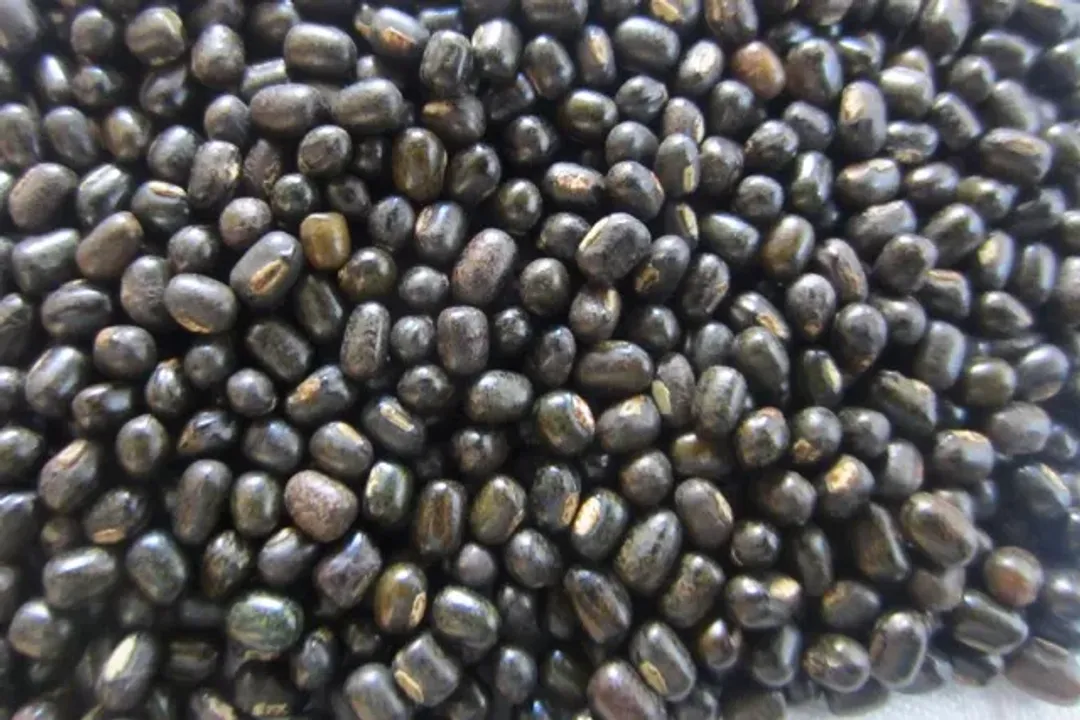
The whole black gram bean includes the outer husk, which is rich in insoluble fiber. When the preparation method shifts to *dhuli* urad, this husk is removed (skinned). While this results in a dal that cooks faster and is easier for sensitive stomachs, the removal process inherently means that the total quantity of dietary fiber, particularly the insoluble type concentrated in the husk, is slightly diminished compared to consuming the whole bean.
Related Questions
Which staples utilize Black gram (Urad Dal) as the backbone in Indian subcontinent cuisine?Which two minerals found in Urad Dal are described as foundational for skeletal strength?What specific complex carbohydrates present in Urad Dal are often responsible for causing digestive upset like gas and bloating?What is the crucial purpose of soaking Urad Dal thoroughly and then discarding the soaking water?How is the *virya* or potency of Urad Dal traditionally characterized in Ayurvedic perspectives?What nutritional trade-off occurs when opting for split and skinned *dhuli* urad over the whole, black bean form?What is the specific function highlighted for Folate (Vitamin B9) present in Urad Dal?If an individual consumes Urad Dal in excess when their digestive fire (*Agni*) is weak, which doshas might be aggravated according to traditional wisdom?How has Urad Dal been historically applied externally in traditional beauty preparations?When comparing digestibility, which pulse is generally considered the mildest relative to the density of Urad Dal?