What flavor difference indicates a potentially stressed *Melothria scabra* plant?
Answer
Acrid bitterness overriding pleasant tartness
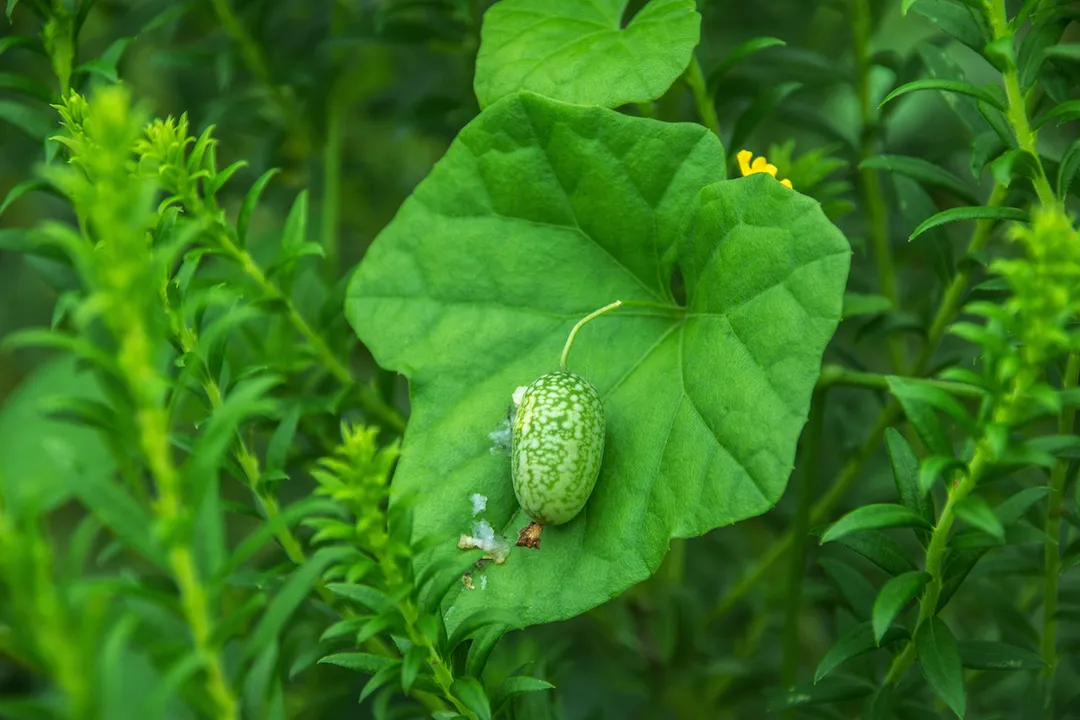
The ideal flavor of a healthy cucamelon is described as a slight, pleasant tartness. However, if the plant experiences stress during growth—perhaps due to harsh conditions or bolting—it may develop higher concentrations of cucurbitacins. When this occurs, the resulting flavor shifts from the desired tartness to an acrid bitterness. It is vital for consumers to recognize this shift, as the presence of genuine bitterness suggests higher levels of potentially problematic compounds, increasing the likelihood of pronounced gastrointestinal distress compared to a normally flavored fruit.
Related Questions
What is the primary flavor experience reported for the Mexican sour gherkin?What family does *Melothria scabra* belong to, along with cucumbers and melons?What compounds found in the *Cucurbitaceae* family are responsible for bitterness?What is the noted effect of consuming ripe *Melothria pendula* fruit?What is the most likely side effect from overindulging in raw cucamelons?What condition is Bitter melon (*Momordica charantia*) associated with in traditional medicine?How can sensitive individuals buffer the tartness of cucamelons on an empty stomach?What flavor difference indicates a potentially stressed *Melothria scabra* plant?What management strategy minimizes temporary digestive upset from new cucamelon intake?If a cucamelon vine shows signs of visible disease or blight, what is the recommended action?