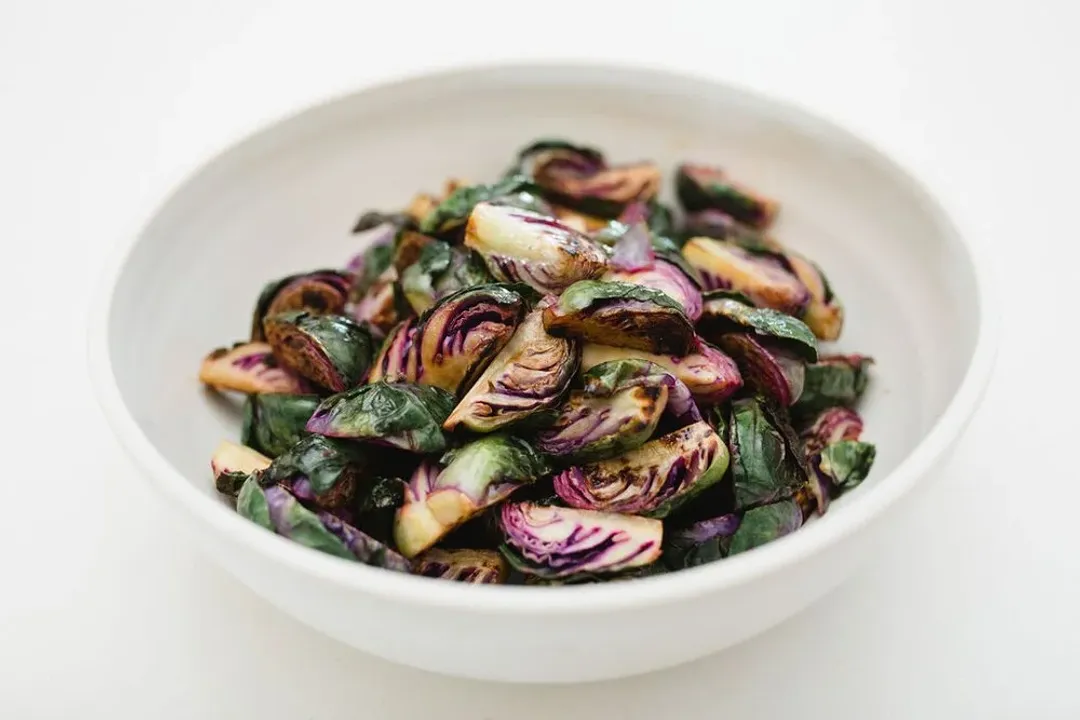
What element should be added to purple Brussels sprouts right after cooking to help preserve their vibrant purple hue from turning blue?
Answer
A splash of acidity, such as fresh lemon juice or balsamic vinegar
The beautiful, deep purple color of these vegetables is sensitive to changes in pH during the cooking process, which can cause the anthocyanins to shift their color expression towards a less desirable blue tint. To counteract this chemical reaction and maintain the desired visual appeal upon serving, a targeted intervention is recommended immediately following cooking. Introducing an acidic component, such as freshly squeezed lemon juice or a drizzle of balsamic vinegar, neutralizes the conditions that promote the color change. This acidic splash not only serves the practical purpose of hue preservation but also enhances the flavor profile by adding brightness.
Related Questions
What specific antioxidant compound is highly concentrated in purple Brussels sprouts due to their dark pigmentation?Around what decade were purple Brussels sprouts reportedly developed by crossing green sprouts with red cabbage?What vital function does Vitamin K, found abundantly in Brussels sprouts, support according to the nutritional facts?What critical benefit does Vitamin C provide specifically for plant-based eaters consuming Brussels sprouts?Which specific plant compounds found in the brassica family support the body’s natural detoxification processes in Brussels sprouts?What structural difference in purple Brussels sprouts often causes them to cook faster than standard solid green ones?What element should be added to purple Brussels sprouts right after cooking to help preserve their vibrant purple hue from turning blue?A diet rich in the fiber found in Brussels sprouts is consistently associated with managing stable levels of what bodily metric?Individuals prescribed blood-thinning medications like warfarin need to discuss their intake of Vitamin K-rich foods due to what physiological reason?How are purple Brussels sprouts generally described as differing in taste compared to their green counterparts?