What specific compounds give the purple daikon its visually stunning color?
Answer
Anthocyanins
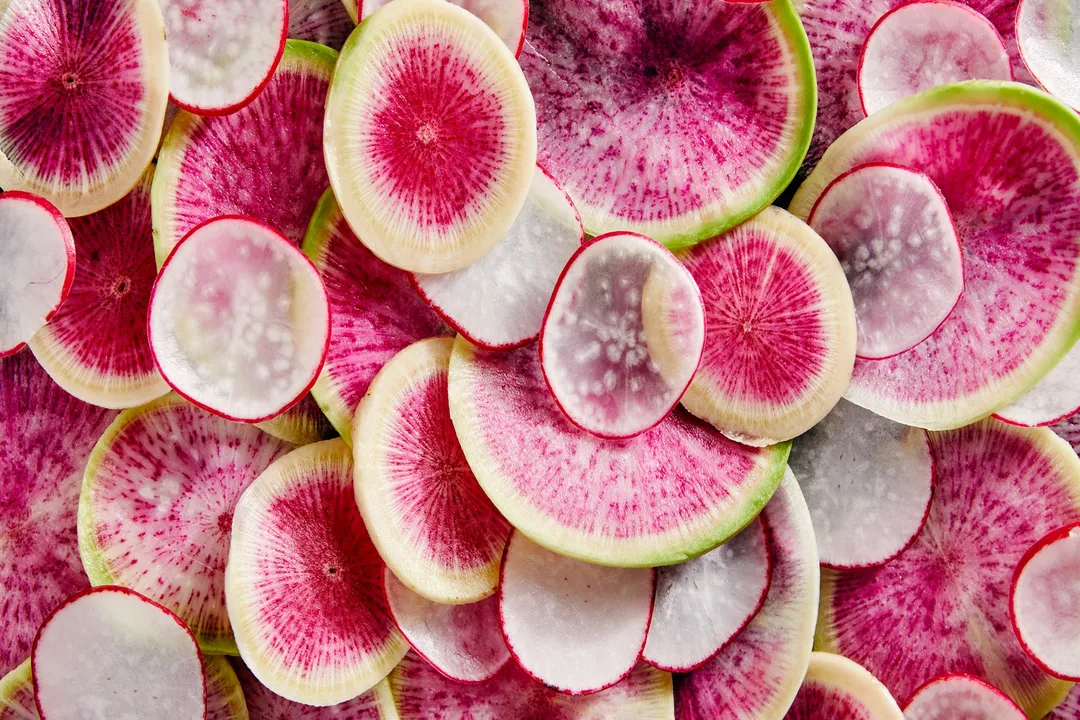
The striking visual characteristic of the purple daikon—its deep violet exterior—is attributed to the presence of anthocyanins. Anthocyanins are a class of potent, naturally occurring flavonoid pigments found in many deeply colored fruits and vegetables, such as blueberries and red cabbage. In the case of the purple daikon, these compounds are responsible for absorbing light in the green-yellow spectrum, thus reflecting the violet hue we perceive. Beyond their aesthetic contribution, anthocyanins are recognized as powerful antioxidants that are particularly linked to supporting improved heart health, adding a chemical layer of benefit atop the radish's existing nutritional profile.
Related Questions
What is the botanical classification of the purple daikon radish?How does the growing climate affect the pungency of purple daikon?What specific compounds give the purple daikon its visually stunning color?Which essential nutrient is an excellent source in purple daikon, particularly when consumed raw?What compounds, formed when glucosinolates break down in daikon, may offer cancer-fighting properties?Which compound extracted from radish leaves showed memory improvement in a mouse study?To which botanical family do radishes belong, contrasting them with beets?What is the recommended initial step when storing purple daikon roots for refrigeration?Compared to the root, what nutrients are radish leaves frequently cited as containing higher amounts of?What vital cellular process requires Folate (Vitamin B9) in daikon, making it important during pregnancy?