Are purple radishes good for you?
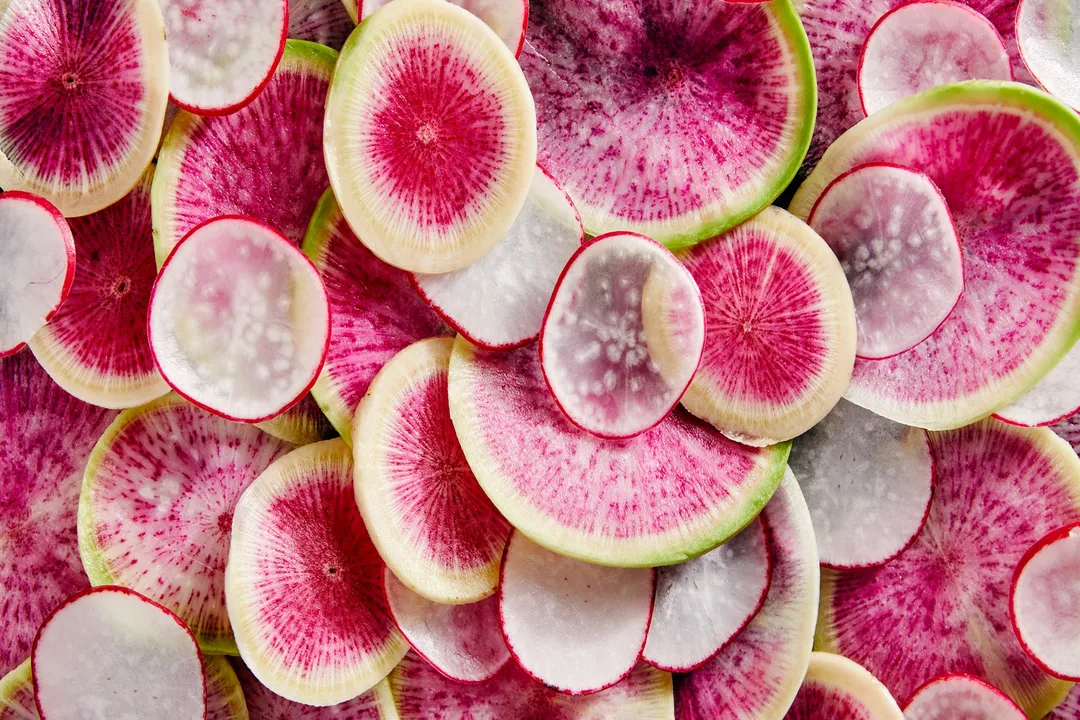
The arrival of purple radishes in the market, particularly the stunning purple daikon variety, offers a visual feast that suggests powerful internal benefits. These root vegetables, characterized by their vibrant violet exteriors and crisp, pale interiors, bring a welcome splash of color to the plate, but their value extends far beyond mere aesthetics. [4][6] As members of the cruciferous or mustard family, radishes share ancestry with familiar vegetables like broccoli and kale, bringing with them a host of beneficial plant compounds. [3][5][6] Understanding what makes this specific, colorful root good for you requires looking closely at its unique chemistry and how it compares to its well-known red counterparts.
# Daikon Appearance
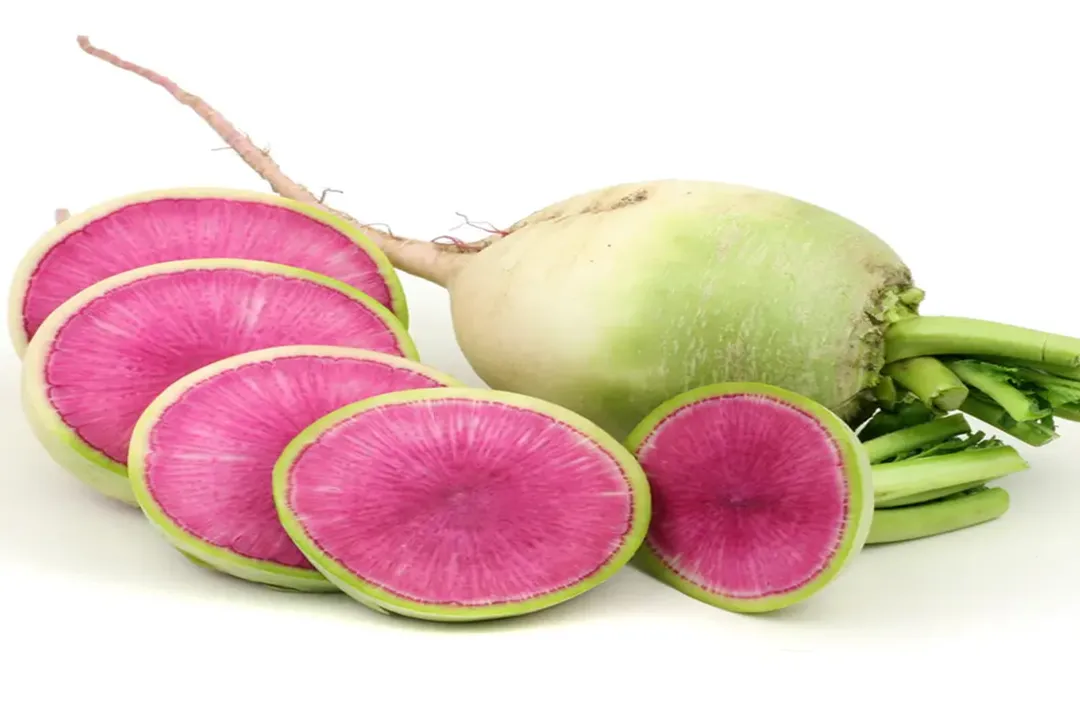
The purple daikon radish is botanically classified as Raphanus sativus var. longipinnatus. [7] It typically presents with a globular shape that tapers to a point, though daikon generally come in cylindrical, oblong, or spherical forms. [3][5] What sets the purple variety apart is its striking bi-coloring: a deep violet on the outside surrounding bright white or pale violet flesh inside. [4] In some specific varieties, like the KN-Bravo daikon, the interior flesh may also hold light purple tones. [5] The texture of this inner flesh is consistently described as very crisp and dense. [4][7]
# Flavor Profiles
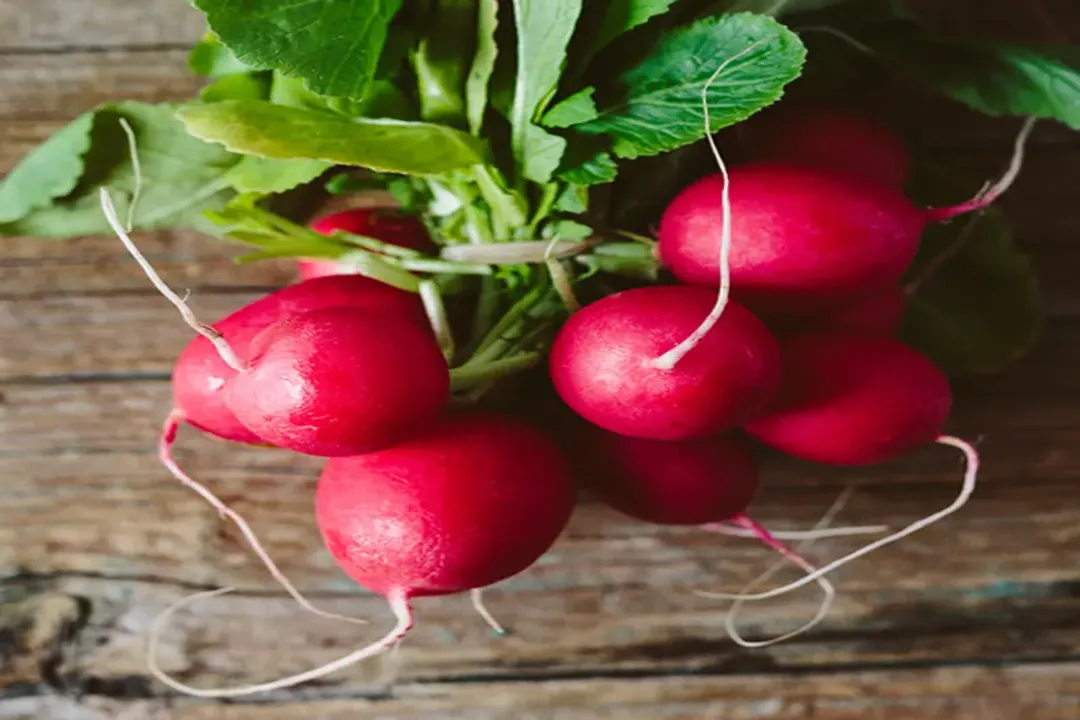
The taste of radishes generally carries a characteristic spicy or peppery note, a result of enzymes found naturally in the root, shared with horseradish and wasabi. [3] For the purple daikon, this flavor is generally described as mild to medium heat with classic daikon flavor, often leaning slightly sweet. [4][6]
A fascinating nuance observed across radish cultivation is how climate dictates pungency. When purple daikon is grown in cooler temperatures, the resulting flavor is milder. [4][6] Conversely, if the growing climate is warm or hot, the radishes tend to develop a more intense, sharper bite. [4][6] This is an important consideration for culinary preparation; roasting or cooking any radish variety helps to tame that spicy bite and can introduce a caramelized sweetness. [3][4] This characteristic variation means that the perceived "heat" of a purple radish is not a static trait but is inherently linked to where and when it was harvested. [6] While the heat compounds are influenced by temperature, the visually stunning purple color, derived from anthocyanins, remains consistent, meaning you get the aesthetic benefit regardless of the spice level.
# Nutrient Profile
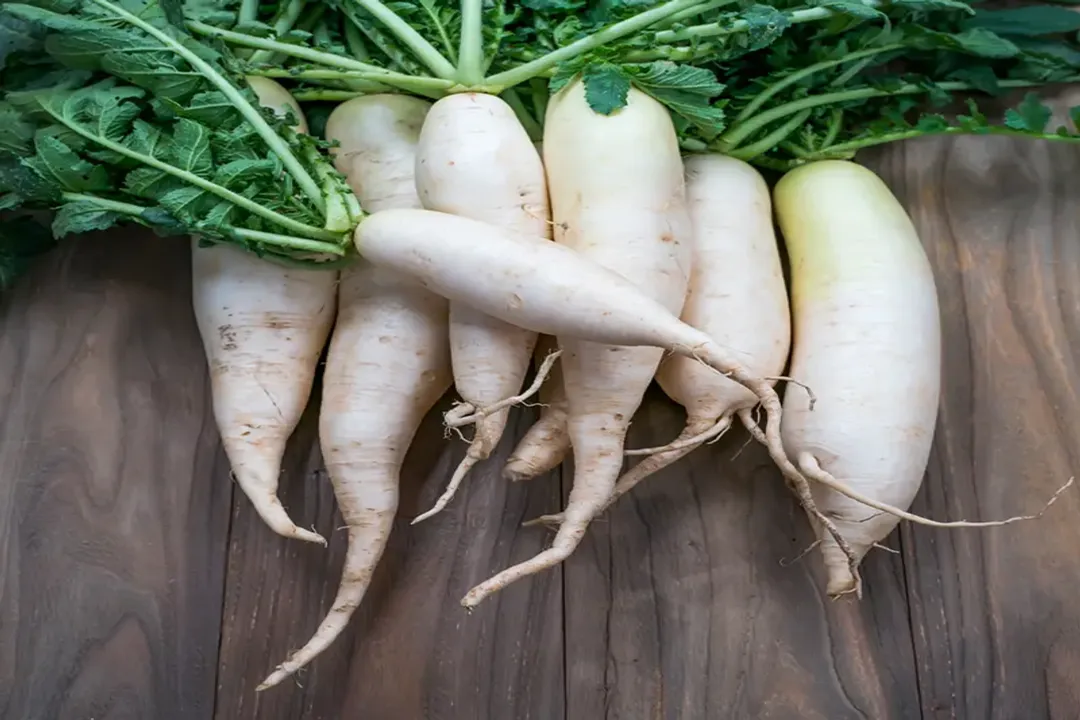
Purple daikon roots possess an impressive nutritional density for a low-calorie vegetable. [5] A half-cup serving of standard sliced radishes is remarkably low in carbohydrates, containing only about 2 grams of carbs, 1 gram of sugar, and 1 gram of fiber. [3] Daikon, in general, is noted for being very low in calories, yet it packs a significant punch of essential vitamins and minerals. [5]
Key vitamins and minerals found in daikon include:
- Vitamin C: Described as an excellent source, especially when the daikon is consumed raw. [4][7] Vitamin C is a necessary nutrient for immune function, tissue repair, and acts as a powerful antioxidant protecting cells from free radical damage. [3][5]
- Folate (Vitamin B9): Daikon provides a high percentage of the Daily Value (DV) for this B vitamin, which is vital for cellular growth and DNA synthesis, making it particularly important during pregnancy. [5][7]
- Minerals: Daikon is rich in Potassium, Calcium, and Magnesium. [4][5][7] General radishes also contain Iron and Manganese. [3] Daikon also supplies Copper. [5]
While general radishes contain compounds like catechin, pyrogallol, and vanillic acid, [3] the purple daikon specifically gains its coloring from anthocyanins, which are another group of potent antioxidants linked to heart health improvement. [1] The root also contains the antioxidant sulforaphane. [4]
# Antioxidant Power
The combined effect of Vitamin C and the unique phytonutrients positions radishes as helpful in fighting cellular damage caused by toxins and pollutants. [1][3] As a cruciferous vegetable, daikon contains glucosinolates. [3][5] When these compounds break down, they form isothiocyanates, which test-tube and animal research suggest may offer strong cancer-fighting properties. [3][5] Furthermore, population studies have suggested a link between higher intake of cruciferous vegetables like radishes and a reduced risk for cancers of the lung and colon. [3][5]
# Digestive Health
Fiber content is a critical component of radish health benefits, aiding in preventing constipation and supporting gut health. [3] Daikon radishes are high in fiber, which can slow digestion and increase feelings of fullness, potentially assisting in weight management efforts. [5]
Daikon's protective compounds are also thought to support the body's natural detoxification processes. Specific chemicals present, such as indole-3-carbinol and 4-methylthio-3-butenyl-isothiocyanate, are believed to activate enzymes in the liver responsible for eliminating harmful toxins. [3] Early research also points toward blood sugar management benefits, as compounds like glucosinolate and isothiocyanate might help regulate blood sugar levels and potentially reduce intestinal glucose absorption, though human confirmation is pending. [3] Additionally, extracts from radish have shown promise in animal models for reducing cholesterol levels and inhibiting the formation of stomach ulcers. [3]
# Leaf Nutrients
It is important to note that in many Western diets, the leafy green tops of radishes are often discarded, which is a missed opportunity for nutrition. [3] In other cultures, such as India, these greens are regularly incorporated into meals. [3] The leaves are frequently cited as being more nutritious than the roots, containing higher levels of Vitamin C, protein, calcium, and antioxidants. [3]
Beyond these general boosts, specific compounds within the leaves have been studied:
- Iron Content: Like many leafy greens, radish leaves contain high amounts of iron, offering support for individuals concerned about anemia. [3]
- Blood Pressure Effects: An extract made from radish leaves showed a noticeable drop in blood pressure in rats, potentially linked to increased sodium and potassium excretion, though this requires human validation. [3]
- Memory Support: A mouse study indicated that erucamide, a compound extracted from the leaves, improved memory test performance, suggesting potential protection against memory problems associated with Alzheimer’s disease. [3]
# Kitchen Uses
Daikon radishes, including the purple variety, are exceptionally versatile in the kitchen, lending themselves to raw, pickled, or cooked preparations. [4][5] While smaller red radishes are often cubed or halved for a quick, sharp garnish, the larger, milder daikon provides more structural integrity when sliced or grated. [3] For instance, daikon adds a superior, crisp texture when shredded into slaws or added to salads, making it a better textural component than a simple peppery topping. [5]
Culinary Applications Table
| Preparation Method | Suggested Use | Flavor/Texture Impact | Sources |
|---|---|---|---|
| Raw | Sliced thinly for salads, sandwiches, or atop sushi/sashimi | Crisp, slight sweetness, mild heat | [4][5] |
| Condiment | Grated raw | Classic daikon flavor | [4][7] |
| Cooked (Roasting/Sautéing) | Added to stews, curries, soups (like miso), or served as a side | Tames spiciness, imparts caramelized flavor | [4][5][7] |
| Pickled | Sliced and fermented (e.g., Korean kimchi or quick pickles) | Fermentation offers natural probiotics; preserves the root | [1][4] |
| Greens | Sautéed, added to soups/stews, or used for pesto | Higher in Vitamin C and antioxidants than the root | [3] |
For a unique cultural application, grated purple daikon mixed with honey is traditionally used in Japan as a natural cough syrup, leveraging the root’s enzymes for their perceived decongestant properties. [7] Furthermore, the greens can be treated much like spinach—sautéed in olive oil, added to casseroles, or even blended with ingredients like pistachios for a dip. [3]
# General Radish Comparisons
When comparing radishes to other root vegetables, the difference between a radish and a beet is notable. [3] Both grow partially underground, but they belong to entirely different botanical families: radishes are in the cabbage/mustard group, while beets are in the amaranth group. [3] Beets are generally larger, possess a firmer texture, and offer an earthy, sweet flavor profile (even producing sugar in some types). [3] Radishes, conversely, are typically smaller, crisp and crunchy when raw, and provide that signature sharp, peppery taste. [3] Even within the radish category, color dictates difference; the smaller red radishes (like Cherry Belles) have a sharp flavor, while daikon varieties are generally milder. [3][5] Heirloom types, like the Watermelon radish, offer a pink magenta interior contrasting with a white/green exterior and carry a mild, peppery kick that softens upon cooking. [3]
# Safety and Consumption
Radishes are generally safe for most people when consumed in moderation. [3] A reasonable daily guideline suggested by the USDA is aiming for a half-cup serving or less. [3] Over-consumption may lead to temporary side effects due to their high fiber content causing stomach upset, or because they act as a natural diuretic, potentially leading to dehydration. [3] Since radishes may help lower both blood pressure and blood sugar, excessive intake could cause levels to drop too low if they are already normal. [3] Furthermore, although rare, allergic reactions to radishes can occur. [3]
When storing, always remove the greens first, as they will pull moisture and nutrients from the root. [3] The roots themselves should be washed and kept in a plastic bag with damp paper towels in the refrigerator for up to two weeks. [3] Their high water content means they do not preserve well when frozen. [3] For longer preservation, pickling is an excellent method, potentially allowing storage for up to a year if properly sealed and sterilized. [3]
Related Questions
#Citations
Purple Daikon Radish - Nature's Produce
Radish: Health Benefits, Nutrition, and Uses - WebMD
Daikon Radish: Types, Nutrition, Benefits, and Uses - Healthline
April: Purple Radish - Kids Cook!
Ravishing Radishes: 5 Varieties You Need to Try
[PDF] Purple Daikon | Sierra Harvest
[PDF] Purple Daikon Radish - Fresh Rx