Why might removing a patch of O. umbellatum result in several patches next season?
Answer
Small fragments of the bulb left behind can regenerate.
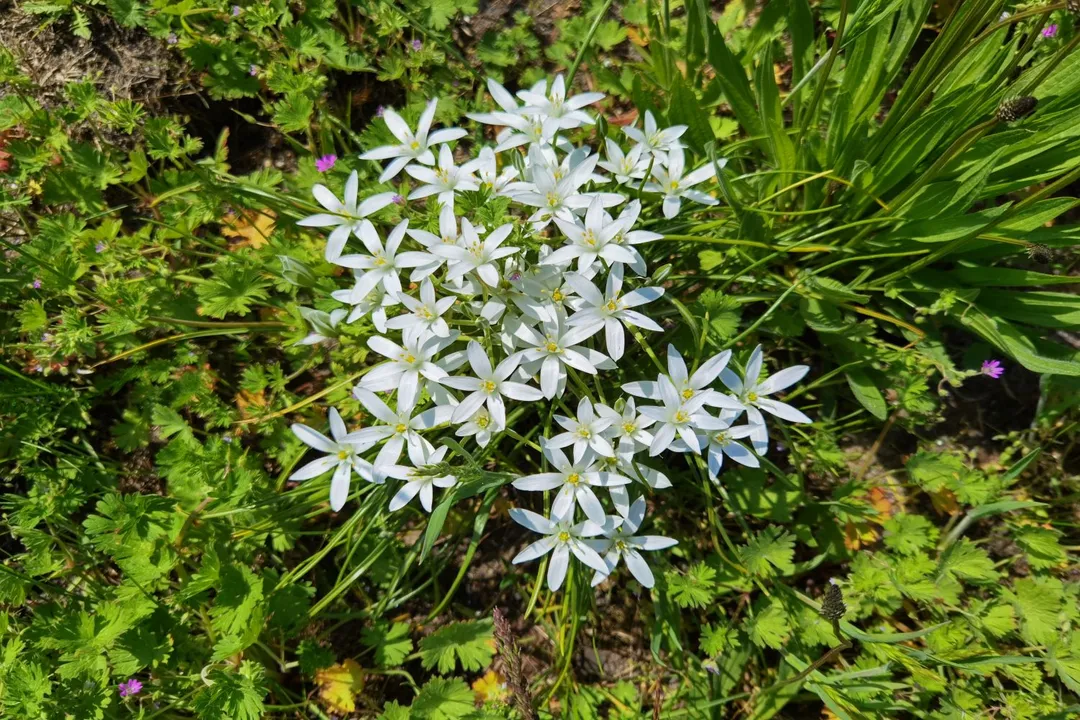
The persistence and aggressive regrowth capabilities of *O. umbellatum* are directly tied to its bulbous reproduction strategy, demanding extreme care during removal efforts. Because the plant produces many small offsets connected to the main underground system, a failure to completely excavate every single piece of the bulb structure can lead to multiplication rather than eradication. Even minute fragments of the bulb that remain in the soil possess the viability to regenerate into new, complete plants the following season. This characteristic necessitates a careful, patient approach to digging to ensure absolute physical removal from the area.
Related Questions
What potent cardiac glycosides are the primary concern in Ornithogalum species toxicity?Which Ornithogalum species is most frequently associated with the common name Star of Bethlehem?What immediate gastrointestinal effects result from ingesting Ornithogalum plant material?Why is simple mowing ineffective for eliminating Star of Bethlehem persistence in a yard?What distinguishes consuming the raw Star of Bethlehem bulb from its homeopathic use?How many tepals typically characterize the striking white flowers of Ornithogalum umbellatum?What physiological function do cardenolides, identified in Ornithogalum, directly affect?What is the most effective recommended strategy for removing O. umbellatum from a landscape?Which parts of the Ornithogalum plant contain potentially hazardous compounds?What public concern often centers community focus on Ornithogalum besides documented human poisoning incidents?Why might removing a patch of O. umbellatum result in several patches next season?