What public concern often centers community focus on Ornithogalum besides documented human poisoning incidents?
Answer
Its invasive behavior and difficulty of eradication.
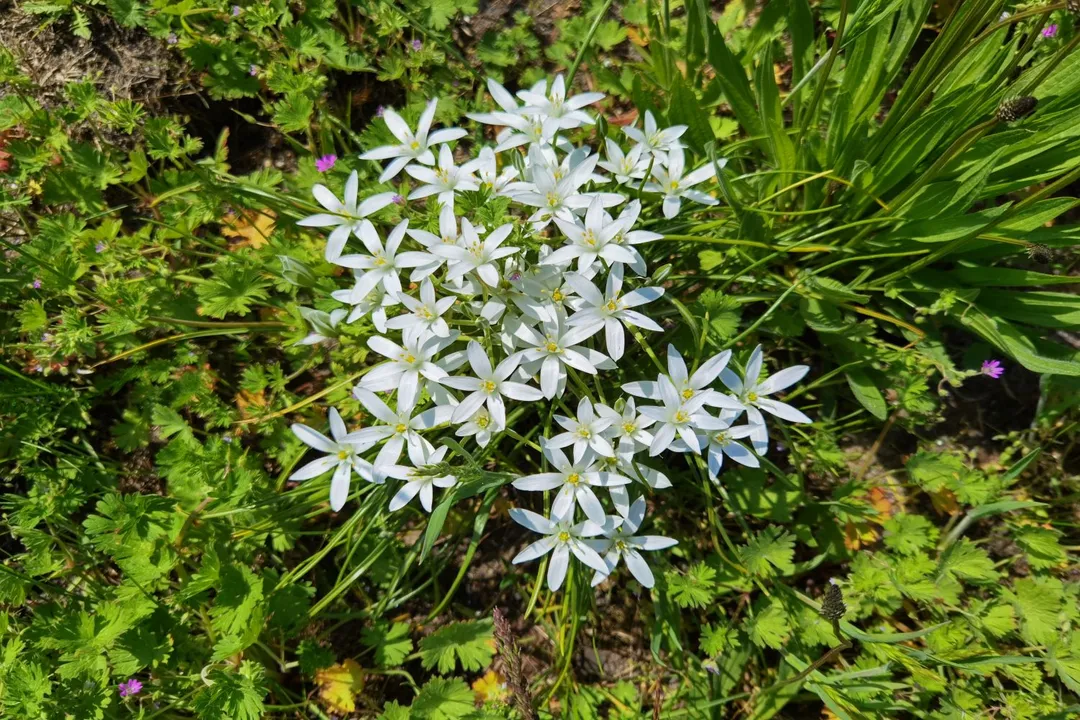
While the toxicity stemming from cardenolide content is a significant underlying chemical hazard of the Star of Bethlehem, community concern in certain gardening areas frequently emphasizes a different aspect: its propensity for invasive spread. *Ornithogalum umbellatum*, in particular, is noted for aggressive colonization of lawns and wild spaces. The sheer difficulty involved in eradicating this plant once it becomes established often overshadows the frequency of documented human poisoning events. This means managing its aggressive colonization through thorough bulb removal is a major practical challenge for gardeners.
Related Questions
What potent cardiac glycosides are the primary concern in Ornithogalum species toxicity?Which Ornithogalum species is most frequently associated with the common name Star of Bethlehem?What immediate gastrointestinal effects result from ingesting Ornithogalum plant material?Why is simple mowing ineffective for eliminating Star of Bethlehem persistence in a yard?What distinguishes consuming the raw Star of Bethlehem bulb from its homeopathic use?How many tepals typically characterize the striking white flowers of Ornithogalum umbellatum?What physiological function do cardenolides, identified in Ornithogalum, directly affect?What is the most effective recommended strategy for removing O. umbellatum from a landscape?Which parts of the Ornithogalum plant contain potentially hazardous compounds?What public concern often centers community focus on Ornithogalum besides documented human poisoning incidents?Why might removing a patch of O. umbellatum result in several patches next season?