What is the recommended careful method for removing visible tentacle remnants after initial rinsing?
Answer
Using tweezers or a gloved hand.
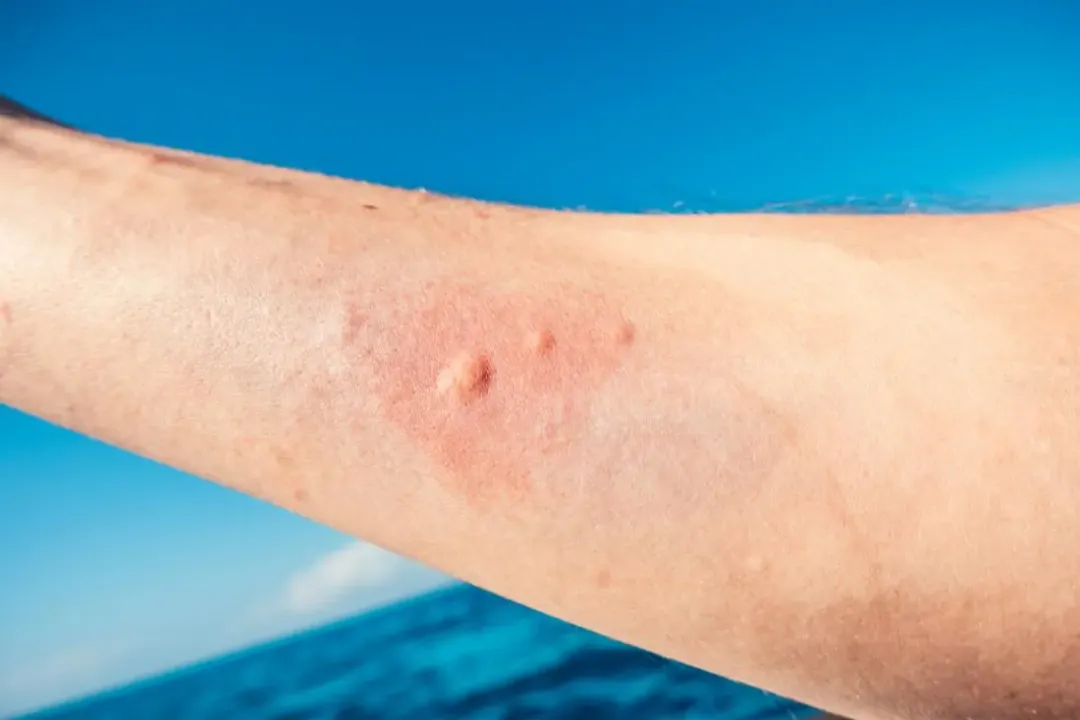
Once the immediate threat of unfired stingers has been addressed through proper rinsing (e.g., with vinegar or seawater), the next physical step involves removing any tentacle remnants still visibly stuck to the skin. This removal process must be executed with extreme care. Aggressive physical actions, such as scraping the skin with hard objects like a credit card, are explicitly cautioned against because such pressure can prematurely discharge any still-active nematocysts remaining within the fragments, leading to further envenomation. Therefore, the appropriate method involves gently lifting or grasping the remnants using sterile tweezers or by employing a gloved hand.
Related Questions
What allows nematocysts, the microscopic stingers, to continue injecting venom after contact?What is the recommended immediate rinsing agent for many common jellyfish stings to neutralize unfired nematocysts?What specific temperature range should the affected area be soaked in for heat application to effectively denature venom proteins?What severe systemic consequence is associated with the Box Jellyfish species *Chironex fleckeri* (Sea Wasp)?Why is rinsing a jellyfish sting with fresh water (tap or bottled) strongly discouraged during first aid?Which species is specifically noted as an exception where using vinegar as an initial rinse may actually worsen the sting reaction?How is the venom potency of the Irukandji jellyfish reportedly compared to the venom of a cobra?What is the recommended careful method for removing visible tentacle remnants after initial rinsing?Following initial decontamination steps, what post-incident follow-up regarding skin penetration must be reviewed within 24 hours?What immediate physical manifestation often maps the path of a jellyfish tentacle contact on the skin after the initial shock of pain?Which folk remedy is largely debunked due to inconsistent efficacy based on diet-related variability in the agent used?