Does vinegar help a man of war sting?

The aftermath of contact with a Portuguese man-of-war is notorious for its searing, whip-lash intensity, leaving behind raised, angry welts as a stark reminder of the floating hazard. For anyone stepping out of the surf after such an encounter, the immediate scramble for the right first aid can be hampered by a maze of conflicting folk wisdom and outdated advice. A major point of contention in treating these painful stings has long centered on a common household staple: vinegar. Does this acidic solution actually quell the burn, or does it simply amplify the agony by triggering those microscopic stingers, the nematocysts, to fire their venom payload? The answer, according to recent scientific scrutiny, flips decades of assumed knowledge on its head, though pockets of contradictory advice persist on the coastlines.
# Evidence Shift
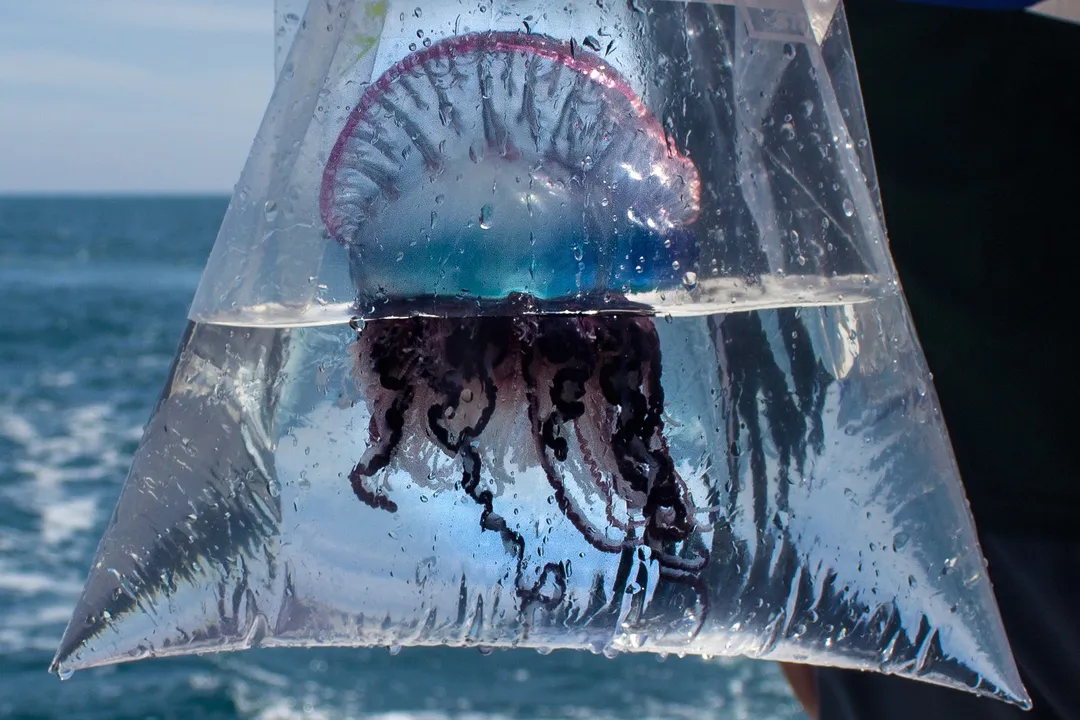
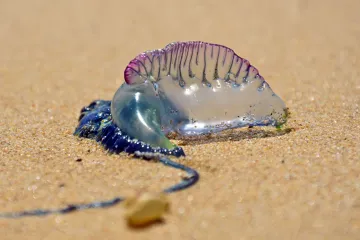
For many years, official recommendations around the world treated stings from the Portuguese man-of-war (Physalia physalis) as an exception to standard jellyfish first aid protocols. This distinction stems from the fact that the man-of-war is technically not a true jellyfish but a siphonophore—a complex colony of specialized organisms working in concert. Because of this biological difference, many guidelines specifically discouraged the application of vinegar, often favoring a simple rinse with seawater instead.
However, a focused, comparative study published in the journal Toxins initiated a major pivot in recommended care. Researchers at the University of Hawaiʻi at Mānoa, collaborating with colleagues in Ireland, rigorously tested various common remedies against both Atlantic and Pacific man-of-war venom mechanisms. The findings strongly suggested that the biological difference between Physalia and true jellyfish does not necessitate a different, ineffective treatment path. The conclusion drawn from this research was emphatic: rinsing the affected area with vinegar is the most effective initial step for Physalia stings, as it actively prevents the unfired stinging capsules left on the skin from releasing more venom.
# Discredited Methods
The same scientific testing that championed vinegar also served to definitively debunk several popular anecdotal remedies. Perhaps the most infamous of these, popularized in television culture, is the use of urine. Research clearly indicated that dousing a sting with urine, much like using cola, alcohol, lemon juice, or baking soda, actually aggravated the situation by causing the cnidae to discharge more toxins.
Rinsing with seawater, a treatment frequently recommended in the past, was shown to be particularly detrimental. Seawater, being isotonic to the nematocysts, does not neutralize them; instead, it spreads the stinging capsules over a wider skin area, increasing the total venom delivered to the victim. Furthermore, scraping tentacles off the skin with bare hands or a cloth, or applying ice packs, was found to increase pressure or cause thermal shock, both resulting in a greater release of venom into the tissue. One dermatologist reviewing treatment methods noted that forgetting these common pitfalls—especially avoiding fresh water, which also forces toxins deeper—is as important as applying the right treatment.
# Conflicting Coastal Wisdom
Despite the emergence of strong, evidence-based arguments favoring vinegar, not all coastal guidance has caught up, creating a significant point of confusion for beachgoers seeking immediate relief. For instance, while several major research outputs confirm vinegar's role in preventing further envenomation, another source specifically cautions against it for the man-of-war. This source advises that while vinegar is helpful for typical jellyfish stings, for Physalia, it "may actually make a Portuguese Man o' War sting worse by triggering more nematocyst discharge".
This divergence highlights a critical element in evidence-based medicine: the pace of change versus established local practice. The researchers who conducted the pivotal study acknowledged that their findings represented a "complete U-turn" for established protocols, with one co-author noting that the previous guidance he helped write involved the "worst possible combination of steps: seawater rinsing followed by ice pack treatment". Therefore, the advice not to use vinegar likely stems from these pre-2017 protocols, which were based on the assumption that the man-of-war should be treated differently than true jellyfish species. Understanding this context is key: if you encounter older signage or local advice contradicting the vinegar/heat protocol, it’s likely based on the assumption that Physalia requires a unique, non-vinegar approach, an assumption that modern testing has contested.
# Optimal Sequential Care
When a sting occurs, the best course of action involves a two-step process focused first on halting further envenomation, and second on inactivating the venom already injected.
# Step One Rinsing
The priority is preventing the thousands of unfired nematocysts clinging to the skin from activating. For the Portuguese man-of-war, the protocol supported by the most current comparative research dictates a rinse with vinegar for a minimum of 30 seconds. This substance effectively deactivates the nematocysts, meaning they cannot fire their microscopic barbs, allowing the tentacles to be safely swept away. Removing the tentacles themselves should be done carefully after the vinegar rinse, perhaps using tweezers or the edge of a card, never by rubbing the area. If vinegar is entirely unavailable, rinsing with saltwater is a far better alternative than fresh water or no rinse at all, though it is less effective at halting further discharge than acetic acid.
# Step Two Pain Management
Once all remnants are cleared and the immediate threat of further venom release is mitigated, the focus shifts to treating the pain caused by the venom already injected into the skin. The gold standard identified in the research is the application of heat. The affected area should be immersed in water that is approximately 45°C (113°F), or a hot pack should be applied, for a sustained period, ideally around 45 minutes. This elevated temperature is effective at inactivating the already-injected toxins and reducing the pain response.
It is important to note the nuance regarding heat. While the study suggests heat deactivates venom, one expert notes that pain relief is a neurological process, and applying excessive heat might cause capillaries to dilate, potentially allowing venom to spread further into the body. Therefore, achieving the recommended temperature—hot but not scalding—is crucial. For practical application on a busy beach, knowing that 113°F is just shy of what most people can comfortably hold their hand under for an extended period offers a tangible benchmark for managing the heat application phase.
| Remedy Attempted | Effect on Unfired Nematocysts | Rationale / Outcome |
|---|---|---|
| Vinegar (Acetic Acid) | Stops discharge | Deactivates capsules, allowing safe removal |
| Seawater | Spreads discharge | Spreads venom capsules over a larger area |
| Urine/Lemon Juice/Alcohol | Worsens discharge | Causes nematocysts to fire more toxins |
| Fresh Water | Worsens discharge | Forces toxins further into the skin |
| Ice Packs | Worsens discharge | Causes nematocysts to fire more venom |
# Beyond the Basics
The scientific work investigating Physalia has provided a more unified approach to marine envenomation, suggesting that many stinging creatures can be treated with the same initial rinse, whether it's vinegar or a specialized product like Sting No More® Spray, which was developed for use by military divers. This standardization simplifies emergency response significantly, moving away from the need to precisely identify the stinging organism in a moment of distress.
When considering the immediate aftermath, one valuable action that is often overlooked, even by those who cite the research, is what not to do before rinsing. Many victims instinctively try to rub the area or brush off tentacles with sand or a towel. This action almost guarantees that any remaining, still-loaded stinging cells will rupture, significantly increasing pain and venom load. The failure to pause and apply the deactivating agent first before attempting physical removal is a common and costly error in panic situations. Always prioritize neutralizing the surface threat with the correct rinse before attempting any physical removal of the tentacles.
If you are far from immediate medical aid, remember that severe reactions—including difficulty breathing, chest tightness, facial swelling, or loss of consciousness—demand emergency help immediately, regardless of the first aid applied. Most stings resolve with proper shore-side care, but vigilance for systemic symptoms is always necessary, especially for vulnerable populations like children or the elderly. Ultimately, while the human instinct is to apply something immediately, that something must now be vinegar, followed by targeted heat, to effectively counter the chemical weapon deployed by the man-of-war.
Related Questions
#Citations
SOEST scientists scrutinize first aid for man o' war stings
Urine Luck: Vinegar Is the Best Treatment for a Man O' War Sting
What is the best antidote for a jellyfish sting? (Clue: it's not urine)
Portuguese Man o' War: What to Do if You are Stung
How to treat jellyfish stings - PMC - NIH