When to go to the ER for a jellyfish sting?

Stung by a jellyfish, that sudden, sharp sting that leaves behind lines of fire on your skin, is a painful reality for many who spend time in the ocean. While most stings can be managed with careful first aid, knowing precisely when that initial discomfort escalates into an emergency requiring an ER visit is perhaps the most crucial piece of beach knowledge you can possess. This isn't about debating the merits of vinegar versus hot water; it’s about recognizing the clear, non-negotiable signs that indicate a medical system emergency.[1][2][6]
# Critical Symptoms

When immediate life support might be necessary, your reaction must be swift and decisive: call emergency services or head directly to the Emergency Room. The most urgent situations involve systemic reactions that affect breathing or circulation, which is far beyond the scope of standard first aid protocols.[2][4][7][8]
If the person stung develops difficulty breathing, you must treat it as an absolute emergency. [2][4][5][8] This symptom, along with any indication of chest pain or tightness, signals a potentially severe systemic reaction, such as anaphylaxis or a profound toxic effect from the venom. [2][7][8] Similarly, look for signs of a severe allergic reaction: widespread hives, swelling of the face or throat, dizziness, or sudden nausea and vomiting that accompanies the sting. [3][5][6] These signs suggest the venom has entered the bloodstream rapidly or that the individual is highly sensitive to it, warranting immediate advanced medical intervention. [8]
Some marine creatures, like the Box Jellyfish, carry venom potent enough to cause rapid collapse or cardiac arrest, even from minor exposures. If the sting involves any species known for high toxicity in your region, or if the victim exhibits confusion, loss of consciousness, or muscle spasms, bypassing the urgent care clinic entirely for the ER is the only safe course of action. [9]
# Sting Extent
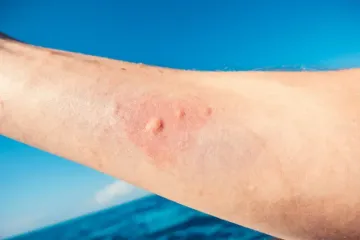
The sheer amount of venom introduced into the body directly correlates with the potential severity of the reaction, making the area affected a key determining factor for ER consideration. [1][3][7] A small sting on a forearm might hurt, but a sting that covers a large percentage of the body demands immediate professional assessment. [3][5][7]
When a sting covers a large area—for example, covering more than half an arm or leg, or a significant portion of the torso—the systemic absorption of venom increases substantially, even if the symptoms are not yet life-threatening. [1][7] Furthermore, the location of the sting carries added importance. Stings affecting the eyes, mouth, or face should prompt a call to poison control or a trip to the ER because of the risk of airway compromise or direct ocular damage. [6]
Pain management itself can be a triage indicator. If, after initial proper first aid (like rinsing and applying heat), the pain remains so severe that it cannot be controlled or significantly lessened, it suggests a venom load too great for home management. [2][3][5] While Urgent Care centers can often handle moderate pain, pain described as excruciating or debilitating enough to cause shock or fainting necessitates the resources available only in the Emergency Department. [2][5]

# Initial Response Context
Understanding the immediate first aid steps is essential because if those steps fail to stabilize the patient, the next move is clearer. Following a sting, the general consensus among medical advice leans away from freshwater rinsing, which can cause unfired stinging cells (nematocysts) to discharge their venom, making the pain worse. [4][7] Instead, rinse the area with vinegar if available, or seawater, to neutralize unfired nematocysts. [4][5][8] After rinsing, carefully remove any visible tentacles using tweezers or gloved hands—never bare skin. [8]
Once the site is clear of stingers, heat application is often recommended to denature the venom proteins, which can provide significant relief. [1][5] For instance, immersing the affected area in hot water, as hot as the person can tolerate without causing a burn (around 110 to 113 degrees Fahrenheit or 43 to 45 degrees Celsius), for about 20 to 45 minutes, can be extremely effective for pain relief. [1][5] If, however, the patient presents with the life-threatening symptoms previously discussed, skipping this entire process and going straight to emergency care is paramount. [7]
If you are in an area where local medical advice differs—say, a specific region has identified particular species whose venom is not deactivated by vinegar—the urgency to seek professional guidance increases exponentially, as incorrect initial treatment could hasten systemic effects. [9] It is wise for regular beachgoers in known high-risk areas to research local protocols ahead of time, perhaps even saving the relevant local health service’s contact number. Knowing the common local species allows you to better judge the baseline risk; a sting from a known mild sea nettle is judged differently than a sting from a highly dangerous box jellyfish, regardless of initial pain level. [9]
# Infection Risk
Even if the initial sting is mild and seems fully managed at home, signs of secondary infection developing over the next few days are a solid reason to schedule an appointment, potentially with an Urgent Care provider initially, or your primary doctor. [3][6] A puncture wound or a large area of damaged skin is susceptible to bacterial invasion.
Watch for classic signs of infection: increased redness spreading outward from the sting site, warmth emanating from the skin, growing swelling, increasing tenderness, or the presence of pus draining from the site. [1][3] Fever or chills accompanying these local signs are particularly concerning and shift the concern immediately toward ER evaluation, as the infection may be progressing systemically. [3] Generally, these issues develop hours to days later, not immediately, which contrasts sharply with the acute emergency symptoms of anaphylaxis. [6]
# Care Triage
Deciding between the ER and an Urgent Care clinic often boils down to two factors: the immediacy of the threat and the source of the pain. [2]
| Situation | Recommended Action | Rationale |
|---|---|---|
| Breathing Trouble, Chest Pain, Collapse, Severe Allergic Reaction | Emergency Room (Call 911) | Immediate threat to life/airway/circulation. [2][8] |
| Sting Covers > 50% of a limb or large body area | Emergency Room | High potential for significant systemic venom absorption. [1][7] |
| Sting on Face/Eyes/Mouth | Emergency Room or Urgent Care | Airway risk or delicate structure damage requires prompt assessment. [6] |
| Excruciating Pain Uncontrolled by Hot Water Immersion | Emergency Room | Pain load suggests high venom concentration requiring prescription intervention. [2][5] |
| Moderate Pain, Unresponsive to Initial First Aid | Urgent Care Clinic | Pain requires prescription-strength relief, but no immediate systemic signs. [3] |
| Signs of Localized Infection (Redness, Pus) without Fever | Primary Care or Urgent Care | Needs antibiotics/wound care, but not necessarily trauma bay resources. [3][6] |
One helpful way to frame this decision is to assess the body’s primary response system. If the sting has clearly overwhelmed the nervous, respiratory, or cardiovascular systems (the critical symptoms), the ER is necessary. [2][8] If the sting has primarily overwhelmed the local integumentary system (skin) and the pain response centers, making you miserable but not immediately life-threatening, an Urgent Care setting is often the appropriate level of care for advanced pain management or localized treatment. [3]
If you are treating a child, the threshold for seeking professional help should generally be lower. Children have less body mass, meaning the same amount of venom affects them more severely than it would an adult. [4][5] What might be a manageable sting for a 200-pound adult could quickly escalate into a systemic issue for a small child, making any severe symptoms or stings covering a moderate area warranting professional medical evaluation immediately. [4][5]
# Understanding Local Species
In many coastal environments, jellyfish populations are seasonal, and certain species dominate the water column at different times of the year. This local ecological knowledge directly impacts the appropriate speed of your response. For instance, if you are swimming where the Chironex fleckeri (Box Jellyfish) is known to appear seasonally, any sting, no matter how small, demands immediate, aggressive medical consultation, often bypassing the Urgent Care step entirely due to the known speed of its venom. [9] Conversely, in areas known only for mildly venomous species like certain Moon Jellies, a sting might be managed comfortably at home with over-the-counter pain relievers if the initial first aid was done correctly. Always check local advisories before swimming, as this preemptive knowledge dictates the urgency of your action post-sting. [9]
The general guidance found across medical authorities consistently directs individuals toward emergency care when the body exhibits signs of generalized distress or when the injury itself is extensive or located on sensitive areas like the face or eyes. [1][5][6] For everything else—moderate localized pain, minor skin reactions that respond well to heat—local first aid steps are usually the correct initial path. [8] Vigilance remains key; if you treat a mild sting but the victim's condition seems to worsen over the next few hours rather than improve, re-evaluate the need for medical attention.[3]
Related Questions
#Citations
Jellyfish Sting: Symptoms & Treatment
Jellyfish and Stingray Stings — Know When to Go to the ER
Stung by a Jellyfish? Here's When to Make a Splash ...
Jellyfish Sting
Jellyfish Sting in Kids
Jellyfish stings - Symptoms and causes
Jellyfish & Stingray Stings: Symptoms, First Aid, and When ...
Jellyfish Stings: Symptoms & Treatment
Stung by a jellyfish? It's extremely painful, but in most cases ...