How long do you have to live after getting stung by a box jellyfish?
The question of a definitive survival window after a box jellyfish sting is complex, precisely because the answer is not a single number but a terrifying spectrum dependent on a terrifying convergence of factors: species, the quantity of venom delivered, and the speed of human intervention. In the most extreme, documented cases involving the notorious Chironex fleckeri in Australia, collapse and death can follow within as little as five minutes if the envenomation is severe enough. For those fortunate enough to survive an encounter with the deadliest varieties, the clock still ticks rapidly, as cardiotoxicity can induce cardiac arrest in the span of mere minutes.
This immediate, life-altering danger sets box jellyfish stings apart from many other marine injuries. These creatures, which inhabit warm coastal waters across regions like Australia, Southeast Asia, and occasionally the Gulf of Mexico, carry venom so potent it attacks the heart, nervous system, and skin cells simultaneously. Understanding the mechanics of this danger and the precise, non-negotiable steps for immediate first aid is the only way to push that deadly clock backward.
# Physical Traits
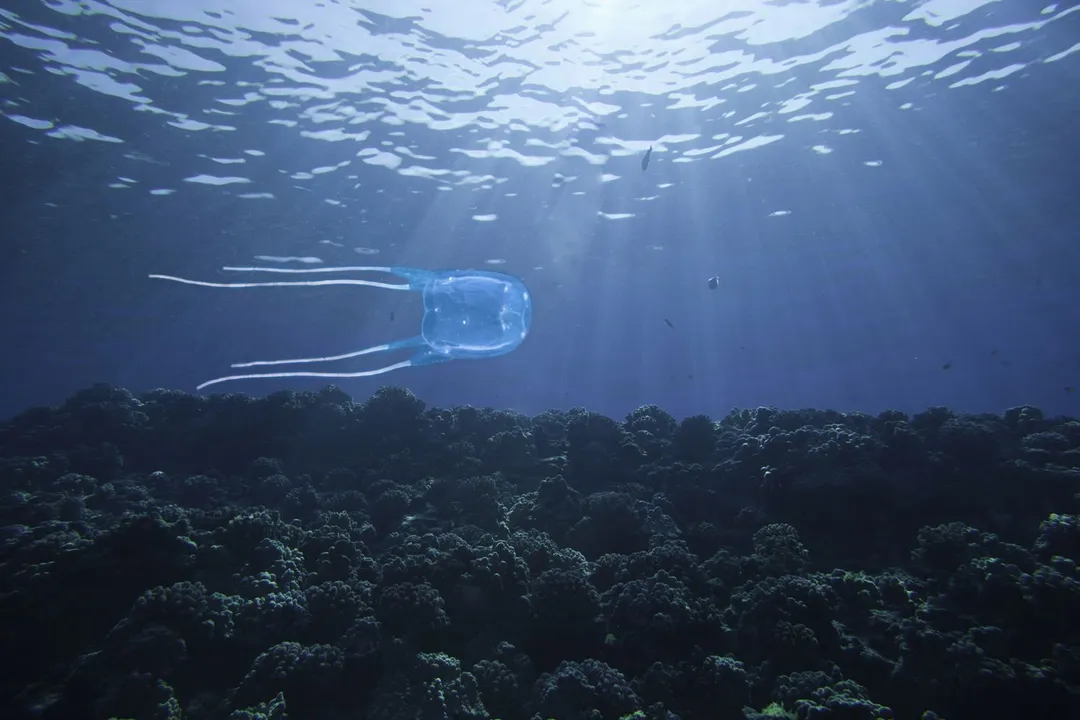
Box jellyfish stand out among their gelatinous relatives due to several remarkable physical characteristics. They possess a distinct, cube-shaped bell that is surprisingly firm, making them active swimmers rather than passive drifters. Unlike many jellyfish species that are nearly invisible, these creatures carry complex visual systems, possessing up to 24 eyes clustered in groups, allowing them to actively perceive and pursue prey.
The true threat, however, lies in their appendages. From each of the four corners of the bell, up to 15 tentacles can trail, sometimes extending lengths of up to 10 feet or 3 meters. These near-transparent tentacles are studded with millions of microscopic stinging cells known as nematocysts. These cells are sophisticated delivery systems; when triggered by contact, they fire microscopic, barbed harpoons that inject venom almost instantly—sometimes in less than a millionth of a second.
The most lethal known species, Chironex fleckeri (the Australian box jellyfish or sea wasp), can have a bell up to 30 cm (12 inches) across. Its venom contains pore-forming toxins that are highly cardiotoxic, causing muscle disruption and rapid increases in blood potassium, which can lead to heart failure. While they possess this advanced biological weaponry, it is interesting to note that due to their simple, decentralized nerve net, they do not experience pain as humans do; their reactions are purely reflexive.
# Symptom Spectrum
The presentation following a box jellyfish sting is heavily dependent on the species and the extent of skin exposure. The sheer volume of venom injected dictates whether the reaction remains localized or escalates into a systemic, life-threatening event.
# Localized Marks
Immediately upon contact, the victim experiences excruciating pain, often likened to being branded with hot metal. The skin quickly develops highly characteristic patterns where the tentacles made contact: ladder-like welts or whip-like marks. These lesions are typically red, raised, and may turn a deep reddish-purple. In severe cases, especially from C. fleckeri, these initial marks can progress over a week or two to full-thickness skin necrosis, followed by permanent pigmentation changes.
# Systemic Collapse
Systemic reactions are the hallmark of a truly dangerous box jellyfish sting, appearing rapidly or within several hours. Symptoms indicating the venom has entered the bloodstream and is affecting major organs include:
- Severe headache, nausea, and vomiting.
- Muscle spasms and cramps.
- Faintness, dizziness, or confusion.
- Difficulty breathing or respiratory distress.
- Cardiovascular distress, such as chest pain or cardiac arrhythmias.
Beyond the acute symptoms, a delayed reaction known as Irukandji syndrome is particularly dangerous and is associated with smaller box jellyfish species, such as Carukia barnesi. Unlike the immediate impact of C. fleckeri, Irukandji symptoms can manifest 20 to 30 minutes later. This syndrome involves intense pain in the back, abdomen, and chest, often accompanied by dangerously high blood pressure and an increased heart rate, which can progress to heart failure or cardiogenic shock.
| Syndrome Type | Primary Species Example | Time to Critical Systemic Symptoms | Primary Threat |
|---|---|---|---|
| Acute Cardiotoxicity | Chironex fleckeri | Seconds to Minutes (e.g., 5–20 minutes) | Cardiac Arrest |
| Irukandji Syndrome | Carukia barnesi | 20 to 45 Minutes Post-Sting | Severe Hypertension/Cardiogenic Shock |
For readers in areas where the jellyfish type cannot be immediately identified—such as Northern Australia between Geraldton and Bundaberg—the only safe course of action is to treat every sting as a potential major box jellyfish sting, demanding immediate hospital transfer.
# Critical First Aid
Given the potential for death within minutes, the margin for error in the first aid response is virtually nonexistent. The goal of initial treatment is dual: manage the physical injury and, critically, prevent further envenomation from any nematocysts that have not yet fired.
# Immediate Response Protocol
- Safety First: The victim must be removed from the water immediately. Rescuers must exercise caution; while nematocysts may not penetrate thick clothing, approaching a victim entangled in tentacles requires awareness.
- Call for Help: Summon emergency medical services immediately (call 911 or Triple Zero (000) in Australia). If the person is unconscious or stops breathing, begin CPR without delay.
The next step is highly species-dependent, which introduces a vital point of local context. Where C. fleckeri is prevalent, the immediate focus is venom deactivation.
# Deactivating Stingers
The consensus for stings from the most dangerous box jellyfish species is clear: Liberal application of vinegar (acetic acid, 4% to 6%) for a minimum of 30 seconds is required. Vinegar acts to deactivate the undischarged nematocysts, preventing a greater dose of venom from entering the wound.
It is equally important to know what not to do, as incorrect actions can trigger massive toxin release from remaining stingers. Never rinse the area with fresh water or alcohol. Do not rub or press on the site. Furthermore, the widely circulated myth of urinating on the sting is strongly discouraged, as it can potentially worsen the pain.
# Tentacle Management
After the vinegar treatment, any visible tentacles must be removed carefully, perhaps using tweezers or a gloved hand. Sources suggest that for the Chironex fleckeri sting specifically, removing tentacles with bare fingertips might be safe because the nematocysts do not penetrate the thicker skin on the palm. However, using any tool or gloved protection minimizes contact risk, which is always preferable when dealing with unknown or multiple stings.
# Pain and Venom Neutralization
Once the threat of further envenomation is managed, the focus shifts to pain control and venom neutralization via heat. The use of heat is recommended for pain relief by several authoritative sources. Immersion of the affected area in hot water between 110–113°F (around 45°C) for 20 to 45 minutes helps to break down the venom and is effective for pain management. The water must be hot but not scalding to prevent secondary burns.
However, this is a point requiring careful consideration based on location and species. While heat is a standard pain treatment for many stings, one expert source notes that for Australian box jellyfish envenomation, heat is not recommended as part of standard treatment because the effort of applying it might detract from more crucial efforts like symptom control and resuscitation, especially if the patient is near cardiovascular collapse. This contrast highlights why immediate, accurate triage—and understanding your geographical location—is essential. If you are in a high-risk area, assume the worst and prioritize life support preparation over prolonged heat therapy if the patient is unstable.
# Medical Management
Even with perfect first aid, severe box jellyfish stings necessitate professional medical intervention to manage systemic toxicity and provide targeted relief.
# Emergency Intervention
Upon hospital arrival, medical teams will immediately monitor vital signs, particularly heart function and respiration. If the patient exhibits signs of severe toxicity—cardiac arrhythmias, respiratory distress, or collapse—the primary intervention is the administration of the specific box jellyfish antivenom. Antivenom, specifically developed for the most deadly species, may begin to reverse cardiac morbidity and lessen pain within about 15 minutes of administration. Oxygen therapy is also a staple for respiratory issues.
A separate consideration is severe allergic reaction, or anaphylaxis, which can mimic severe envenomation symptoms like breathing difficulty and blood pressure drops. This requires emergency administration of epinephrine.
# Ongoing Care
For pain control that persists after initial heat therapy, healthcare providers may administer systemic pain medications or local anesthetic injections, sometimes requiring opioid-level relief for intractable pain. Wound management is also crucial; stings can cause tissue death, requiring assessment for secondary bacterial infections and potential antibiotic treatment. Victims must be closely monitored for delayed complications like Irukandji syndrome, even hours after the initial incident.

# Preparation and Prevention
Since the time between a sting and a fatal outcome can be measured in minutes, prevention shifts from being a sensible measure to a mandatory survival strategy in known habitats.
# Protective Gear
The simplest barrier is protective clothing. Wearing full-body "stinger suits" or even standard wetsuits when swimming in high-risk tropical waters creates a physical barrier that can prevent nematocysts from reaching the skin. Even thin layers, like pantyhose, may prevent the short stingers from puncturing the skin.
# Situational Awareness
Understanding the environment is key. Box jellyfish proliferate seasonally, often referred to as "stinger season" in the southern hemisphere, typically spanning from October to June. Always check local advisories, look for warning flags posted by lifeguards, and ideally, swim only in netted enclosures where they are available. Avoid swimming at dawn or dusk, as box jellyfish can be more active during these times.
A crucial step that often gets overlooked in the immediate aftermath of a sting involves effective communication with emergency services. When calling for help, providing clear, immediate information about the location of the incident (e.g., "We are on a beach in Far North Queensland") allows dispatchers and responding paramedics to prioritize the correct immediate first aid, such as ensuring vinegar is sourced, or understanding that the threat is likely immediate cardiotoxicity versus delayed Irukandji syndrome. This localized data point—which may save valuable minutes—can dictate whether the priority is rushing the patient to antivenom or ensuring prompt CPR readiness. Furthermore, never interact with jellyfish that have washed ashore, as dead tentacles can still discharge venom for up to two weeks. Taking a certified first aid course that covers marine emergencies is the single best preparation for those critical minutes before advanced help arrives.
#Videos
Box Jellyfish Can End Your Life in Minutes - YouTube
Related Questions
#Citations
Jellyfish Sting: Symptoms & Treatment - Cleveland Clinic
Jellyfish stings - Symptoms and causes - Mayo Clinic
Australian box jellyfish stings - DermNet
What is a Box Jellyfish Sting? Effective Management Tips
Box Jellyfish Can End Your Life in Minutes - YouTube
Jellyfish Sting - North Florida Pediatrics
Jellyfish stings - types, symptoms and treatment | healthdirect
How to Recognize and Treat Box Jellyfish Stings - Verywell Health