What is the outcome if fluid intake is low, affecting the efficiency of elimination via the skin?
Answer
The body conserves water, decreasing sweat output, putting additional burden on the renal system.
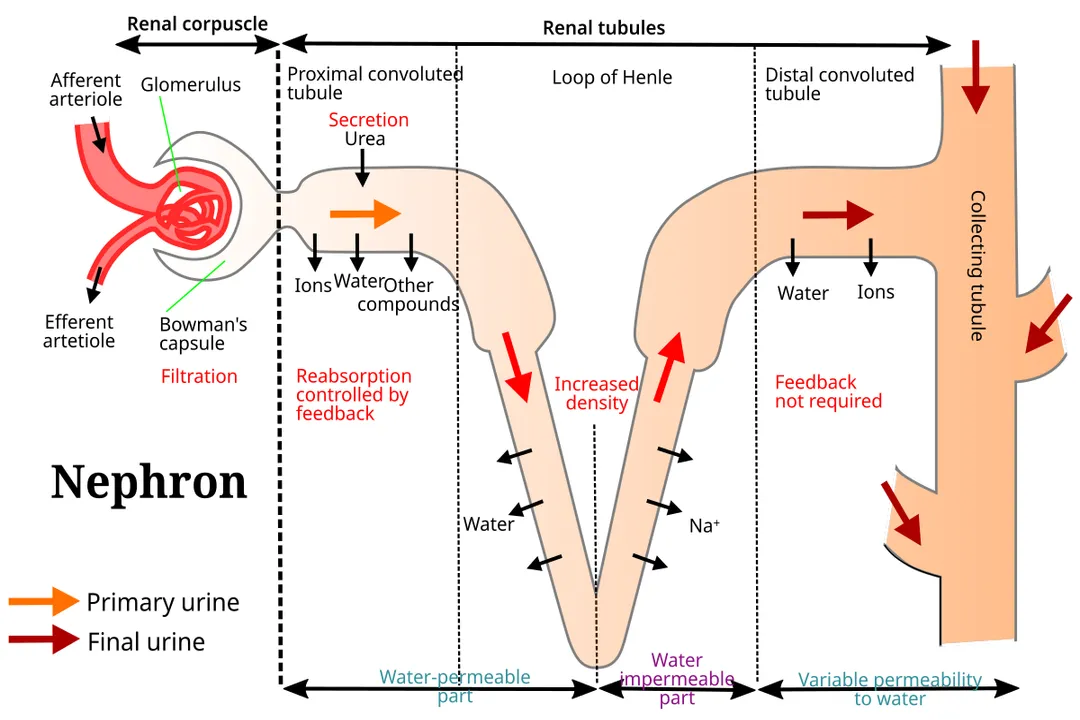
The efficiency of elimination through the skin via sweating is highly dependent on the body's hydration status. When fluid intake is low, the body prioritizes water conservation, which naturally results in a reduction of sweat output. This decreased skin function means that the body must rely more heavily on other systems to manage fluid volume and waste load. Specifically, this reduced water loss through perspiration places a slight additional burden on the renal system, as the kidneys must increase their workload to manage the overall fluid volume that would otherwise have been lost through sweat.
Related Questions
What are the five main channels of elimination recognized in a broader physiological view?Which primary metabolic waste product is continuously eliminated through the Lungs (Respiration)?How is elimination specifically defined in the context of pharmacology?Besides excess water and salts, what specific nitrogenous waste product do the Kidneys filter from the blood?If the kidneys are struggling, which other elimination routes might compensate by processing a slightly increased load of certain wastes?What is the main job of the large intestine after nutrients are absorbed in the small intestine?What involuntary muscular action in the colon pushes waste out during the final step of defecation?What effect does consuming a high-fiber diet, rich in whole grains and vegetables, typically have on stool production?What characteristic distinguishes pharmacological elimination from general waste elimination according to the comparison table?What is the outcome if fluid intake is low, affecting the efficiency of elimination via the skin?