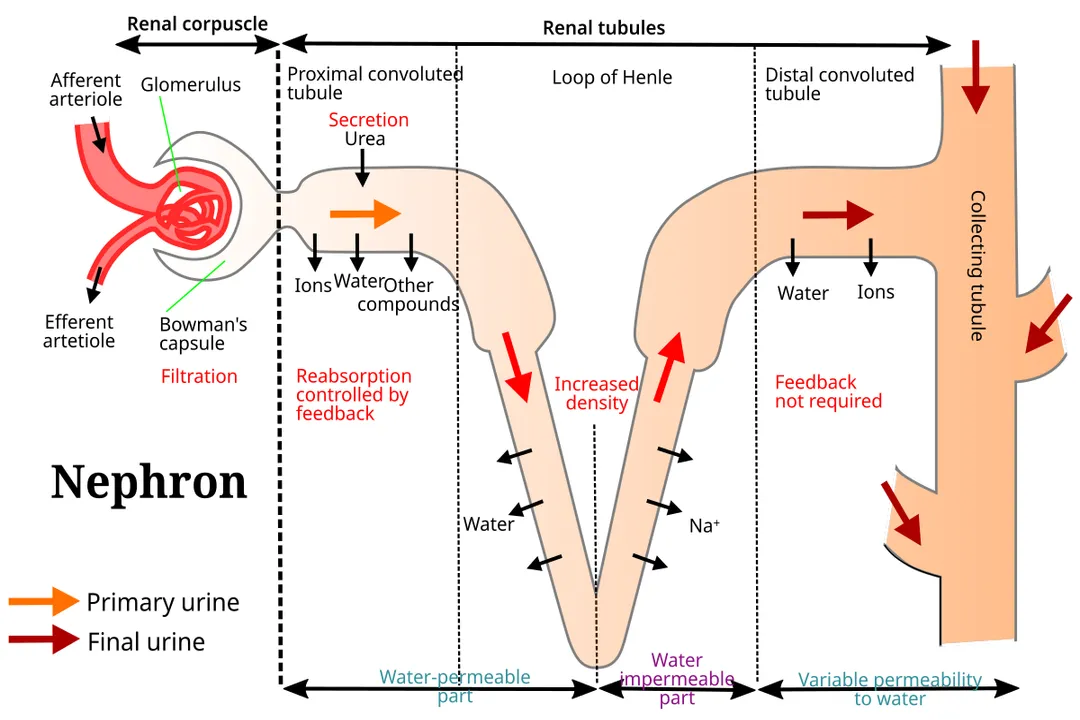
How is elimination specifically defined in the context of pharmacology?
The irreversible removal of a drug or its metabolites from the body
Pharmacological elimination has a precise definition distinct from the general management of metabolic byproducts. In this specialized context, elimination refers strictly to the irreversible process where a medication, or the chemically altered versions of it (metabolites), is permanently taken out of systemic circulation. This is critical because the rate of this removal dictates how long the drug remains active in the system. This overall elimination process comprises two steps: metabolism, which chemically prepares the substance (usually in the liver) to be more water-soluble, and excretion, which is the final physical removal through routes like urine, feces, sweat, or breath.