Besides excess water and salts, what specific nitrogenous waste product do the Kidneys filter from the blood?
Answer
Urea
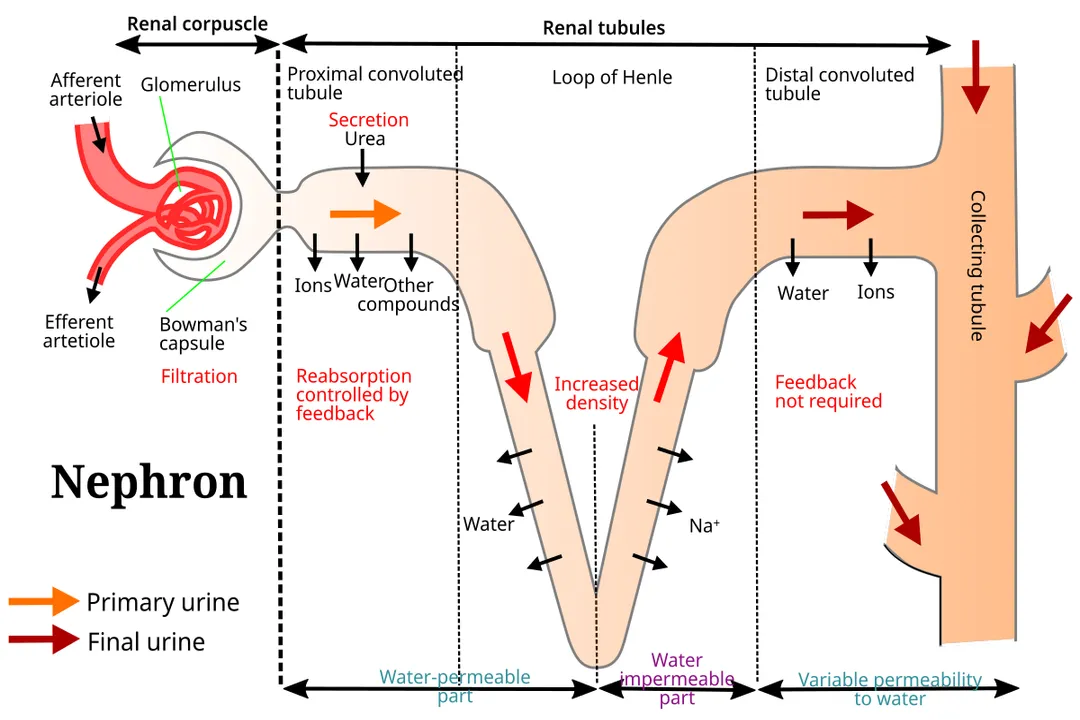
The urinary system, driven by the kidneys, is the main regulator of liquid waste management. The kidneys perform extensive blood filtration, removing substances that are either present in excess or are toxic metabolic byproducts requiring dissolution in water for removal. Among the key substances filtered are water, various salts, and crucially, urea. Urea is identified specifically as a nitrogenous waste product resulting from the breakdown of proteins and amino acids. Once filtered out of the blood, this substance dissolves into the fluid that becomes urine, which is subsequently stored in the bladder prior to expulsion.
Related Questions
What are the five main channels of elimination recognized in a broader physiological view?Which primary metabolic waste product is continuously eliminated through the Lungs (Respiration)?How is elimination specifically defined in the context of pharmacology?Besides excess water and salts, what specific nitrogenous waste product do the Kidneys filter from the blood?If the kidneys are struggling, which other elimination routes might compensate by processing a slightly increased load of certain wastes?What is the main job of the large intestine after nutrients are absorbed in the small intestine?What involuntary muscular action in the colon pushes waste out during the final step of defecation?What effect does consuming a high-fiber diet, rich in whole grains and vegetables, typically have on stool production?What characteristic distinguishes pharmacological elimination from general waste elimination according to the comparison table?What is the outcome if fluid intake is low, affecting the efficiency of elimination via the skin?