How long can tentacles washed ashore still potentially discharge venom after the jellyfish has died?
Answer
Up to two weeks
A critical component of situational awareness involves understanding that the danger does not disappear when the jellyfish itself is no longer alive or has washed up on the sand. Even dead tentacles retain the capability to sting. It is important to note that tentacles washed ashore can remain venomous and capable of discharging their nematocysts for an extended period, potentially remaining hazardous for up to two weeks after the creature has perished, necessitating continued caution around all jellyfish debris.
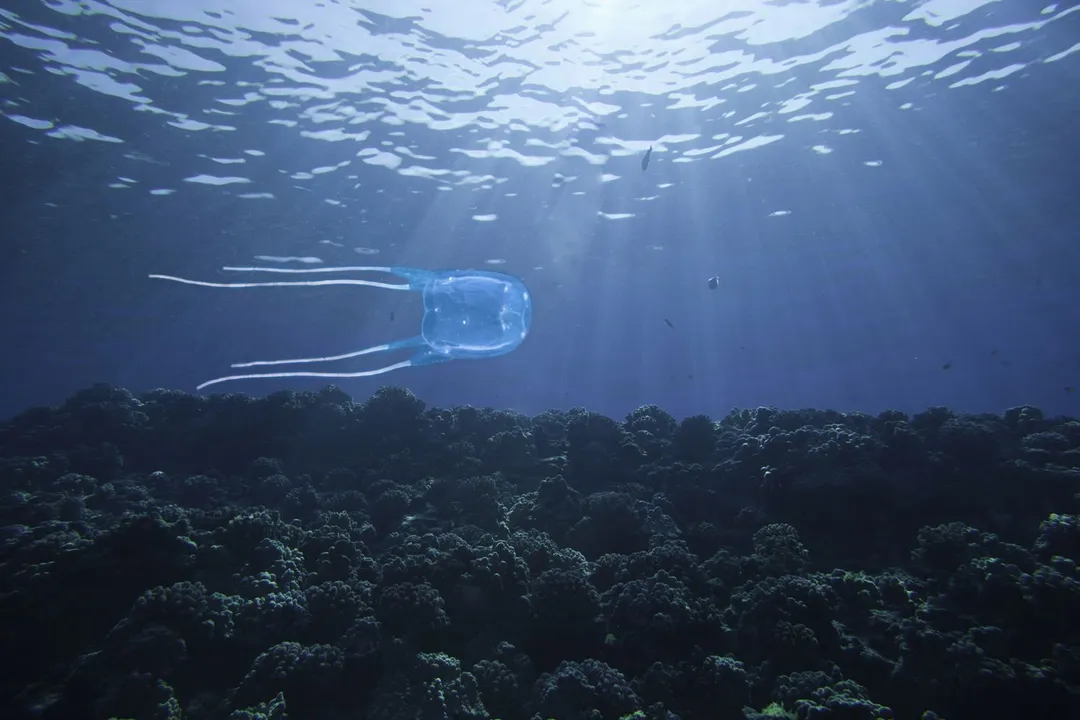
#Videos
Box Jellyfish Can End Your Life in Minutes - YouTube
Related Questions
What is the shortest documented time to collapse and death following a severe sting by Chironex fleckeri in Australia?How many eyes are clustered in the complex visual systems possessed by box jellyfish?How quickly can nematocysts fire microscopic, barbed harpoons into the skin upon contact?What delayed syndrome is associated with smaller box jellyfish species such as Carukia barnesi?What characteristic pattern do highly localized sting marks often present immediately after contact with box jellyfish tentacles?What specific biochemical effect do the pore-forming toxins in Chironex fleckeri venom have that leads directly to heart failure?What substance is required in liberal application for a minimum of 30 seconds to deactivate undischarged nematocysts?Which action is strongly discouraged because it can potentially worsen the pain of a box jellyfish sting?Why is the application of heat (hot water immersion) specifically noted as not recommended for Chironex fleckeri envenomation in high-risk areas?What is the primary intervention administered by medical teams upon hospital arrival for patients with severe toxicity from box jellyfish stings?How long can tentacles washed ashore still potentially discharge venom after the jellyfish has died?