Will we ever get rid of COVID?

The initial hope shared by many across the globe—that SARS-CoV-2 might be eradicated through swift, decisive action—has largely faded into a more sober assessment of the pathogen's biological staying power. [2][6] Scientific understanding now points toward a future where the virus transitions from a novel pandemic threat to a persistent, manageable feature of public health, much like other respiratory viruses. [10] This realization isn't a statement of defeat, but rather an acknowledgement of the complex epidemiology that governs novel viral threats once they achieve widespread global saturation. [2]
# Permanent Presence

The primary barrier to eradicating COVID-19 lies in the fundamental nature of the virus itself and its interaction with the global ecosystem. [2] Eradication, historically, has only been achieved for diseases that lack significant animal reservoirs and have no asymptomatic transmission phase, such as smallpox. [2] SARS-CoV-2 does not meet these criteria.
The virus continues to evolve rapidly, producing new variants that can evade pre-existing immunity derived from prior infection or vaccination. [6] This constant antigenic drift means that immunity gained against one iteration may offer less protection against the next, creating an ongoing chase game between the immune system and the virus. [2] Furthermore, the existence of zoonotic reservoirs—animal populations that can host and re-transmit the virus back to humans—presents a persistent source for re-introduction. [2] If the virus can cycle indefinitely within animal populations, even a perfectly vaccinated or recovered human population will eventually encounter the pathogen again, restarting transmission chains. [2]
In contrast to the common cold coronaviruses, which are endemic and cause mild illness, SARS-CoV-2 has demonstrated an initial phase of high virulence combined with highly efficient human-to-human spread, making early containment exceptionally difficult once community spread was established. [2] While the common cold viruses are established in human populations, the situation with SARS-CoV-2 is dynamic, driven by the continuous emergence of novel immune-evading strains. [6]
# Viral Persistence
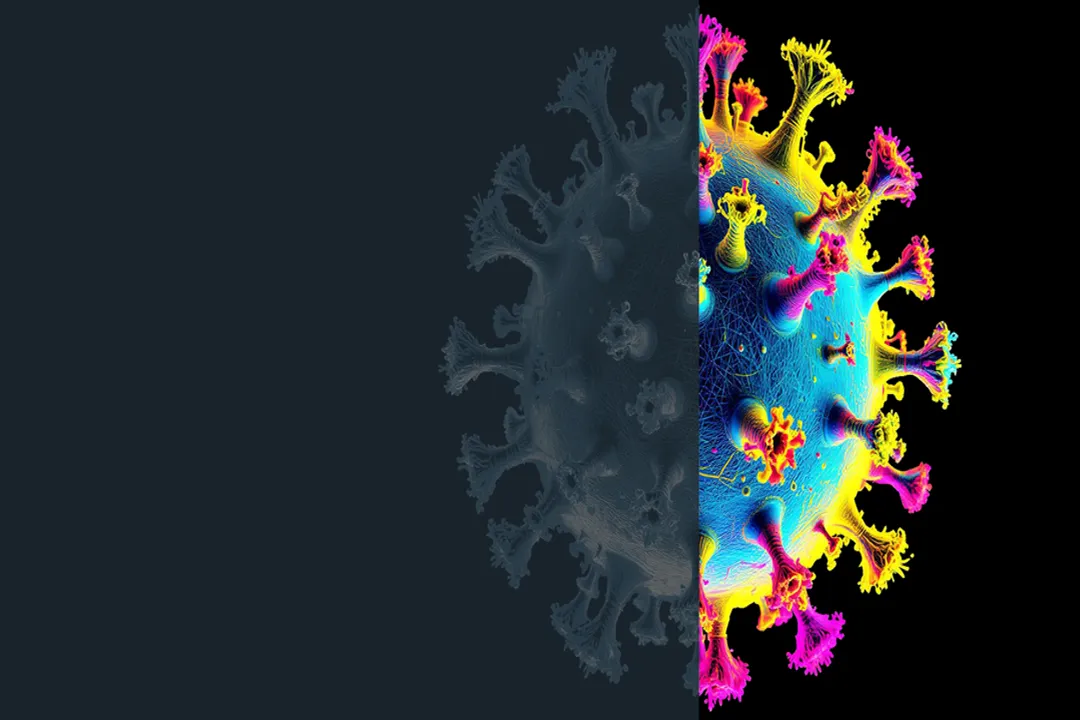
One of the more startling discoveries regarding SARS-CoV-2 is its capacity for long-term residency within the human body, even after the acute phase of infection has passed. [4] Research indicates that the virus, or fragments of its genetic material, can remain detectable in tissues for extended periods, sometimes exceeding a year following the initial infection. [4] This cellular persistence is significant because it contributes to the overall viral load circulating within communities, potentially influencing prolonged shedding and serving as a long-term reservoir within the host population. [4]
The implication of this persistence relates to the idea of herd immunity thresholds. If a significant portion of the population harbors the virus long-term, the effective pool of susceptible individuals may fluctuate in ways that differ from purely transient infections. [4] This contrasts with traditional acute infections where an individual quickly clears the pathogen, either mounting a strong immune response or succumbing to the illness. With COVID-19, recovery does not always equate to complete, immediate viral clearance from the body's systems. [4]
When considering personal risk management in this environment, it becomes clear that moving past blanket restrictions requires an internal risk calculation. For instance, if you live in a community that has recently experienced a high wave of infection, the immediate risk of encountering an actively shedding, highly infectious individual might be slightly lower due to widespread recent exposure, but the background prevalence remains a factor. [5] Therefore, assessing personal vulnerability—such as age or underlying health conditions—should dictate the level of personal protective measures, rather than relying solely on the current public health mandate, which often lags behind real-time community dynamics. [5]

# Reduced Severity
Despite the virus’s stubborn refusal to disappear, the nature of the threat itself is shifting, largely due to widespread immunity—both from vaccination and prior infection. [8] Over time, the virus appears to be evolving, and importantly, the human response to it is maturing, leading to decreased mortality rates. [8] The shift moves COVID-19 toward becoming less deadly, positioning it alongside other endemic respiratory diseases that circulate yearly. [8]
This transition is a dual phenomenon: the virus itself may be evolving to cause milder disease in the face of population immunity, and the population's immune systems are far better prepared to neutralize severe outcomes. [8] For many people, an infection today may present similarly to a bad seasonal cold, especially if they have up-to-date vaccinations or recent prior exposure. [5] However, this does not mean the virus is harmless for everyone; vulnerability remains unevenly distributed across the population. [10] People who are immunocompromised or elderly may still face severe risks even with current variants. [5]
We can observe a parallel in the common cold coronaviruses, which circulate globally every year. [2] These viruses have achieved an equilibrium where they infect frequently but rarely cause severe illness in healthy adults. [2] COVID-19 is trending toward a similar, albeit potentially more impactful, endemic state. [10] The difference lies in the severity ceiling; while endemic coronaviruses rarely cause mass hospitalization, SARS-CoV-2 still possesses the capacity to overwhelm healthcare systems during spikes, which necessitates ongoing attention to vaccine boosters and surveillance. [5][10]
# Future Outbreaks
The global response to the initial pandemic offered extraordinary, albeit imperfect, lessons on how to combat future outbreaks, whether they stem from a new variant of SARS-CoV-2 or an entirely novel pathogen. [3] The swift development of effective mRNA vaccines demonstrated remarkable scientific acceleration capabilities when significant resources were applied. [3] However, the response also exposed weaknesses in coordination and equity. [3]
A critical area for improvement, based on the COVID-19 experience, involves ensuring that global health security measures are implemented before the next crisis reaches peak intensity. [3] This means strengthening surveillance systems globally, ensuring equitable access to countermeasures like diagnostics and therapeutics, and maintaining the manufacturing flexibility required to pivot rapidly to new threats. [3] Relying on reactive measures, as occurred in early 2020, places an undue burden on healthcare infrastructure and society. [3]
Furthermore, preparing for the next threat requires integrating the public health infrastructure we developed for COVID-19 into routine operations, rather than allowing those systems to decay once the immediate emergency fades. [3] For example, maintaining robust genomic surveillance—the ability to rapidly sequence circulating viruses to spot dangerous mutations—is essential for managing any recurring respiratory threat. [3] If local public health agencies treat wastewater surveillance, for instance, as a standard monitoring tool rather than an emergency-only measure, they create an early warning system that can catch circulating threats weeks before case counts spike in hospitals. [1] This proactive stance transforms the reaction from crisis mode to anticipatory management.
The reality we face is not a return to the pre-2020 world, but a new equilibrium where respiratory health requires continuous, nuanced attention. [10] Getting rid of the virus seems biologically improbable given its persistence in various reservoirs and its ability to evolve. [2] Instead, the focus shifts to ensuring that the disease remains a manageable nuisance rather than a recurring societal disruptor. [5][8] This ongoing management depends on high rates of population immunity, rapid diagnostic uptake, and a willingness to adapt personal behaviors based on localized risk, mirroring how society manages influenza, but with a heightened awareness born from the recent pandemic experience. [5][10]
Related Questions
#Citations
Is it possible to eradicate the covid-19 or not? - PMC - NIH
Q&A: Why Can't COVID-19 Be Eradicated and Other Lingering ...
The next pandemic: COVID-19 showed us how ... - UC Davis Health
COVID-19 Virus Can Stay in the Body More Than a Year after Infection
Do I Still Need to Worry about COVID? | URMC Newsroom
Will COVID Ever Be Eradicated? - Scientific American
Will we ever get rid of COVID-19? - Gavi, the Vaccine Alliance
The mystery of why Covid-19 seems to be becoming milder - BBC
We may well be able to eliminate coronavirus, but we'll probably ...
COVID-19 in 2025: 'A Constant Threat, but a Manageable One' | SPH