What distinct audible sounds are key indicators of respiratory involvement in Coryza?
Answer
Rattling, gurgling, or snicking noises
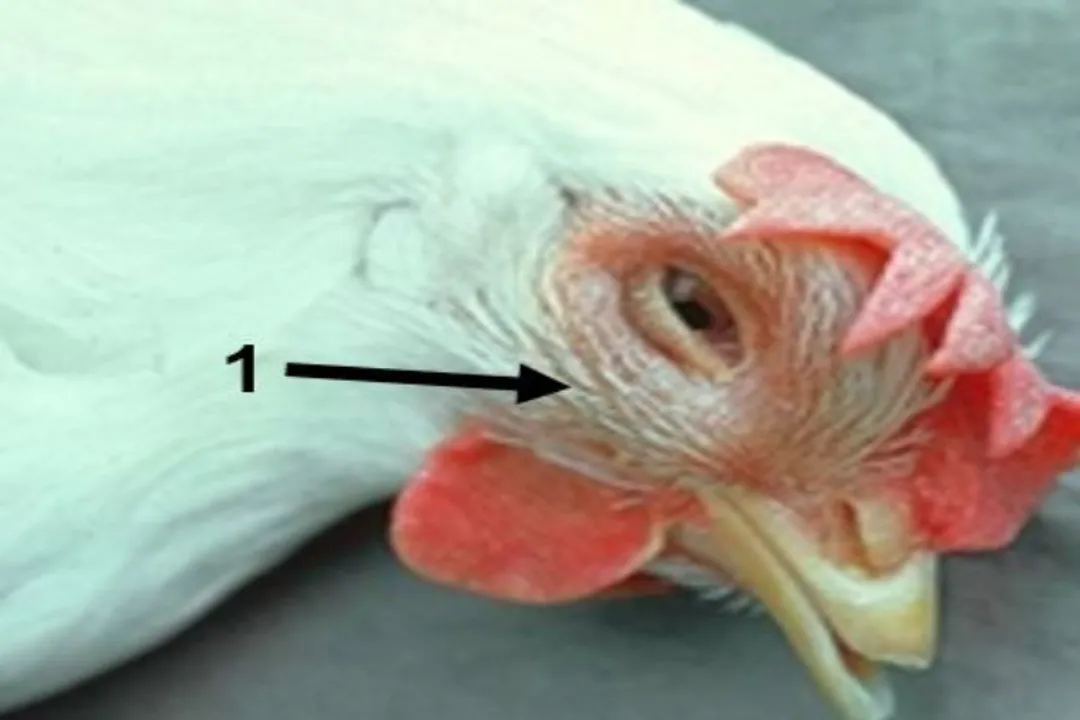
The presence of specific respiratory sounds is a strong indicator of active Infection Coryza within the flock. Birds experiencing respiratory distress due to the infection often produce rattling sounds, which indicate congestion or inflammation within the airways. Gurgling suggests the presence of fluid or excessive mucus in the lower respiratory tract or throat. Snicking refers to sharp, quick inhalations often associated with trying to clear the passages. These sounds, alongside visible discharges, confirm significant respiratory tract involvement and signal the need for immediate management strategies.
Related Questions
What is the primary bacterium responsible for true Infectious Coryza in poultry?What distinct audible sounds are key indicators of respiratory involvement in Coryza?What term describes inanimate objects like contaminated waterers that carry the Coryza agent?How does poor ventilation increase the severity of *A. paragallinarum* infection?What challenging state allows recovered birds to shed *A. paragallinarum* for months?What is the recommended quarantine period for new birds to protect an established flock from IC?Which agents can initiate infection or worsen Coryza after *A. paragallinarum* compromises defenses?When does the shedding of Coryza bacteria typically cease relative to visible recovery?What specific cleaning instruction prevents mechanical transfer of pathogens between pens?What aspect of *A. paragallinarum* infection is *not* resolved by treating secondary bacterial infections with prescribed antibiotics?