Why must fresh water be avoided when rinsing an active Man-o'-War sting immediately after contact?
Answer
It causes undischarged nematocysts to fire their venom, escalating the sting.
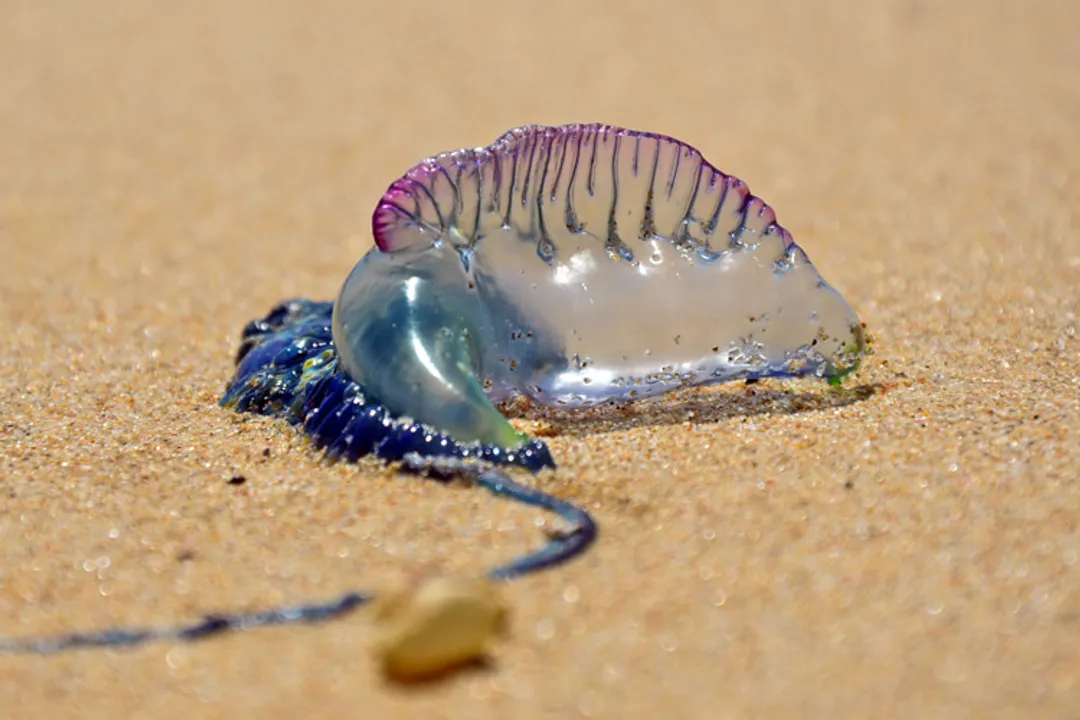
A critical point in treating a Man-o'-War sting is avoiding rinsing with fresh water, which includes tap water. Fresh water creates a hypotonic environment that triggers the microscopic stinging cells, known as nematocysts, which may still be clinging to the skin surface, to discharge any remaining venom payload. This action directly exacerbates the envenomation by injecting more toxin into the affected area, significantly increasing the patient's suffering and the severity of the resulting injury. The correct first step is using seawater to gently clear loose material before chemical deactivation.
Related Questions
How is the initial, searing pain of a Man-o'-War sting frequently described by those who experience it?Why must fresh water be avoided when rinsing an active Man-o'-War sting immediately after contact?Which specific acidic solution is frequently cited as the best agent for deactivating stinging cells after a Man-o'-War encounter?What is the recommended temperature range for hot water immersion used for pain management after a Man-o'-War sting?What technical classification describes the Portuguese Man-o'-War as a colony of specialized, interconnected organisms working as one?What method should be strictly avoided when physically removing Man-o'-War tentacles from the skin after deactivation?For how long should vinegar be applied liberally over the affected area to prevent further venom release from remaining nematocysts?What component of the venom is thermally denatured during hot water immersion to reduce lingering pain from a Man-o'-War sting?What is the purpose of the initial gentle rinse using seawater following contact with a Man-o'-War?Which sign of post-sting complication specifically warrants seeking professional medical attention according to monitoring guidelines?