What gentle cleaning method is usually sufficient for clearing surface dirt and debris from minor injuries?
Answer
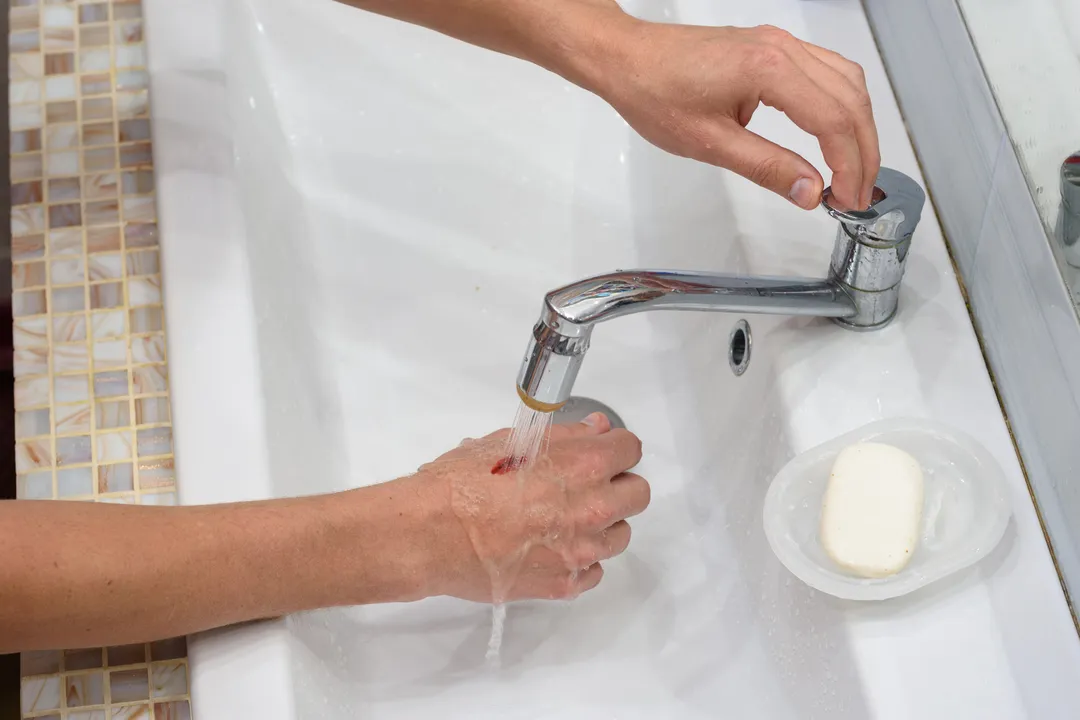
Washing the area gently with mild soap and clean running water
For simple, minor abrasions or cuts where debris is primarily surface-level, modern protocols recommend adhering to the gentlest cleaning methodology possible to support rapid healing. The current standard emphasizes mechanical cleaning, which involves manually removing dirt without chemical interference. This is best achieved by washing the injured area cautiously using a mild, gentle soap, followed by thorough rinsing under clean, running water. This approach effectively clears away superficial contaminants while leaving the underlying cellular structures intact and ready to begin repair.
Related Questions
What enzyme is responsible for breaking down hydrogen peroxide into water and oxygen gas upon contact?Which specific cells vital for wound repair are destroyed by the indiscriminate action of topical hydrogen peroxide?What essential role do fibroblasts play in the process of closing an open wound?What is the preferred cleaning agent recommended for irrigating a minor wound to flush out debris?Why are containers for hydrogen peroxide typically colored amber or brown?What severe internal complication can result from the rapid oxygen release caused by ingesting 3% hydrogen peroxide?What is the consequence of using hydrogen peroxide on an open wound regarding the healing timeline?What common household cleaning task is hydrogen peroxide suitable for, given its role as an oxidizer?What gentle cleaning method is usually sufficient for clearing surface dirt and debris from minor injuries?Why does the visible effervescence of hydrogen peroxide often mislead users regarding its effectiveness on a wound?