What enzyme is responsible for breaking down hydrogen peroxide into water and oxygen gas upon contact?
Answer
Catalase enzyme
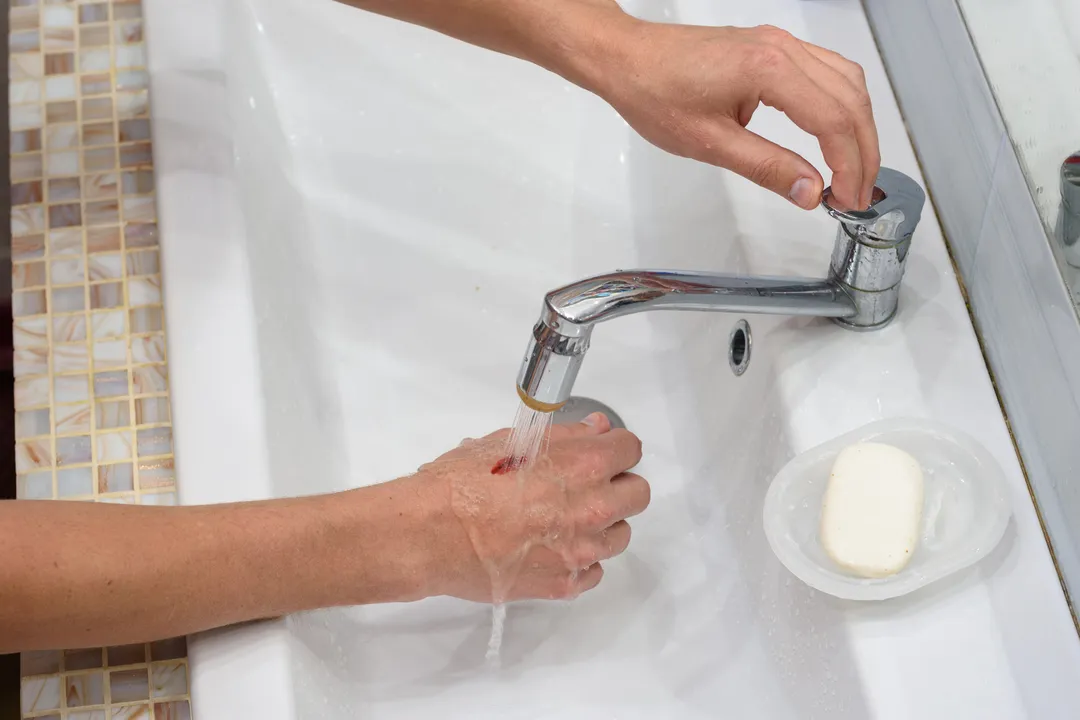
The bubbling and foaming observed when hydrogen peroxide is applied to organic matter, such as blood or tissue debris in a wound, is directly caused by the catalase enzyme. This enzyme is present in both the hydrogen peroxide compound itself and in the organic material present in the wound. Catalase facilitates a decomposition reaction, rapidly breaking down the hydrogen peroxide ($ ext{H}_2 ext{O}_2$) molecule into harmless components: water ($ ext{H}_2 ext{O}$) and oxygen gas ($ ext{O}_2$). This effervescence was historically misinterpreted as effective pathogen destruction, but it is simply the visible sign of this chemical breakdown occurring.
Related Questions
What enzyme is responsible for breaking down hydrogen peroxide into water and oxygen gas upon contact?Which specific cells vital for wound repair are destroyed by the indiscriminate action of topical hydrogen peroxide?What essential role do fibroblasts play in the process of closing an open wound?What is the preferred cleaning agent recommended for irrigating a minor wound to flush out debris?Why are containers for hydrogen peroxide typically colored amber or brown?What severe internal complication can result from the rapid oxygen release caused by ingesting 3% hydrogen peroxide?What is the consequence of using hydrogen peroxide on an open wound regarding the healing timeline?What common household cleaning task is hydrogen peroxide suitable for, given its role as an oxidizer?What gentle cleaning method is usually sufficient for clearing surface dirt and debris from minor injuries?Why does the visible effervescence of hydrogen peroxide often mislead users regarding its effectiveness on a wound?