Who first used fizzy water to stay healthy?
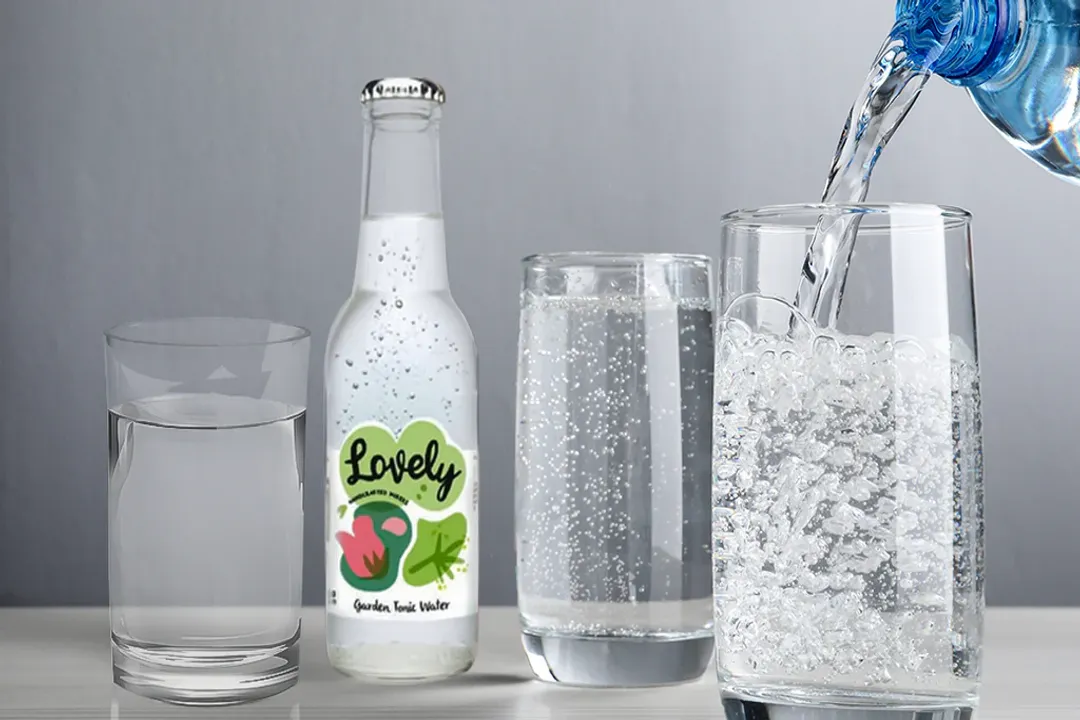
The quest to bottle the benefits of natural springs—those effervescent waters reputed for their healing qualities—is the true origin story of fizzy water, long before it became a simple thirst quencher or mixer. The desire wasn't initially for a novel beverage but for a reproducible medicine or health tonic. [7] For centuries, people traveled to natural mineral springs, believing the dissolved gases and minerals provided therapeutic relief, especially for digestive ailments. [2][7] The ability to create this "fixed air" artificially was a direct attempt to capture and democratize those perceived health benefits. [7]
# The Inventor's Gas
The pivotal moment in making carbonated water accessible came not from a physician seeking a cure, but from a scientist keenly interested in gases. That figure is widely recognized as Joseph Priestley, an English chemist and theologian. [1][5] Around the year 1767, Priestley was experimenting with fixed air, which we now know as carbon dioxide (). [1][3] He achieved his breakthrough in Leeds, England, by placing a kettle of water over a beer vat at the Stone Brewery. [1] The fermenting beer released , and Priestley ingeniously suspended a bowl of water above the brew, capturing the gas that rose into it. [1] He then used this process to "infuse" ordinary water with the fixed air. [1]
Priestley's primary focus, at this stage, was purely scientific discovery and capturing the gas, rather than immediate commercialization for public health. [1][5] His work provided the method for carbonation, which others would later adapt for wellness applications. [1]
# Emulating Nature
While Priestley discovered the how, the commercialization rooted in the why—health—came slightly later. The inspiration was undeniably the naturally carbonated mineral springs. [2][7] Before artificial creation, these springs were the only source of bubbly water, and their consumption was entirely therapeutic. [7]
A key development occurred in 1781, when Dr. Jacob Wall patented a method for manufacturing carbonated water. [2] However, the person who truly took this method and turned it into a lasting enterprise was Johann Jacob Schweppe. [2] Schweppe, a watchmaker living in Geneva, developed his own commercially viable process for creating carbonated water in 1783. [2][3] He soon established a factory in Geneva dedicated to its production. [3]
It is Schweppe's commercial venture that marks the transition from a laboratory curiosity or a single patented method to a product marketed with health in mind. [3] Early carbonated water, sometimes called "soda water" or mimicking the popular "seltzer" from German springs, was often sold by apothecaries and chemists specifically for medicinal use. [3][9] This was a direct substitution for traveling to a spa town; the manufactured product brought the spa experience—and its reputed curative effects—to the consumer's home. [7]
# Medicinal Beginnings
The initial market for manufactured fizzy water was steeped in the prevailing medical understanding of the time. These early versions weren't just plain water mixed with ; they were often formulated to imitate specific mineral compositions found in famous European springs. [7] This explains why the early names often referenced mineral sources, like Seltzer water (named after the German town of Selters). [9]
When considering who first used it for health, the answer points toward the earliest consumers purchasing Schweppe's product or similar early attempts, believing they were ingesting a medically sound preparation derived from natural waters. [3][7] The belief was that the artificial effervescence stimulated the stomach, aiding digestion and curing various ailments. [7] It was a form of early functional beverage marketing, where the perceived physiological effect was the main selling point. [6]
An interesting point emerges when comparing Priestley's scientific pursuit with Schweppe's commercial one. Priestley was concerned with the science of gas absorption, seeing it as a chemical curiosity. [1] Schweppe, on the other hand, was focused on the experience and replicability of natural effervescence for the consumer market. [2] The health component provided the necessary bridge for commercial adoption: Priestley provided the technology, and the long-standing tradition of curative springs provided the justification for selling it. [7] Had Priestley’s gas not been linked to natural health springs, the process might have remained an obscure laboratory procedure for much longer.

# The Rise of Seltzer
The concept of artificial mineral water took firm root in America, largely through the efforts of individuals like Jacob Schweppe’s descendant, Charles H. Schweppe, who brought the product to the United States. [8] Another important figure in the American context was Elias Howe, an inventor who, in the 1830s, developed a device to infuse water with for home use, furthering the idea that this effervescence was a staple for daily wellness, not just a rare spa treatment. [8]
The term seltzer became a common American shorthand for carbonated water, despite the manufacturing process being artificial. [9] This widespread adoption shows that the belief in its health properties had successfully transferred from the natural spring site to the everyday drink. [9] The carbonation itself—the bubbles—became synonymous with digestive aid or refreshment.
We can chart the transition of intent:
| Era | Primary Source/Method | Primary Motivation for Use | Key Figure |
|---|---|---|---|
| Pre-1767 | Natural Mineral Springs | Therapeutic cure for ailments; Balneotherapy | None specific (General public) [2][7] |
| c. 1767 | Laboratory Infusion | Scientific investigation of | Joseph Priestley [1] |
| Post-1783 | Commercial Carbonation | Replicating medicinal spring water; Commercial sale | Johann Jacob Schweppe [2][3] |
This transition highlights a subtle shift in health practice: from relying on unique geological locations to seeking manufactured standardization. [7] In the 19th century, having carbonated water available at home or in local pharmacies was seen as proactive self-care, similar to how we might view certain supplements today.
# From Tonic to Thirst Quencher
The move from a perceived health tonic to a common beverage happened as the technology became cheaper and more accessible, and as flavors were introduced. [6] Once the novelty of the "fixed air" wore off, and as industrial processes reduced the cost, manufacturers began adding flavorings—often fruit extracts or sweeteners—to make the experience more palatable for general consumption. [6]
This introduction of flavor is the point where the primary use diverges significantly from the original health motivation. When sugar and syrups were added to the carbonated base, the product transitioned into what would become the modern soft drink industry. [6] The initial medicinal purpose, rooted in the belief that the itself was beneficial, became secondary to the taste experience. [6][7]
However, the legacy of the health connection remains. Today, many consumers consciously choose plain sparkling water, intentionally stripping away the flavorings and sweeteners that accompanied the product’s evolution into soda, seeking a return to the purity of Schweppe's early manufactured tonic or Priestley's infused water. [1] They are implicitly re-engaging with the historical idea that the bubbles themselves offer a mild digestive benefit, even if that claim is now subject to more scientific scrutiny than in the 18th century.
A practical consideration for modern consumers looking to connect with this historical health trend is understanding the mineral content, or lack thereof. Early manufactured waters aimed to mimic mineral springs like those at Selters, which naturally contained sodium, potassium, and magnesium. [9] Modern plain seltzers, unless specifically labeled as mineral water or fortified, are essentially just water and added , sometimes with added sodium bicarbonate for texture or taste. [9] If someone is seeking the purported mineral benefits of the original waters, simply drinking unflavored, unfortified seltzer might not replicate the full historical experience; they would need to seek out naturally sourced mineral water or specifically enhanced artificial products. The simple act of choosing unflavored carbonated water over sweetened soda, however, is an indirect nod to the original health-focused user who valued the effervescence itself over other additions.

# The Modern Echo
The earliest adopters who actively sought out fizzy water for health were those who could access or afford Schweppe’s product in the late 18th and early 19th centuries, driven by the established faith in European mineral springs. [2][3] They were the first consumers of manufactured wellness water. The scientific knowledge was provided by Priestley, but the application toward personal health maintenance belonged to the first generation who bought the bottled version of the spring cure. [1][7]
This persistent association between carbonation and digestion is fascinating because, fundamentally, plain carbonated water is largely neutral in its effect on hydration compared to still water, though the bubbles can provide a feeling of satiety. [6] Yet, the historical precedent is so strong that the mild stimulation of the gastric system caused by the gas is often perceived as beneficial, a form of psychosomatic or mild physical comfort passed down through generations of consumption habits. [7] The sheer longevity of this practice, moving from spa attendees to Schweppe's factory patrons to today's health-conscious seltzer drinkers, confirms that the idea of fizzy water as a health aid has been far more enduring than any single ingredient it might have contained. [8]
For anyone today wanting to experiment with the historical approach to using carbonated water for perceived digestive support, a simple technique is to consume a small glass (perhaps 4 to 6 ounces) of unflavored sparkling water about 15 to 20 minutes before a meal. [7] This mimics the traditional European practice of drinking the waters slightly diluted before eating, aiming to "prime" the stomach. It should be done cautiously, especially if one has known sensitivities, as the carbonic acid can sometimes cause temporary bloating in susceptible individuals, a side effect that practitioners in the 19th century likely managed by adjusting dosage or mineral composition. This small, low-stakes experimentation allows a modern reader to participate in the historical ritual without committing to the high sugar content that later became associated with the beverage.
Related Questions
#Citations
Fizzy Water | Science History Institute
about the invention of sparkling water by Joseph Priestley - Sparkel
Carbonated water - Wikipedia
Joseph Priestley's accidental invention of soda water in 1767 at a ...
TIL that sparkling water was invented by Joseph Priestly, who also ...
The Beverage That Doesn't Stay Still: The History of the Carbonated ...
Fizzy Logic: The History and Science of Carbonated Drinks
The History of Sparkling Water - Borg & Overström
A Brief History of Seltzer - COR - Kashruth Council of Canada