What material components make up the complex eggshells of Soil-Transmitted Helminths?
Answer
Proteins, chitinous material, and lipids.
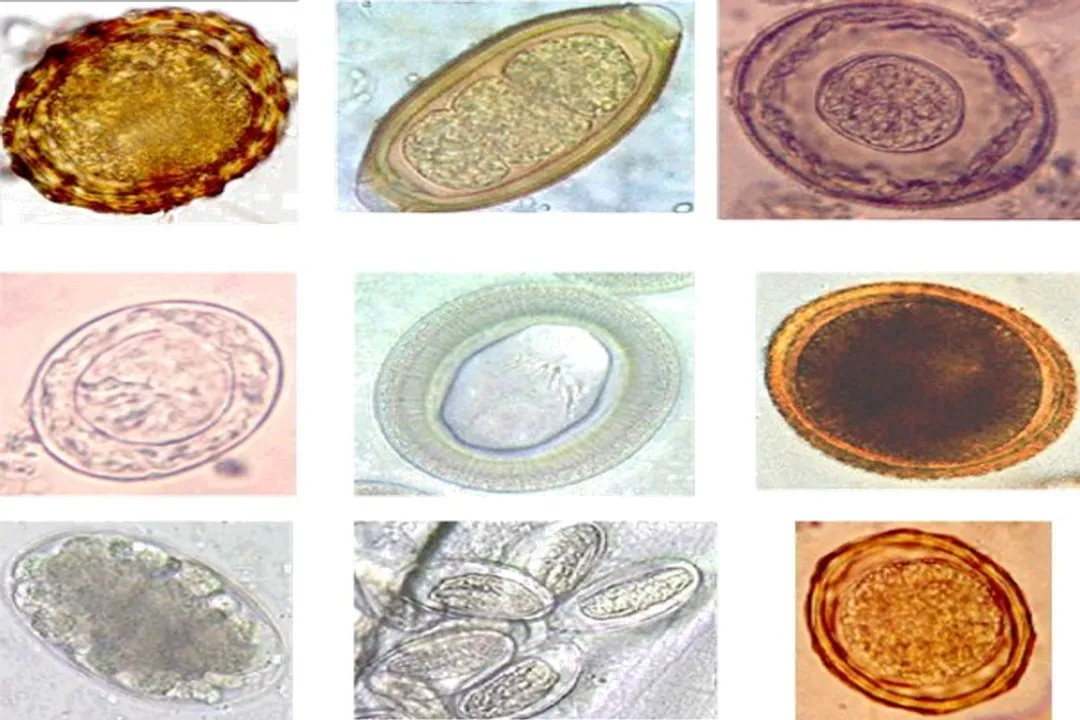
The remarkable persistence of many parasitic worms in the environment is directly attributable to the structural integrity of their eggs, which serve as the primary mode of transmission for Soil-Transmitted Helminths (STHs). The eggshells are described as complex structures, not single-layered entities, built from three primary material classes: proteins, chitinous material, and lipids. This composite makeup grants them substantial resilience, enabling survival against environmental stressors such as desiccation (drying out), exposure to strong acids or bases, and resistance to common water treatment disinfectants like chlorine, UV light, or ozone.
Related Questions
What peculiar reproductive capability distinguishes Strongyloides species from Ascaris and Whipworm?How do hookworm larvae infecting hosts compare to Ascaris eggs in transmission entry?What specific laboratory test is employed to capture eggs from Pinworms?What is the primary WHO strategy for controlling widespread Soil-Transmitted Helminths (STHs)?Where do Schistosomes, a type of fluke, notably reside within the human host?Following swallowing of Ascaris lumbricoides eggs, what path do the larvae take before reaching intestinal maturity?What material components make up the complex eggshells of Soil-Transmitted Helminths?Which anthelmintic is recommended specifically for Strongyloides stercoralis infection?What condition results if Taenia larvae develop into cysts in non-intestinal tissues like the liver or brain?What distinct structural characteristic differentiates Nematoda (roundworms) from Platyhelminthes (flatworms)?