What distinct structural characteristic differentiates Nematoda (roundworms) from Platyhelminthes (flatworms)?
Answer
Nematodes have cylindrical bodies.
The classification of helminths relies heavily on fundamental body structure differences observed microscopically. Roundworms, belonging to the phylum Nematoda, are structurally distinguished by having cylindrical bodies. Conversely, members of the phylum Platyhelminthes, which includes tapeworms and flukes, are characterized by their flattened body structure. This difference in geometry—cylindrical versus flat—is a key feature used to separate these major groups of parasitic worms, contrasting them sharply against other categories like the ringed or segmented worms (Annelida).
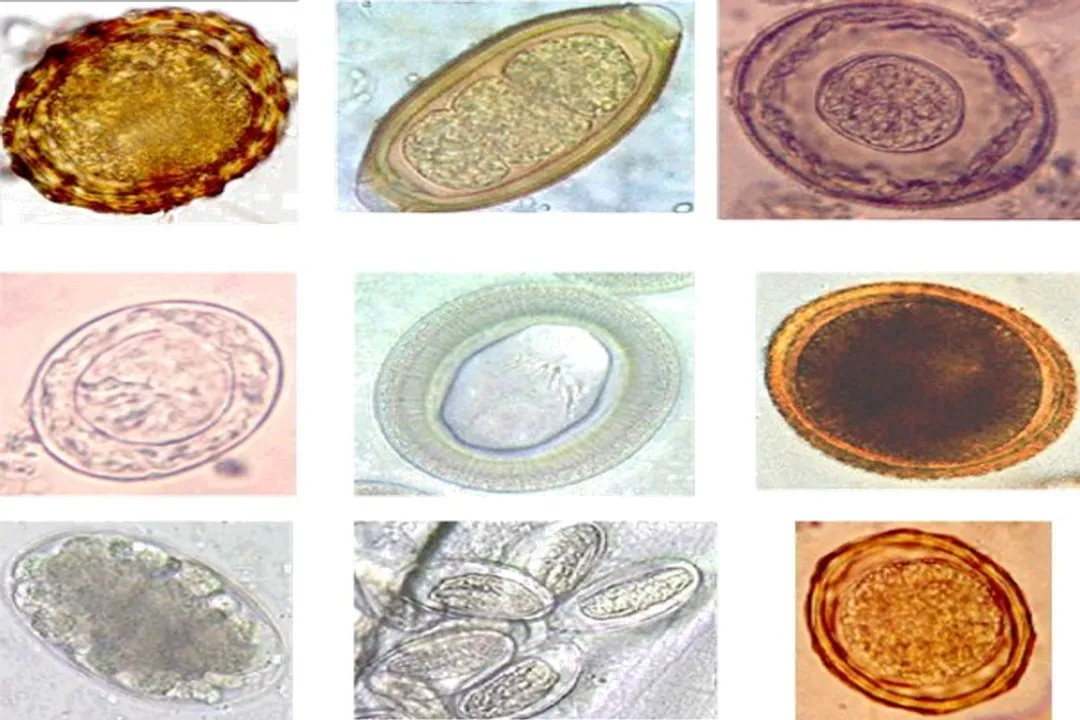
Related Questions
What peculiar reproductive capability distinguishes Strongyloides species from Ascaris and Whipworm?How do hookworm larvae infecting hosts compare to Ascaris eggs in transmission entry?What specific laboratory test is employed to capture eggs from Pinworms?What is the primary WHO strategy for controlling widespread Soil-Transmitted Helminths (STHs)?Where do Schistosomes, a type of fluke, notably reside within the human host?Following swallowing of Ascaris lumbricoides eggs, what path do the larvae take before reaching intestinal maturity?What material components make up the complex eggshells of Soil-Transmitted Helminths?Which anthelmintic is recommended specifically for Strongyloides stercoralis infection?What condition results if Taenia larvae develop into cysts in non-intestinal tissues like the liver or brain?What distinct structural characteristic differentiates Nematoda (roundworms) from Platyhelminthes (flatworms)?