What imaging technology, adopted in the 1970s and 1980s, enabled doctors to shape radiation beams to fit the exact three-dimensional contours of a tumor?
Answer
Computer tomography (CT)
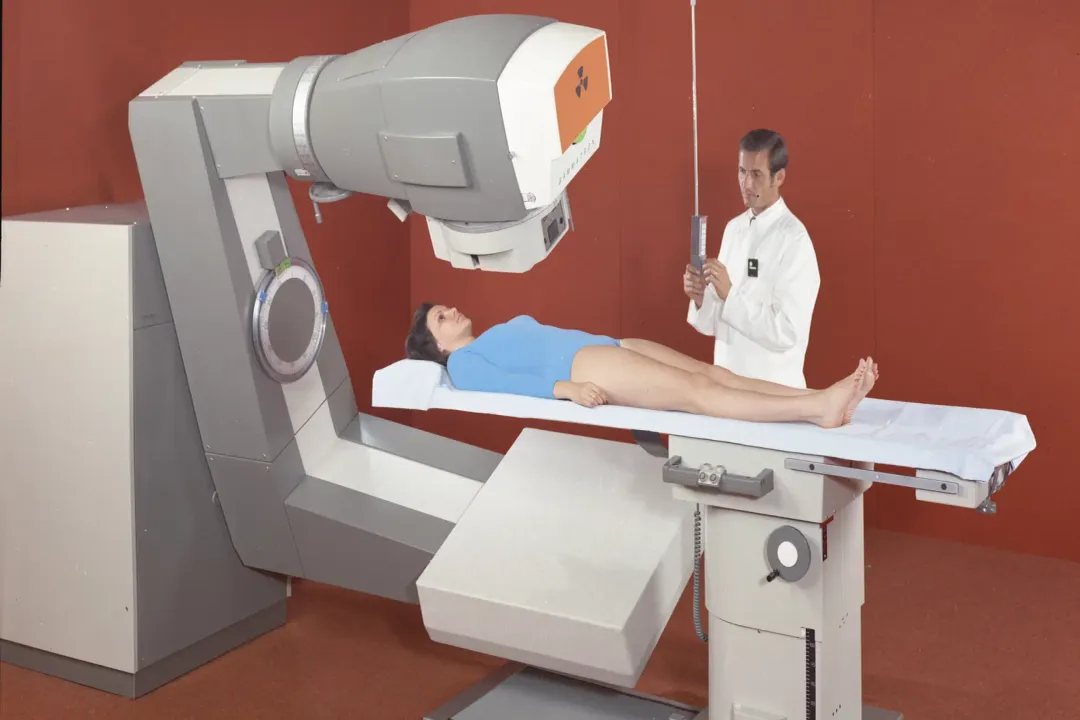
The advent of computer tomography (CT) in the 1970s and 1980s marked a transformation in radiation oncology. Before this, doctors relied on two-dimensional X-ray films and had to estimate tumor positions based on skeletal landmarks, which was often imprecise. CT technology allowed for the visualization of tumors in three dimensions, facilitating the precise shaping of radiation beams to match the tumor's contours, thereby sparing critical healthy organs such as the heart, lungs, and spinal cord.
Related Questions
What specific phenomenon did Wilhelm Conrad Roentgen observe in his laboratory in late 1895 while experimenting with cathode rays?Which radioactive elements were isolated by Marie and Pierre Curie, marking a significant development in physics and chemistry?Who is recognized for performing one of the first cancer treatments using X-rays on a patient with a breast carcinoma?What medical term described the severe skin reaction that early practitioners used as a signal that a cancer patient had received a sufficient radiation dose?What radical strategy did Henri Coutard introduce in the 1920s to prevent damage to healthy tissues during radiation therapy?What technological advancement in the 1950s introduced the megavoltage era, allowing for the treatment of internal cancers such as prostate and lung tumors?What is a primary safety advantage of the linear accelerator (LINAC) compared to radioactive isotope sources like Cobalt-60?Which method involves the internal application of radiation by placing small capsules of radioactive material directly into or near a tumor?Who is credited with discovering the concept of radioactivity in 1896 while studying uranium salts?What imaging technology, adopted in the 1970s and 1980s, enabled doctors to shape radiation beams to fit the exact three-dimensional contours of a tumor?