Who should not eat jicama?
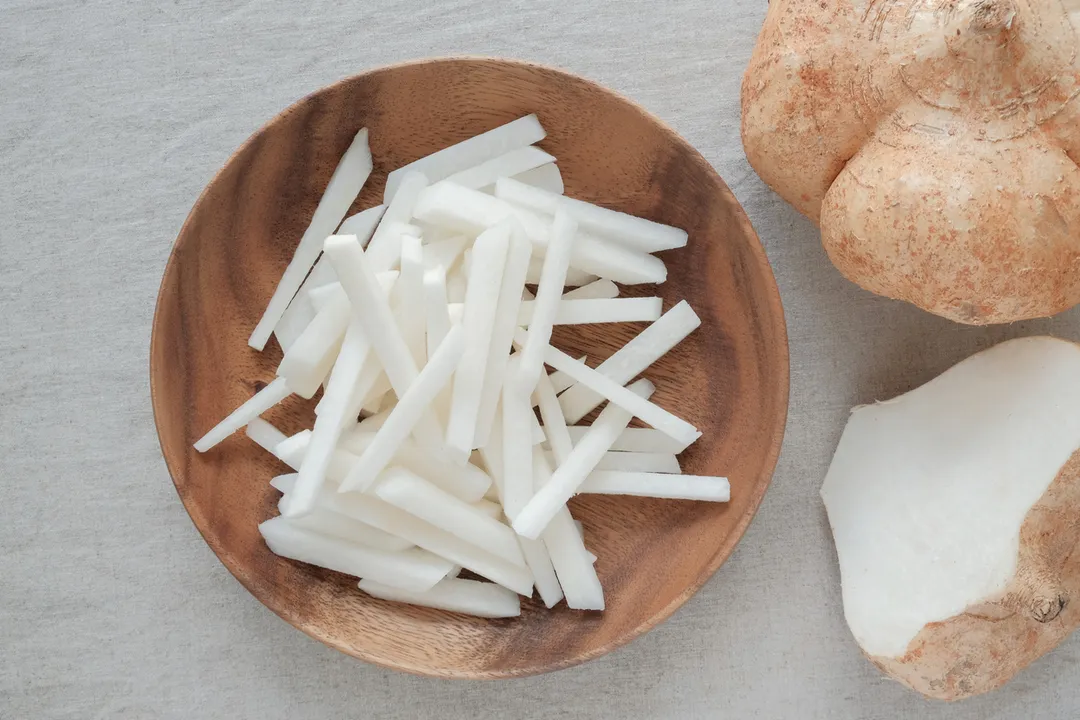
Jicama, often called a Mexican turnip or yam bean, is a refreshing, crisp root vegetable that looks like a brown-skinned bulb but hides a juicy, starchy interior. [1][4] Many people enjoy it raw, sliced into sticks with lime and chili, or tossed into stir-fries for its satisfying crunch. While it offers impressive nutritional value, including plenty of fiber and vitamin C, it is not a food that fits every situation or every person. [2][4] The most critical factor regarding who should avoid it isn't based on a medical condition, but rather on which part of the plant you might be tempted to eat.
# Toxic Parts
The most significant warning regarding jicama is not about the root itself, but the rest of the plant. While the fleshy, underground tuber is perfectly edible, the stems, leaves, and seeds of the jicama plant are poisonous. [1][6] These parts contain a natural compound called rotenone. [1][4] Rotenone functions as a natural pesticide, protecting the plant from insects and other pests, but it is harmful to humans. [9]
Ingesting the aerial parts of the jicama plant—the parts that grow above the ground—can lead to severe toxicity. [6] You should never consume the pods, seeds, stems, or leaves, whether raw or cooked. If you are growing jicama in your garden, ensure that children and pets do not have access to these parts of the plant. The root is the only portion that belongs in your kitchen. [4][9] If you purchase jicama from a grocery store, you will typically find it stripped of all these toxic parts, but it is always wise to inspect your produce to ensure no stray stems or leaves remain attached.
# Digestive Sensitivity
For those who do eat the root, jicama is generally considered safe and healthy. [2][4] However, it is an extremely high-fiber food. Jicama is rich in inulin, a type of prebiotic fiber that feeds the beneficial bacteria in your gut. [2][5] While this is excellent for long-term digestive health, it can cause immediate discomfort for certain individuals.
If you are not accustomed to a high-fiber diet, introducing a large serving of jicama suddenly may result in bloating, gas, or stomach cramping. [2] This happens because the gut bacteria ferment the inulin, creating gas as a byproduct. Individuals with Irritable Bowel Syndrome (IBS) or those prone to digestive issues might find that eating large quantities of jicama makes their symptoms worse.
To determine if jicama is right for your digestive system, consider a slow introduction. Start with a small amount—perhaps a few slices—and monitor how your body reacts. If you notice persistent gas or bloating, you might need to limit your intake or ensure you drink plenty of water alongside the vegetable to help the fiber move through your system.
# Allergic Potential
While food allergies to jicama are quite rare, they are not impossible. As with any food, there is a small chance of developing an adverse reaction. [7] If you have a history of severe food allergies or specifically an allergy to legumes—since jicama is a member of the bean family—you should exercise caution. [4]
Symptoms of an allergic reaction can include itching, hives, swelling of the lips or tongue, or digestive distress. If you experience these symptoms after eating jicama, discontinue use immediately and consult a healthcare provider. Because it is not a common allergen, people often do not suspect jicama, so keeping a food diary can be a helpful way to track if this vegetable is the culprit behind any unexpected symptoms.
# Dietary Context
Often, people ask if jicama is off-limits due to medical conditions, such as kidney disease or diabetes. In reality, jicama is frequently recommended for these groups. For individuals on a kidney-friendly diet, jicama is an excellent, low-potassium choice that can add much-needed texture to meals. [8] Similarly, its low glycemic index and high fiber content make it a stable option for those managing blood sugar, as it does not cause rapid spikes in glucose levels. [2][3]
However, the "who should not eat" list is primarily limited to those consuming the non-root parts of the plant. If you are worried about the carbohydrate content because of a strict ketogenic diet, you should know that jicama contains carbohydrates, though they are primarily from fiber. [2] While it is not "restricted" for keto, it is something to account for in your daily carb count if you are strictly monitoring intake.
# Preparation Checklist
To ensure you are safely preparing and consuming jicama, follow these steps. Proper preparation minimizes the risk of consuming debris or tough, inedible parts and maximizes the pleasant texture.
- Inspect the Surface: Ensure the skin is firm and free of soft spots or deep gashes. Avoid jicama that has cracked skin or feels spongy, as these may indicate the root is past its prime.
- Peel Thoroughly: The skin of the jicama is thick, tough, and fibrous. It is not meant to be eaten. Use a sharp vegetable peeler or a paring knife to remove the brown, papery skin completely.
- Trim the Ends: Cut off both the top and bottom ends where the root was attached to the stem. Ensure there are no leftover fibrous bits or woody stems attached.
- Rinse: Once peeled and chopped, give the raw pieces a quick rinse under cold water to remove any soil or residue from the skin that may have been transferred during the cutting process.
- Storage: Once cut, jicama oxidizes and can discolor. Store it in an airtight container in the refrigerator. It remains fresh for several days, but if it starts to feel slimy or develops an off-odor, discard it.
# Fiber Comparison Table
Understanding why jicama causes gas in some people requires looking at how it compares to other common vegetables. The following table illustrates the potential for gas production based on fiber composition.
| Vegetable | Fiber Type | Gas Potential | Note |
|---|---|---|---|
| Jicama | Inulin (Prebiotic) | Moderate | May cause bloating in sensitive individuals |
| Carrots | Pectin/Cellulose | Low | Generally very easy to digest |
| Broccoli | Raffinose | High | Often triggers significant gas in most people |
| Cucumber | Cellulose | Low | High water content, very gentle on the stomach |
This comparison shows that while jicama is not as high-gas as cruciferous vegetables like broccoli, it is not as inert as cucumber. If you find you cannot handle jicama, it is likely the inulin content that is the specific irritant for your particular gut microbiome.
# Managing Consumption
If you love the taste of jicama but find that it upsets your stomach, you do not necessarily have to remove it from your diet forever. Cooking can sometimes change the structure of the vegetable and make it easier to process. While many people prefer the raw, crisp version, steaming or roasting jicama softens the fibers.
When you cook jicama, the high water content remains, but the cell walls break down slightly, which can ease the burden on your digestive tract. Try stir-frying thin matchsticks of jicama with other vegetables like snap peas and carrots. The combination of heat and additional vegetables can spread out the fiber load, making it more manageable for your stomach to handle.
Finally, remember that variety is a core component of a healthy diet. Even a healthy vegetable like jicama should not be consumed to the exclusion of others. By rotating your vegetable choices, you ensure you get a broad spectrum of nutrients and avoid putting undue stress on your digestive system from any single source of fiber. If you are ever in doubt about whether a new food is right for your specific health profile, consulting a doctor or a registered dietitian remains the safest path forward.






Related Questions
#Citations
Nutritional Benefits and Potential Risks of Jicama - Everyday Health
Jicama: Nutrition Facts and Benefits
Jicama - A New Veggie for Your Cancer Fighting Diet
What Is Jicama — and Is It Good for You? - Food Revolution Network
Did You Know? While the crunchy, juicy flesh of singkamas (jicama ...
Health Benefits of Jicama, Uses And Its Side Effects - Lybrate
Jicama: A low potassium food for kidney diets | DaVita
Is Jicama root safe to eat every day? - ECHEMI