What happens if you eat too much jicama?

Jicama, a root vegetable often recognized for its crisp, refreshing texture and slightly sweet taste, has become a staple in many kitchens. Known scientifically as Pachyrhizus erosus, this Mexican yam bean provides a unique crunch that makes it a popular alternative to water chestnuts or raw carrots in salads and slaws. [2][4][9] Because it is low in calories and packed with hydration, people often wonder if there are drawbacks to consuming it regularly or in large quantities. While the vegetable is generally considered safe and highly nutritious, there are specific considerations to keep in mind regarding portion sizes and the parts of the plant that should never be consumed. [1][8]
# Nutrient Profile

The primary reason to include jicama in a diet is its impressive nutritional composition. It serves as a good source of fiber, specifically inulin, which acts as a prebiotic. [2][6] Prebiotics are essential for feeding beneficial gut bacteria, which can improve digestion and immunity. [4][9] Additionally, jicama contains significant levels of Vitamin C, a powerful antioxidant that supports immune function and skin health. [6][9]
Beyond these core components, jicama consists of roughly 80 to 90 percent water, contributing to satiety without a heavy calorie load. [2][9] This high water and fiber ratio explains why it feels filling, yet light. Despite these advantages, the specific type of fiber found in jicama—inulin—is a fermentable fiber. [2][6] While this is beneficial for long-term gut health, it can lead to temporary discomfort if an individual suddenly increases their intake significantly. [1][5]
# Digestive Impact

Consuming an excessive amount of jicama can primarily cause gastrointestinal distress. [1][8] Because the root is dense in fiber, a sudden, massive serving can overwhelm the digestive system. [1][5] Symptoms often include bloating, gas, and abdominal cramps. [1] This is common with any high-fiber food; the body needs time to adapt to increased fiber intake. [5]
To mitigate this, it is best to introduce jicama into the diet gradually rather than consuming large portions all at once. [5] For most individuals, moderate consumption—such as a cup or two—does not cause issues. [8] However, those with sensitive stomachs or conditions like irritable bowel syndrome (IBS) may find that they are more prone to these side effects even with smaller amounts, due to the fructans found in the root. [1][2]
| Symptom | Cause | Mitigation |
|---|---|---|
| Bloating | High inulin/fiber content | Increase intake gradually |
| Gas | Fermentation by gut bacteria | Portion control |
| Cramping | Rapid digestive transit | Stay hydrated |

# Toxicity Warning

While the root of the jicama plant is safe and edible, there is a crucial warning regarding the rest of the plant. [1][6] The stems, leaves, and seeds of the jicama plant contain a natural pesticide called rotenone. [1][3] Rotenone is toxic and is not intended for human consumption. [3][6]
Because of the presence of this compound, growers and consumers must ensure that only the edible root makes it to the plate. [6][10] Accidental ingestion of these other parts can lead to serious health complications, as rotenone is harmful to both humans and animals. [3] When purchasing jicama, always ensure it is the tuberous root and that no leaves or seeds remain attached. [6][10] This is not an issue with store-bought jicama, as it is processed specifically for the root, but it is a vital detail for home gardeners. [6]
# Safe Consumption
Eating jicama daily is generally considered safe for most people, provided that the portions are reasonable. [8] Since it acts as a low-calorie, high-nutrient snack, it can be a healthy addition to a daily regimen. [9] The key is balance. Because it is high in fiber, it pairs well with other foods that are easier to digest or foods that balance out the nutrient profile, such as lean proteins or healthy fats. [2][4]
For example, serving jicama with lime juice and chili powder is a traditional preparation that does more than just add flavor. [10] The acidity from the lime juice can sometimes assist with the perception of freshness and might even help break down the crunch, making it feel less heavy on the digestive tract than eating it in large, plain chunks. [10]

# Preparation Tips
To enjoy jicama safely and minimize potential digestive issues, focus on proper preparation. First, always peel the skin entirely. [2][10] The skin is tough, fibrous, and generally unpalatable, which can add unnecessary strain on the digestive system. [10] Once peeled, the white flesh is what you consume. [2][10]
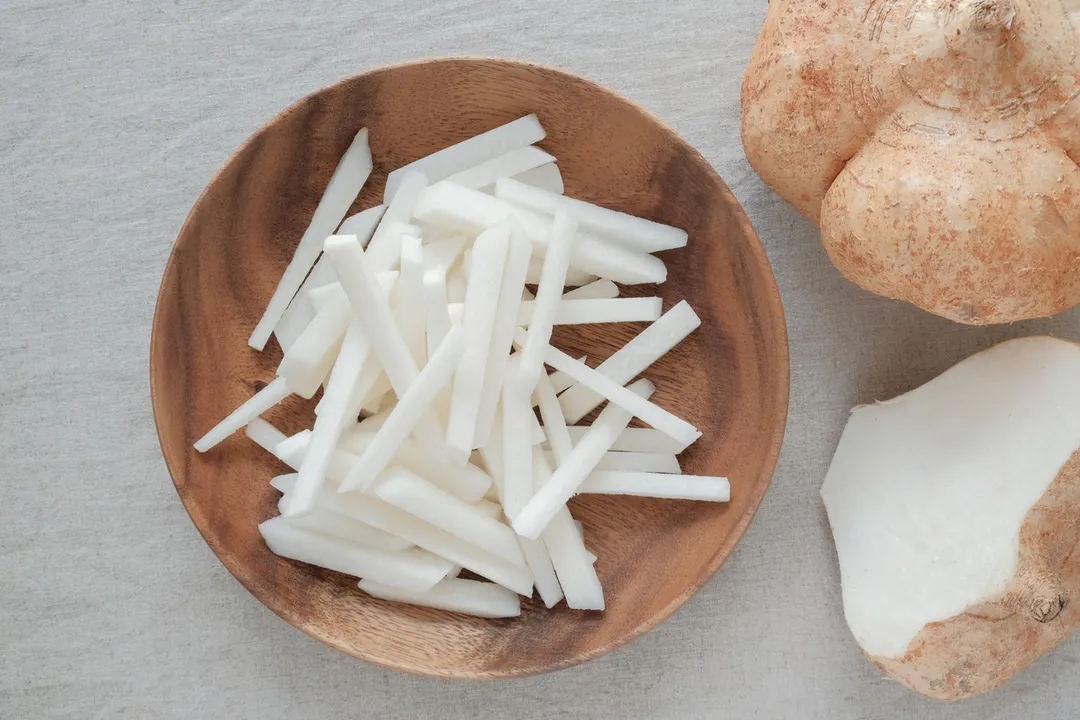
Another strategy to manage the intake of high-fiber foods like jicama involves slicing them into thinner pieces. Cutting jicama into matchsticks or thin shavings instead of large chunks can help the digestive process. Thinner slices increase the surface area, allowing the stomach to break down the fibers more efficiently than it would with large, dense wedges. Furthermore, pairing jicama with a probiotic-rich food, like yogurt or fermented pickles, can balance the prebiotic effect of the inulin, potentially reducing the likelihood of gas.
Ultimately, jicama is a safe and beneficial vegetable that fits well into a healthy diet. The concerns surrounding "too much" consumption are largely related to digestive comfort rather than severe toxicity, provided the roots are the only parts consumed. By starting with smaller servings and paying attention to how the body responds, most people can enjoy the benefits of this crunchy, nutrient-dense root without any negative side effects.
Related Questions
#Citations
Nutritional Benefits and Potential Risks of Jicama - Everyday Health
Oral Allergy Syndrome Associated with Jicama - PMC - NIH
Jicama: Nutrition Facts and Benefits
Health Benefits of Jicama, Uses And Its Side Effects - Lybrate
What Is Jicama — and Is It Good for You? - Food Revolution Network
Jicama's health benefits and toxicity in mesoamerican civilizations
Is Jicama root safe to eat every day? - ECHEMI
8 Health and Nutrition Benefits of Jicama - Healthline
What is Jicama & How to Use It - Savor the Southwest