What are the benefits of Jaipur Foot?

Restoring mobility to individuals who have lost limbs is often viewed through the lens of expensive, high-tech engineering. However, the Jaipur Foot provides a striking alternative, demonstrating that effective medical solutions can arise from simple, locally sourced materials and indigenous design expertise. [2][3] This prosthetic limb, which has changed the lives of hundreds of thousands of people, highlights how design, when matched to the specific environmental and cultural needs of its users, can provide results that outperform more costly medical devices. [6][8]
# Historical Origins
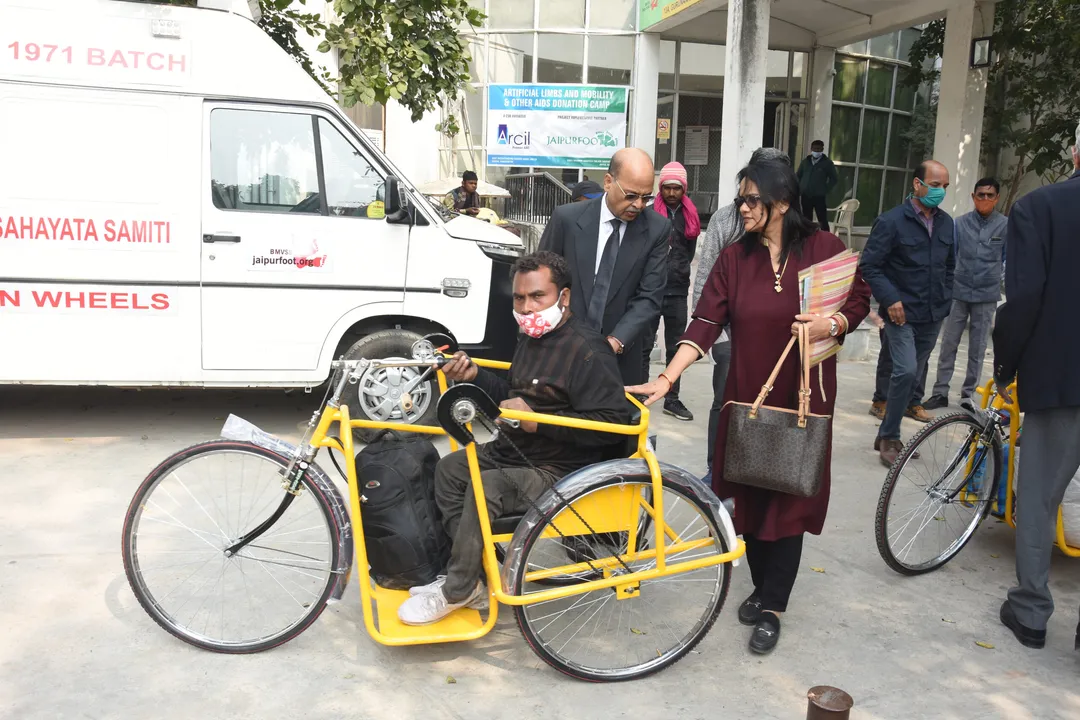
The story of the Jaipur Foot begins in the late 1960s with a collaboration between an orthopedic surgeon, Dr. P.K. Sethi, and a sculptor named Ram Chandra Sharma. [2][3] While orthopedists brought medical training, Sharma provided the artisan’s understanding of material flexibility and aesthetics. They sought a solution that allowed for the natural functions of a foot, such as sitting cross-legged or walking on uneven, unpaved surfaces, which were common in rural India. [3]
Before this innovation, many prosthetic options were modeled after designs from industrialized nations. These designs were meant for flat, indoor surfaces and paved roads. In rural environments, these prosthetics often caused discomfort or broke down quickly. The team in Jaipur worked by trial and error, experimenting with vulcanized rubber and other accessible components to create a device that mirrored the actual mechanics of a human foot rather than just its shape. [2]
# Design Principles
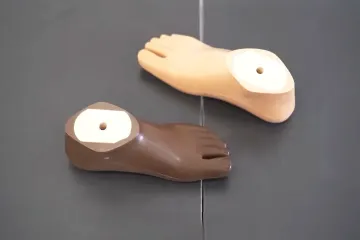
The primary technical benefit of the Jaipur Foot is its focus on functional mechanics over cosmetic perfection. It is constructed from a combination of vulcanized rubber, wood, and aluminum. [2][8] This specific material composition allows for a high degree of rotation and flexibility, which is essential for movement on rugged, rural terrain. [9]
Unlike many sophisticated prosthetics that rely on complex joints which can seize up in sandy or wet conditions, the Jaipur Foot is surprisingly resilient. It provides a multi-axial ankle movement that mimics the natural gait, allowing the user to navigate steep slopes and muddy ground without fearing that the prosthetic will detach or snap. [3] The material is also waterproof, meaning it does not degrade during the monsoons or when working in agricultural fields, a massive advantage for farmers and laborers. [8][9]
# Terrain Adaptability
A defining feature of this prosthetic is its ability to be used barefoot. In many parts of the world, wearing shoes indoors or in specific social settings is uncommon or impractical. Traditional artificial limbs usually require a permanent shoe, making them awkward in households where footwear is removed at the door. [3] The Jaipur Foot is designed to look and function like a natural foot, allowing users to move about their homes and communities without the social awkwardness or physical inconvenience of needing a permanent covering. [9]
The following table compares the typical environmental utility of the Jaipur Foot against high-end, mass-produced prosthetics often found in developed medical systems.
| Feature | Jaipur Foot | High-End Prosthetics |
|---|---|---|
| Primary Terrain | Mud, sand, agricultural land | Paved roads, carpet, floors |
| Water Resistance | High (Rubber construction) | Variable (Electronic components) |
| Maintenance | Low (DIY repair possible) | High (Requires professional visits) |
| Footwear | Barefoot or simple sandal | Specific fitted shoes |
| Cost | Negligible/Donated | Expensive/High overhead |
This comparison highlights that the "best" device is entirely context-dependent. The high-end device offers advanced capabilities like micro-processing for gait, but the Jaipur Foot offers high-utility for the realities of daily life in developing regions. [9]
# Economic Efficiency
The affordability of the Jaipur Foot is one of its most cited advantages. By utilizing locally available materials and simplified manufacturing techniques, the cost per unit is a fraction of western-market alternatives. [5][9] This creates a model where organizations can conduct mass fitting camps, providing hundreds of people with new limbs in a matter of days. [1][6]
The low cost does not stem from "cheap" components in the sense of low quality, but rather from the removal of unnecessary overhead. There is no complex manufacturing facility needed to produce the core of the foot; it relies on craftsmanship. This financial accessibility removes the barrier to entry for patients who would otherwise remain immobile because they cannot afford the high prices associated with advanced medical care. [8][9]

# Social Reintegration
Physical mobility is often the bridge to economic independence. When an individual who has lost a limb is unable to move, they often struggle to hold a job or participate in family life. The Jaipur Foot is not just a medical object; it is an economic tool. [7] By enabling people to return to their farming or manual labor, the device helps restore their status as providers. [8]
In many instances, the stigma attached to limb loss is severe. When an individual receives a Jaipur Foot and can walk with a near-natural gait, the visual marker of their disability is reduced. [8] This helps in social settings where mobility is tied to the ability to participate in community rituals or work. The psychological impact of regaining the ability to stand, walk, and work is frequently reported as equal in value to the physical benefits of the device. [7]
# Maintenance Reality
Prosthetics are mechanical devices that naturally degrade. In remote areas, having a device that requires a specialized technician to fix a simple alignment issue is a major liability. If a high-end, complex prosthetic breaks, the user may be stuck for weeks or months waiting for a replacement part. [9]
The Jaipur Foot follows a different logic. Because the materials are relatively standard—rubber and wood—local cobblers or craftsmen can often assist with basic repairs if the device wears down. [2][3] This creates a sustainable system of care that does not leave the patient dependent on a central, distant supply chain. The device empowers the user to manage the upkeep of their own limb, which is a significant factor in long-term satisfaction. [8]

# Limitations and Evolution
While the design is effective, it is not without limitations. It is heavier than carbon fiber alternatives, and for those who require high-speed movement or specialized sports performance, it lacks the energy-return properties of advanced materials. [4] Researchers continue to look at ways to integrate modern, lightweight composites into the Jaipur Foot design to reduce weight without sacrificing the rugged, low-maintenance characteristics that make it so effective. [8]
There is also the matter of comfort for long-term wear. Because the socket interface—the part where the limb meets the prosthetic—is as important as the foot itself, many programs now focus on improving the molding of the residual limb. The future of this technology involves combining the durable, versatile "foot" with better-fitting, more comfortable socket technology to ensure that users can wear their prostheses for longer periods during the day without irritation. [8]
# Global Scalability
The model of the Jaipur Foot has served as a blueprint for other initiatives worldwide. The concept of "frugal innovation"—creating a high-impact solution at the lowest possible cost—is now a recognized approach in global health. [6] When a design is shared openly and relies on local manufacturing, it can be adapted to other cultures.
This approach prevents dependency. Instead of shipping thousands of pre-made limbs from one country to another, local health organizations can set up workshops to manufacture the feet themselves. This creates local jobs and ensures that the design can be modified to fit the specific needs of the local population, whether that means adjusting for different types of terrain or accounting for different standard sizes of feet. [1]
# Expert Observations
One distinct advantage of the Jaipur Foot, often overlooked in clinical literature, is the psychological benefit of the "artisan collaboration" model. When patients receive a device, they are not just receiving a mass-produced product from a factory; they are receiving something that has been handcrafted. This human element of the fitting process creates a stronger connection between the provider and the user. The interaction between the technician and the amputee is personal, which helps in the initial training phase where the patient must learn to trust the new limb.
Furthermore, the design's simplicity encourages users to push the limits of what their prosthetic can do. When a device is perceived as "delicate" or "expensive," users are often afraid to use it in water, mud, or on rough terrain for fear of damage. Because the Jaipur Foot is marketed and perceived as rugged, users are more likely to engage in a wider range of physical activities. This leads to better physical health outcomes because the user is more active, improving their cardiovascular fitness and muscle tone in the remaining limb, which is vital for long-term health. [8]
The success of this device illustrates a fundamental truth in medical engineering: the best solution is the one that actually reaches the person in need. By prioritizing function, cultural appropriateness, and low-cost maintenance, the Jaipur Foot has bridged the gap between complex medical theory and the practical reality of rural life.
#Videos
Abled Differently I Jaipur Foot transforming the lives of amputees
Related Questions
#Citations
Homepage New - Jaipurfoot
The “Jaipur Foot” - IEEE Pulse
Jaipur foot - Wikipedia
The Jaipur foot - Bone & Joint
TIL about the 'Jaipur Foot' an ultra low-cost prosthetic limb - Reddit
Jaipur Foot: Innovative Prosthetic Solution - Giftsandentertainment
Abled Differently I Jaipur Foot transforming the lives of amputees
The Jaipur Foot and the “Jaipur Prosthesis” - PMC
Jaipur Foot: A Cost Effective Prosthetic Leg - WeCapable