How does Jaipur Foot compare to other prosthetics?
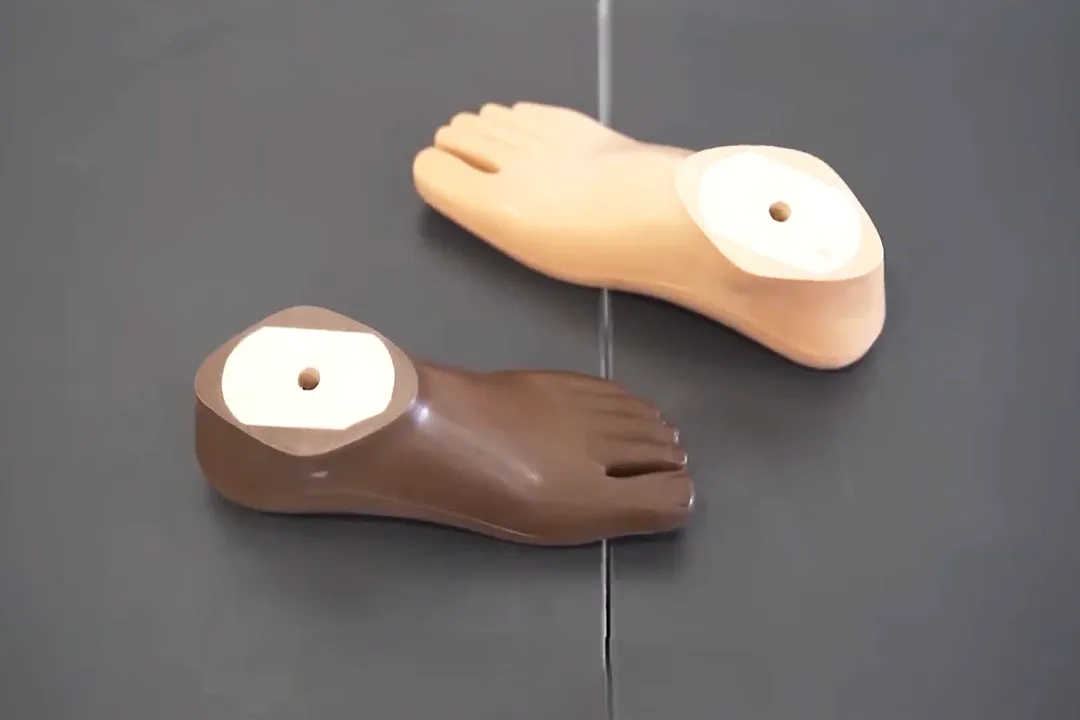
When evaluating prosthetic options, the distinction between designs often depends on the daily environment of the user. While many advanced prosthetic feet are engineered for stability on flat surfaces, the Jaipur Foot was designed to address specific challenges faced by individuals in rural settings. Its development marked a departure from rigid prosthetic norms, focusing instead on flexibility, durability, and the ability to navigate uneven ground. [8]
Historically, the standard for many years was the Solid Ankle Cushion Heel (SACH) foot. This design consists of a wooden or plastic keel encased in foam rubber. It provides a stable base and is suitable for walking on level ground. [3] However, the Jaipur Foot operates on a different mechanical principle. It uses a vulcanized rubber construction that mimics the natural movement of a human foot, allowing for a wider range of motion, particularly in the ankle and heel. [5][7]
# Design principles
The primary difference between the Jaipur Foot and other conventional prosthetics lies in the way they manage energy and movement. A standard SACH foot relies on the compression of the heel wedge to absorb shock at the moment of heel strike. Because the ankle joint is effectively locked, the foot acts as a lever to roll the user forward. [3] While this is predictable and safe for indoor use, it creates difficulties on irregular surfaces.
The Jaipur Foot incorporates a design that permits multi-axial movement. This means the foot can rotate and flex in several directions, adapting to the terrain rather than forcing the user’s leg to compensate. [7] This flexibility allows the prosthetic to absorb ground reaction forces more effectively, reducing the stress on the amputee's residual limb. [2][7]
# Terrain adaptation
One of the defining features of the Jaipur Foot is its performance on uneven ground. In many developing regions, paved roads are not the default walking surface. Users often traverse dirt paths, fields, and rocky terrain. Standard rigid prosthetics often struggle in these conditions because they cannot conform to the slope of the ground, which leads to instability. [6]
Because the Jaipur Foot is constructed from high-density rubber with a flexible keel, it effectively "grips" the surface. The design allows for a degree of dorsiflexion and plantarflexion, which are the up-and-down movements of the foot. [5] This enables users to walk comfortably even when the ground is sloped or soft. This functional difference is a distinct departure from the SACH foot, which can feel precarious when the user places their weight on an uneven surface. [3]
# Squatting performance
A critical, often overlooked aspect of daily life for many people is the ability to squat or sit cross-legged. Most Western-designed prosthetics are built for a gait pattern that assumes the user will spend most of their time walking or standing on flat surfaces. They do not typically account for activities that require the foot to be placed in extreme positions, such as squatting on the floor to work or eat. [8]
The flexibility of the Jaipur Foot allows it to maintain contact with the ground even when the user is in a squatting position. This capability is rarely matched by standard SACH or rigid keel feet. When a user with a rigid foot attempts to squat, the heel or the toe often lifts off the ground, causing a loss of balance. The rubber composition of the Jaipur Foot permits the foot to flatten against the ground under body weight, providing a stable base for activities that take place at floor level. [3][6]
# Mechanical comparison
To better understand how these devices stack up against one another, it is helpful to look at their structural characteristics. While advanced energy-return feet made of carbon fiber exist, they are often cost-prohibitive and fragile in harsh environments. The following table highlights how the Jaipur Foot compares to the standard SACH foot in practical application.
| Feature | Jaipur Foot | SACH Foot |
|---|---|---|
| Material | Vulcanized Rubber | Wood/Plastic Keel + Foam |
| Ankle Movement | Multi-axial (Flexible) | None (Rigid) |
| Primary Terrain | Uneven/Outdoor/Natural | Flat/Indoor/Paved |
| Squatting Ability | Excellent | Limited |
| Durability | High (Water/Heat resistant) | Moderate (Foam degradation) |
| Cost | Low (Mass production focused) | Variable (Low to Medium) |
This comparison highlights that the choice of prosthetic is less about which technology is "better" in a vacuum and more about which design fits the physical requirements of the wearer's daily life. [3][7]
# Biomechanical impact
Research into the ground reaction forces (GRF) experienced by prosthetic users shows clear variances between models. Studies indicate that the Jaipur Foot produces a gait pattern that is biomechanically closer to the natural human gait than the SACH foot. [7] By allowing for controlled ankle motion, the Jaipur Foot reduces the abrupt impact often felt with rigid designs.
This difference in biomechanics has a direct effect on the user’s energy consumption. When a prosthetic does not adapt to the terrain, the user must expend more muscular energy in the hip and knee to stabilize themselves. [2] The Jaipur Foot’s ability to dampen these forces helps in preserving the health of the residual limb, as excessive pressure on the skin and tissue of the stump can lead to long-term discomfort or breakdown. [2][9]
# The philosophy of design
There is a significant distinction between the "Gold Standard" of prosthetic design in high-income nations and the requirements of users in rural or resource-constrained settings. Many modern prosthetics prioritize high-tech materials and energy-return mechanisms that work perfectly on level sidewalks. However, these same devices often require specialized maintenance and are susceptible to damage in muddy, dusty, or hot environments. [5]
The Jaipur Foot represents a philosophy where the design is dictated by the environment of the user. By using readily available rubber, the design remains waterproof, heat-resistant, and relatively easy to repair. This approach acknowledges that a "perfect" prosthetic is one that the user can actually use in their home environment without fear of breaking it on a stone or losing grip in the rain. This is a practical reality check against the assumption that expensive, lightweight materials are always the superior choice for every amputee.
# Maintenance and longevity
Another practical factor is how these devices handle wear and tear. The SACH foot is prone to the degradation of its cosmetic foam cover, which can tear or crumble over time, requiring replacement of the entire foot unit. [3] The Jaipur Foot is constructed from a homogenous rubber block. This means that even if the outer surface is scuffed or cut, the structural integrity of the foot remains intact.
This durability is essential for users who walk long distances on abrasive surfaces. While the Jaipur Foot may appear heavier than carbon-fiber alternatives, its longevity in rugged conditions often outweighs the benefit of a lighter weight. Users often report that the device requires minimal maintenance, which is a major advantage for individuals who do not have easy access to prosthetic clinics for frequent adjustments or repairs. [8]
# Clinical outcomes
Clinical studies reviewing the performance of the Jaipur Foot show high rates of user satisfaction, particularly regarding comfort and functional mobility. Reviews of patients using the device have noted that the ability to walk barefoot is a major advantage. [9] Many users find the aesthetic, which resembles a natural human foot, to be socially significant, as it helps them integrate into their communities with less visibility of their disability. [8]
When comparing this to other prosthetics, the clinical success is often measured by how well the user returns to their daily activities. For a farmer, the ability to work in a field is the success metric. For a student, it is the ability to navigate a campus. The Jaipur Foot consistently performs well in these practical metrics because it does not require a gait that is hyper-optimized for perfect, flat surfaces, but rather one that is optimized for real-world unpredictability. [2][9]
# Assessing suitability
Deciding on the right prosthetic involves looking past the specifications and focusing on the user’s goals. If the primary need is for high-speed running or competitive sports, the Jaipur Foot is not the intended design; specialized carbon-fiber blades are better suited for that. However, for the vast majority of daily tasks—walking, standing, crouching, and traversing uneven terrain—the Jaipur Foot offers a balance of flexibility and strength that rigid prosthetics simply cannot provide. [3][7]
Understanding the specific needs of the amputee is essential. The "best" prosthetic is not necessarily the most expensive or the one with the most complex components. It is the one that allows the user to navigate their specific environment with the least amount of pain and the highest level of independence. The Jaipur Foot serves as a case study in how simple, thoughtful engineering can solve complex mobility problems by prioritizing the realities of the user’s terrain over the theoretical perfection of the device. [8]


#Videos
Prosthetics vs Orthotics| Jaipur foot | SACH foot| NEET PG| NExT
Related Questions
#Citations
A biomechanical comparison of the SACH, Seattle and Jaipur feet ...
The Jaipur Foot and the “Jaipur Prosthesis” - PMC
Jaipur Foot vs SACH Foot | Key Differences Explained for 2025
Prosthetics vs Orthotics| Jaipur foot | SACH foot| NEET PG| NExT
[PDF] Jaipur prosthetic and orthotic technology - MedCrave online
Comparison of Jaipur, SACH, and Madras Feet | PDF - Scribd
A biomechanical comparison of the SACH, Seattle and Jaipur feet ...
The “Jaipur Foot” - IEEE Pulse
The Jaipur foot - Bone & Joint