Do bloodwood trees have medicinal uses?
The term "Bloodwood tree" immediately calls to mind the dramatic, reddish exudate that oozes from a wound in its bark, a sight that has captured the attention of Indigenous peoples across continents for millennia. [5][6] This distinctive feature gives the tree its evocative name, though the term applies to several distinct species across different parts of the world. In Southern Africa, it often refers to Pterocarpus angolensis, which yields a dark red, sticky sap believed by some local cultures to hold magical properties related to blood ailments. [5] Meanwhile, in Australia, the name is used for various species, including those now classified under the genus Corymbia, such as Corymbia opaca (the desert bloodwood) and Corymbia gummifera (Red Bloodwood). [7][4] Regardless of the continent, this bleeding sap, often referred to as kino in the Australian context, has served as a critical component of traditional medicine. [6]
# Traditional Healing Resins
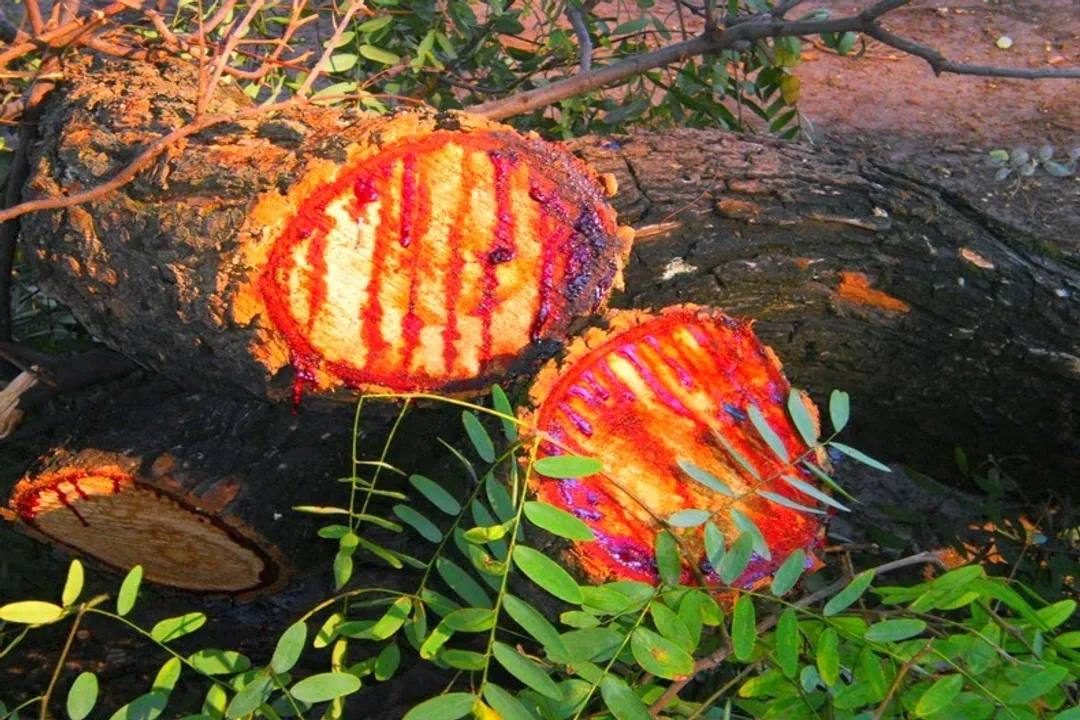
The primary medicinal value consistently reported across traditional uses centers on the tree's resinous exudate. For Aboriginal Australians, this kino, which hardens upon exposure to the air, was an accessible antiseptic source. [6][7] The sticky gum could be applied directly to minor cuts, sores, and insect bites to clean the wound and promote healing. [6][7] The astringent quality of the sap made it effective in stemming blood flow, allowing a poultice of mud and leaves to support treatment for more significant injuries. [6] When diluted, the sap could function as an antiseptic liquid wash for ulcers and burns. [6] Specific uses varied by species: the kino of Corymbia terminalis was reportedly taken in water to address headaches, diarrhea, and blood conditions, while C. calophylla kino was historically used for dysentery and chronic bowel issues.
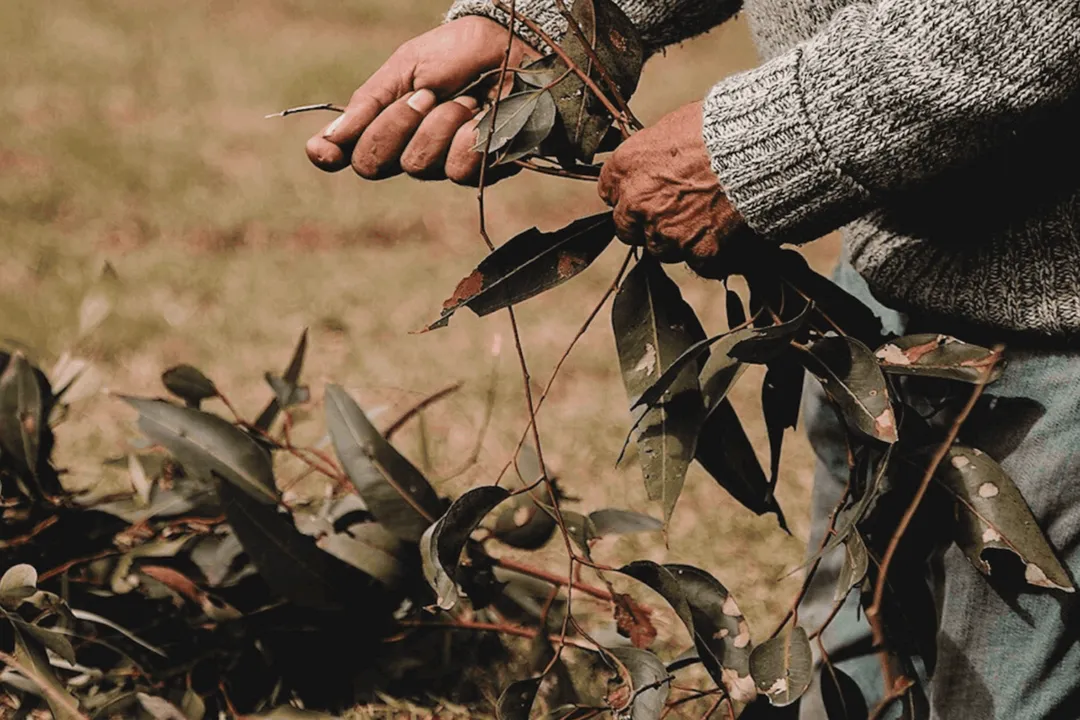
The uses extended beyond the exudate. The leaves of certain Australian bloodwoods, particularly Corymbia citriodora, were employed as antiseptic washes and consumed in boiled water extracts to treat respiratory complaints, fever, and muscle pain. In some parts of Queensland, the bark's gum was even used to treat bladder infections. In Southern Africa, Pterocarpus angolensis sap was traditionally applied to ailments such as ringworm, malaria, stomach issues, and was even used to help increase the supply of breast milk. [5] It is worth noting that separate sources mention a "Bloodwood tree" (Haematoxylum campechianum—Logwood) being used for diarrhea and excessive bleeding, though this is a different species entirely. [2] This diversity underscores a shared intuitive recognition of the plant's chemical activity for managing internal health issues alongside topical trauma.
# Scientific Validation of Corymbia Extracts

While traditional knowledge is rich, modern scientific investigation has heavily focused on the Australian Corymbia genus, which was formally separated from Eucalyptus in 1995. Of the 115 recognized Corymbia species, ethnobotanical uses have only been reported for about 14, with Corymbia citriodora receiving the vast majority of the research attention. This scientific focus has revealed an impressive spectrum of bioactivities within these trees.
The leaves and kino of Corymbia species contain complex mixtures, including essential oils (EOs), polyphenols (like flavonoids), and various terpenoids. The leaf EO of C. citriodora is particularly noted for its strong antiseptic properties and is a source for commercial essential oils. [4] This oil shows broad-spectrum anti-fungal activity against pathogens like Candida albicans and Aspergillus species, and has demonstrated anti-bacterial effects against both Gram-positive and Gram-negative bacteria, including inhibition of airborne Mycobacterium tuberculosis.
Furthermore, the anti-inflammatory and antioxidant potential is significant. The leaf EO of C. citriodora exhibits strong inhibition in in vitro antioxidant assays, and isolated compounds like ellagic acid (a tannin found in the kino) have shown potent anti-inflammatory and gastroprotective effects in animal models simulating gastric ulcers. The kino of C. maculata has also been studied, revealing that isolated flavonoids possess antioxidant and hepatoprotective properties, potentially shielding the liver from damage caused by toxins like acetaminophen.
# Bioactive Components and Species Contrast
The specific chemical profile dictates the precise medicinal application, and this varies widely between species and even between plant parts. For instance, the leaf EO of C. citriodora is dominated by citronellal and citronellol, compounds responsible for its well-known insect-repelling capacity, though this effect is often short-lived due to the compounds' volatility. In contrast, the leaf EO of Eucalyptus gummifera (Red Bloodwood) features bicyclogermacrene and -caryophyllene as its major constituents, differing significantly from the citronellal-rich profile. [4] The oleo-resin of E. gummifera, however, is powerfully astringent and has been traditionally used to treat bladder inflammation and diarrhea, suggesting its medical utility lies in its tannin content rather than its EO profile. [4]
The Corymbia genus also shows promise in addressing complex, systemic conditions. Research into C. citriodora has uncovered compounds with anti-diabetic potential; isolated triterpenoids like betulinic acid and corosolic acid were shown to enhance the activity of the GLUT-4 glucose transporter in vitro, supporting the traditional use of leaf extracts for treating diabetes. In the realm of infectious disease, specific novel compounds isolated from the flowers of C. intermedia and C. torelliana—a class called -triketones—demonstrated potent anti-plasmodial activity against strains related to malaria. Most recently, leaf extracts from C. citriodora yielded compounds like citriodolic acids that exhibited potent antiviral activity against Respiratory Syncytial Virus (RSV), comparable to existing drug treatments.
# Research Bias and Untapped Potential
While the scientific data on C. citriodora suggests it could yield new treatments for inflammation, cancer, diabetes, and viral infections, this intense focus creates a noticeable gap in our understanding of the broader genus. As mentioned, only 14 of the 115 Corymbia species have documented ethnomedical uses, and outside of C. citriodora, C. maculata, and C. torelliana, very few publications detail the bioactivities of the others. For example, Corymbia opaca, known to Aboriginal Australians for its antiseptic sap and its roots used for water storage, has virtually no associated research on its isolated compounds or biological activities published in the scientific literature reviewed. [7]
This highlights an interesting parallel between ancient and modern resource use. Traditional healers across Australia had to source remedies from whatever species was locally available, utilizing the sap from C. opaca in the desert or C. gummifera in coastal forests. [6][7] Modern pharmaceutical research, however, tends to gravitate toward the most accessible or best-known species, like C. citriodora, which has a commercially recognizable EO profile. Considering the variety of unique chemical structures—such as the -triketones isolated from flowers—it suggests that many of the unstudied species may hold chemotypes offering novel mechanisms of action against drug-resistant diseases.

# Application Considerations and Future Research
The medicinal applications of bloodwood trees, whether derived from sap or essential oils, necessitate caution. The Eucalyptus gummifera oil, like many essential oils, is reported to be potentially toxic in large doses, with severe symptoms reported from ingestion. [4] Moreover, for the EO of C. citriodora, while highly effective as an insect repellent in vitro, field trials have sometimes shown only moderate effectiveness due to the rapid volatility of its active components like citronellal. This suggests that for practical application, researchers might look toward extracting less volatile, more stable compounds from the kino or bark, which traditionally possessed excellent astringent and antiseptic qualities.
The continued investigation into the Corymbia genus represents a clear path for natural product drug discovery, moving beyond general antiseptic uses to targeted treatments for conditions like malaria, RSV, and Type 2 diabetes. The shift in scientific literature from simply noting the traditional use of a gum to isolating specific compounds like the anti-plasmodial -triketones shows an evolution in how this botanical resource is valued. To truly capture the medicinal legacy of the Bloodwood, future work should prioritize systematic screening of the kino and extracts from the understudied species, ensuring that the deep knowledge held within Indigenous cultures, such as those related to C. opaca water storage in roots, is matched by equivalent scientific breadth. [7] This multi-faceted approach—honoring both the external wound-care application of the sap and the complex internal medicine derived from leaves and kino—will be key to unlocking the full therapeutic potential of the Bloodwood tree family.
Related Questions
#Citations
Eucalyptus gummifera Red Bloodwood PFAF Plant Database
Bloodwood tree - Gigas Nutrition
Corymbia opaca - Wikipedia
The Bloodwood Tree | Amusing Planet
Bloodwood in the Tropics - FNQ Nature Tours
Tree Sap: Aboriginal Food, Medicine & Knowledge
Ethnopharmacology, Phytochemistry, Bioactivities of Corymbia Genus