Is it okay to drink water with particles in it?
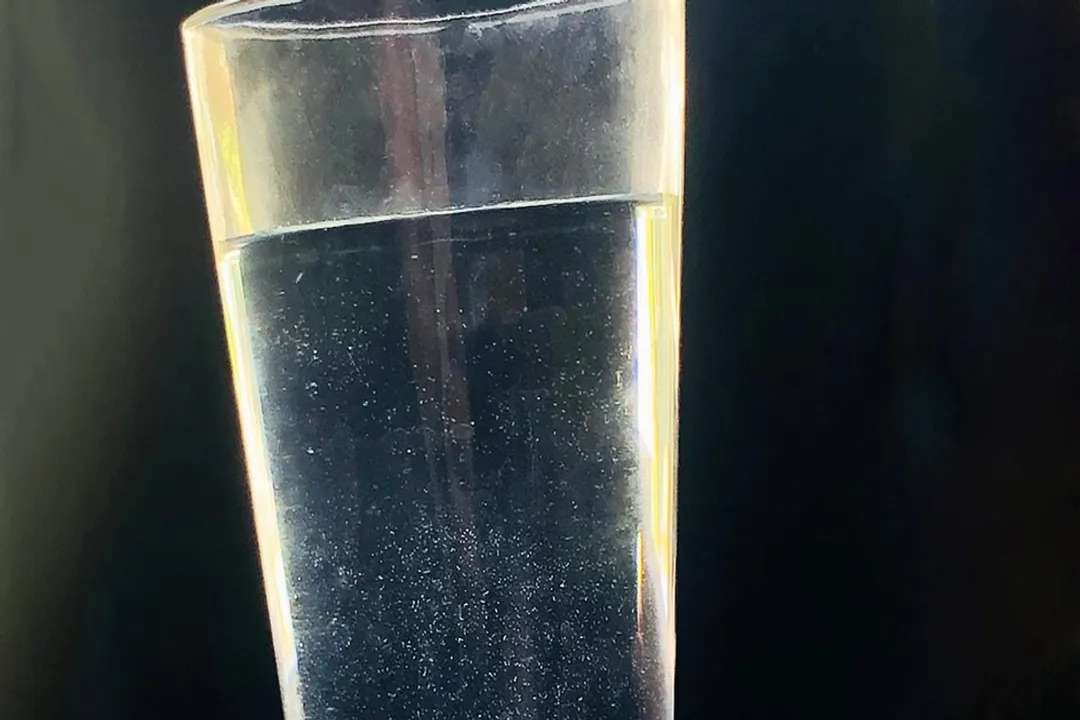
Seeing small specks floating in a glass of water when you hold it up to the light is a surprisingly common experience, prompting a natural question about whether the water is safe for consumption. [3] Most people are accustomed to thinking of drinking water as a perfectly clear, uniform substance, so any deviation can cause alarm. However, the reality is that water, even when properly treated and delivered to your tap, is rarely absolutely particle-free. The safety concern hinges entirely on what those particles are, where they came from, and how much you are consuming. [6][4]
# Mineral Content
One of the most frequent culprits for visible particles is related to the mineral composition of the water itself, particularly if you live in an area known for hard water. White, flaky bits often seen suspended or settled at the bottom of a kettle or glass are frequently limescale or calcium carbonate deposits. [2] These are the same minerals—calcium and magnesium—that cause buildup inside plumbing and appliances. [2] While perhaps aesthetically unappealing, these minerals are generally inert and safe to ingest in these quantities. [2]
Cloudiness in water is another visible phenomenon that can look like a suspension of fine particles. Sometimes this is just tiny air bubbles that will dissipate quickly if the glass is left undisturbed; this is harmless. [5] Other times, particularly after scheduled maintenance or a significant drop in pressure, the water main might briefly stir up silt, sand, or fine sediment that has settled in the pipes over time. [5] Water utilities often advise residents that this type of appearance, sometimes looking like sand or dirt, is temporary and usually clears up once the system pressure stabilizes. [5][1]
# Particle Type Quick Reference
To better understand the visual evidence, it can be helpful to categorize what you are seeing, as the source dictates the immediate health implication.
| Appearance | Likely Source | Immediate Concern |
|---|---|---|
| White/Gray Flakes | Hard Water Minerals (Calcium/Magnesium) | Low; primarily aesthetic [2] |
| Fine Brown/Reddish Bits | Rust/Iron from aging pipes | Low to Moderate (color change suggests corrosion) [5] |
| Turbidity/Silt/Sand | System flushing, construction, main break | Low if water clears quickly; check advisories if persistent [5] |
| Invisible Fibers | Microplastics (from various sources) | Moderate; long-term ingestion effects are studied [7] |
# Infrastructure Woes
When the particles are distinctly colored, such as brown or reddish, the source is more likely related to the distribution system itself. Iron corrosion or small particles of rust breaking off from older iron pipes can introduce these specks into your water. [5] While a small amount of rust is not usually acutely toxic, it suggests that your home's plumbing or the main lines serving your area might be degrading, which warrants attention. [4]
A scenario that causes sudden, visible contamination is often related to nearby construction, nearby firefighting activity, or planned system flushing by the local water authority. [5] These activities intentionally disturb sediment lying at the bottom of large water mains, sending temporary plumes of less-than-pristine water into the distribution lines. [5] If you notice this immediately following a known event, it is likely transient. If the problem persists for days after the work has finished, it might indicate a compromised main line that needs reporting to the utility. [1]

# Invisible Ingestions
While we focus on what we can see floating in the glass, it is crucial to acknowledge the particles we cannot, which often carry greater potential health risks. [8] One highly discussed area is the ingestion of microplastics. Research has shown that individuals who regularly drink bottled water, for instance, can consume tens of thousands of microplastic particles annually—particles that are too small to see without magnification. [7] These microscopic pollutants originate from the plastic bottles themselves, as well as from the general breakdown of larger plastics in the environment that find their way into water sources. [7]
The health consequences of ingesting mineral flakes versus microscopic synthetic materials are vastly different. Inert minerals like calcium are dietary necessities. Conversely, public health concerns around water quality usually focus on biological contaminants (bacteria, viruses, protozoa) or chemical pollutants that can cause immediate or chronic illness. [8] If water has been chemically treated and tested by a municipal system, the risk from pathogens is usually low, but the presence of unexpected visible material should always prompt further thought about filtration integrity. [6]
If you are drawing water from a non-municipal source, such as a well or an untreated natural source like a stream while hiking, the calculus changes entirely. Water containing visible dirt outdoors poses a significant risk of carrying harmful bacteria or parasites, making filtration and purification necessary steps before consumption, regardless of how clear it looks after initial settling. [6]
# Determining Action
How do you decide if the visible evidence in your glass requires a call to the water company, a trip to the hardware store for a filter, or if it can be safely ignored? The context of when the particles appear is the best clue.
If you see a sudden influx of sediment shortly after your area experienced a water main break notification or a fire hydrant being used heavily nearby, the advice from the utility is usually straightforward: let the water run for a few minutes until it clears, and then proceed with normal use. [5] If the water remains cloudy or gritty for more than an hour after normal activity resumes, it is prudent to report it.
For persistent issues that appear only when you draw hot water, the problem is almost certainly within your own home's water heater. Sediment buildup inside the tank can be agitated when the heating element kicks on, sending rust and mineral deposits into the hot water lines. [4] In this case, the solution is typically flushing or servicing the water heater, rather than blaming the municipal supply.
Here is a simple diagnostic approach to guide your next steps when particles are noticed:
- Test Hot and Cold: Draw a cold glass and a hot glass simultaneously. If the issue is only in the hot water, the source is likely your water heater. [4]
- Check Timeframe: Did this start immediately after construction or utility work? If yes, wait a few hours. [5]
- Observe Particle Type: Are they white and chalky (likely harmless minerals) or dark/colored (potential pipe corrosion)?
- Filter Consideration: If the particles are very fine, persistent, and non-mineral (e.g., fine black specks), investing in a certified point-of-use filter, such as a pitcher filter or faucet attachment rated for sediment reduction, can provide immediate peace of mind for daily drinking water. [3]
Ultimately, for municipally supplied water, the system is regulated to ensure safety against pathogens, meaning visible, inert particles like calcium or small amounts of disturbed silt are rarely an immediate danger. [8] However, if the particles are colored, persistent, or accompanied by an unusual taste or odor, treating the water as suspect and contacting your local water provider for testing information is the most responsible course of action to ensure the quality of what you are drinking. [4]
Related Questions
#Citations
Is this water safe to drink and Why is it like this? Looks the same ...
If You See White Flakes in Water from Your Tap, This Is What It Means
Is water we drink completely clean or are there dust particles ... - Quora
Particles Drinking Water | Resources | Danamark Water Care
[PDF] Why are there sand particles in my water?
Is drinking water containing dirt harmful?
People Who Drink Bottled Water on a Daily Basis Ingest ... - WIRED
Solid Particles in Suspension - Drinking Water and Health - NCBI - NIH
Is filtered water with particles safe to drink? - Facebook