Does supermoon affect health?

The celestial events that dominate the night sky often carry a weight of folklore and popular belief, and few are as frequently discussed in relation to human behavior as the supermoon. This term, referring to a full moon or new moon that occurs when the Moon is at or near its closest approach to Earth in its orbit—known as perigee—naturally sparks curiosity about its influence on our well-being. While astronomers define this event based on orbital mechanics, the common question remains: does this slightly closer, brighter moon actually translate into measurable health changes for the average person?[5]
# Supermoon Basics
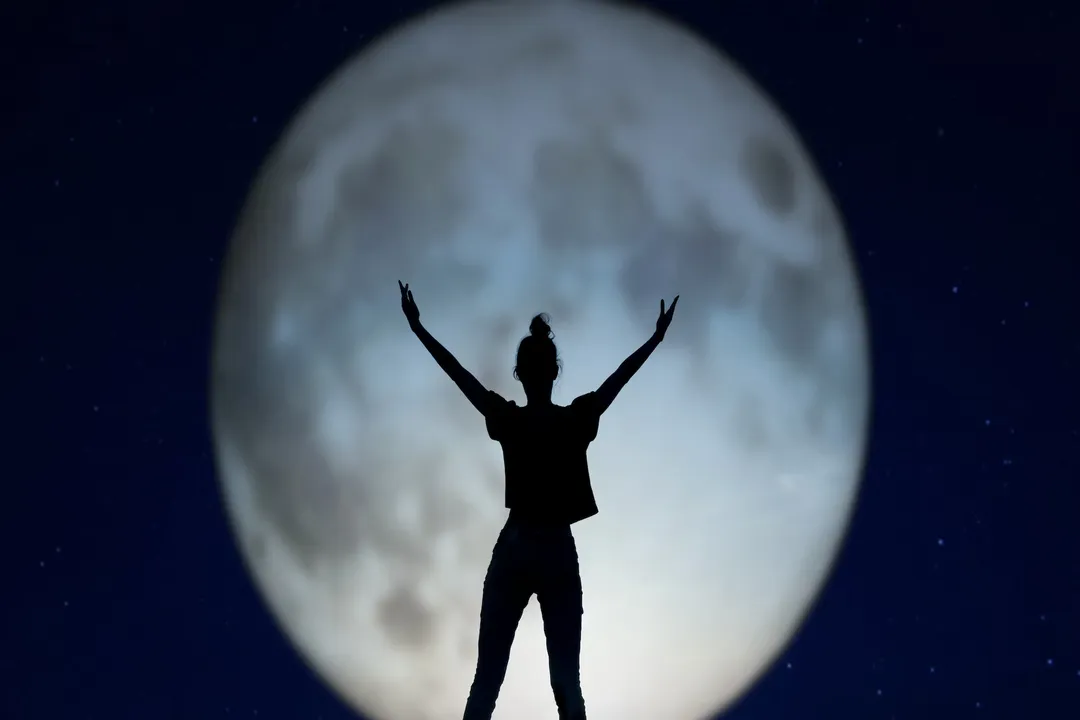
A supermoon is a perceptual rather than a scientific term, first popularized by astrologer Richard Nolle in the 1970s. [5] Essentially, it describes a perigee full moon or a perigee new moon. [5] When the Moon is at its closest point to Earth (perigee), it appears marginally larger and brighter than an average full moon. However, the difference is often subtle; compared to the furthest point in its orbit (apogee), a supermoon can appear about 14% larger in diameter and 30% brighter. [5] This slight increase in luminosity is one of the few concrete physical differences that might plausibly translate to a biological effect, primarily through light exposure.
# Sleep disruption

One of the most common areas linked to lunar cycles, especially the full moon phase, is sleep quality. Anecdotally, many people report feeling restless or having trouble sleeping during these bright nights. [3] Scientific investigation has supported this suspicion to some degree. One study indicated that even without knowing the phase of the moon, participants took longer to fall asleep, slept for a shorter duration, and had lower overall sleep quality during the nights surrounding the full moon. [3] The difference observed in this research was that subjects spent about five minutes longer falling asleep, slept 20 minutes less overall, and experienced a notable decrease in deep sleep. [3]
This suggests a real, albeit perhaps mild, physiological response to the increased ambient light present during a full moon, regardless of whether it is technically a "supermoon." Since a supermoon is brighter than an average full moon, one might hypothesize an even slightly more pronounced effect due to light pollution interfering with natural circadian rhythms. [5] If you find yourself tossing and turning when the night sky is particularly illuminated, understanding that this is a recognized pattern, even if small, can be helpful. For nights predicted to be supermoons, ensuring your sleeping environment is as dark as possible—using blackout curtains or a comfortable sleep mask—becomes a more deliberate preventative measure against potential light-induced restlessness. [3] Think of it less as a mystical pull and more as simply having a natural, albeit distant, reading lamp turned on outside your window.

# Emergency Behavior
The notion that mental health crises, violence, or general chaos spikes during a full moon is deeply ingrained in popular culture, often reflected in the workplace culture of emergency services. Many nurses and emergency department staff report a strong feeling that things are busier and more erratic during a full moon. This belief is so prevalent that it has spurred several academic inquiries to see if the anecdotal experience aligns with objective data.
When scientists have looked for correlations between the full moon—or specifically a perigee full moon (supermoon)—and emergency department (ED) volume, the results have often been inconclusive or negative. [7] One study analyzing ED behavioral health volume and total volume specifically across perigee full moons found no statistically significant relationship between the presence of a perigee full moon and changes in behavioral health volume. [4] Similarly, reviews of hospital admissions for psychiatric issues have frequently failed to find a consistent link to the lunar cycle. [1]
A comparison across multiple studies often reveals that while staff believe incidents increase, the actual logged data does not support a dramatic surge tied directly to the moon's phase. [1] For instance, studies examining crime rates or psychiatric admissions have often concluded that the belief in lunar influence might be an example of confirmation bias, where staff members more readily remember the unusual or dramatic incidents that coincided with a full moon, while ignoring the routine busy nights that occurred without one. [1] The sheer volume of the public over an entire month means that a few unusual events are statistically likely to coincide with any given full moon simply by chance. [1] While the gravitational pull of the Moon certainly affects Earth's tides, its effect on the minuscule fluid volumes within the human body, like blood or brain fluid, is not considered significant enough to alter behavior or cause medical emergencies. [1]
# Hormonal Claims
Beyond visible light and subtle tidal forces, some theories suggest the Moon might influence internal, hormonal processes. The monthly human female reproductive cycle aligns roughly with the lunar cycle, leading to speculation about a direct causal link. [8]
This connection is compelling because the term menstruation is derived from the Greek word mene, meaning month, which is also related to the Greek word for Moon, mene. [8] However, when examining the data, the alignment appears to be a coincidence of timing rather than causation. [8] While the average menstrual cycle length is about 29.5 days, closely mirroring the synodic lunar month (29.53 days), human cycles are highly variable, ranging from 21 to 35 days. [8] If the Moon truly dictated the cycle, everyone’s cycle would be precisely 29.5 days long, which is not the case. [8] Therefore, the current understanding is that the association between the menstrual cycle and the lunar cycle is largely coincidental, not driven by lunar gravity or light affecting hormones like estrogen or progesterone. [8]

# Examining Scientific Literature
To gain more clarity, it is useful to look at specific peer-reviewed investigations, even if they focus on the general full moon rather than exclusively the supermoon. Research published in journals like Sleep Medicine has looked into the idea of lunar influence on sleep architecture, finding the noted differences in sleep latency and duration previously mentioned. [3]
Another area of focus has been the impact on general medical presentations. A review of medical records concerning various conditions has often failed to establish a statistically significant correlation between the full moon and increases in presentations for specific complaints, such as asthma attacks or cardiac events, suggesting that the Moon does not act as a universal trigger for acute illness. [6] This pattern—where the anecdotal experience of healthcare providers contradicts large-scale data analysis—is a common theme when investigating lunar effects on health. [7][1] The gravitational differences between a perigee full moon (supermoon) and an apogee full moon are minute in terms of tidal force experienced on Earth, making a significant biological impact highly unlikely based on known physics. [1][5]
# Practical Perceptions versus Physics
The divergence between belief and evidence presents an interesting dichotomy for the layperson. If science cannot definitively link the supermoon to increased seizures, birth rates, or psychiatric episodes, why does the belief persist so strongly across professions like nursing and emergency medicine? Part of the answer lies in the inherent human need to find patterns in chaos. When a busy night in the emergency department is coupled with a spectacularly bright full moon, the brain naturally connects the two events as cause and effect. [1]
Consider the subtle effect of the light itself. A supermoon is physically brighter than other full moons. [5] In historical contexts, this increased illumination would have been significant, extending effective daylight hours and potentially altering natural sleep/wake cycles before widespread artificial lighting. [1] Today, while artificial lights often overpower the Moon's brightness, we can still observe this phenomenon on camping trips or in rural areas. If you are planning an outdoor activity or simply want to assess your own sensitivity, pay attention to how an exceptionally bright moon influences your ability to fall asleep versus a cloudy night. This awareness allows for personal calibration rather than relying on a generalized fear of the lunar phase. For those who are highly sensitive to light at night, knowing a supermoon is imminent might serve as a helpful, if coincidental, reminder to enforce stricter bedroom darkness protocols.

# Synthesizing Health Effects
When summarizing the available evidence regarding the supermoon's direct effect on health, the conclusion trends toward skepticism for dramatic outcomes:
| Alleged Effect | Scientific Consensus (Based on sources) | Primary Reason for Belief |
|---|---|---|
| Increased ER Visits/Behavioral Issues | No statistically significant link found for perigee moons or full moons generally. [4][7] | Confirmation bias; memorable correlation. [1] |
| Hormonal Changes/Menstruation | Coincidence; no evidence of Moon driving human cycles. [8] | Shared approximate period length (29.5 days). [8] |
| Severe Physical Illnesses | No established link to asthma, cardiac events, etc.. [6] | General anxiety and pattern-seeking. [1] |
| Sleep Quality | Mild but potentially measurable reduction in sleep quality and duration. [3] | Increased ambient light exposure from a brighter full moon. [3][5] |
It is important to note that the gravitational effect of the Moon on the human body is negligible compared to its effect on the oceans. [1] The forces exerted on something as small as a human being are vastly overpowered by local environmental factors, like barometric pressure changes or even the simple gravitational pull of a nearby building.
To navigate nights where the moon is full and bright, one strategy for maintaining good sleep hygiene involves proactive environmental control. Beyond just ensuring the bedroom is dark, consider managing other sensory inputs. If you are anticipating a night when the moon will be at its brightest—whether a supermoon or just a very clear full moon—establishing a consistent pre-sleep routine that includes dimming lights an hour before bed, avoiding screens, and perhaps trying a brief, slow-paced meditation can help counter any subtle restlessness induced by light or expectation. This focuses personal agency on controllable factors, decoupling wellness from the distant, uncontrollable celestial body.
Ultimately, while the lore surrounding the supermoon is captivating and certainly influences the perception of what happens on those nights in hospitals and homes, the scientific community has yet to find compelling, repeatable evidence that this specific astronomical alignment causes widespread adverse health outcomes or dramatic shifts in human behavior beyond a potential minor impact on sleep due to increased light. The true power of the supermoon in our daily lives seems to rest more in its capacity to inspire awe, perhaps leading us to be more mindful of our immediate surroundings, including our sleep environment.[5]
Related Questions
#Citations
Does The Moon Affect Humans? - Health Cleveland Clinic
A Supermoon Rises Tonight: Does the Full Moon Affect Our Health?
'I'm a sleep expert, here's why supermoons cause chaos with your ...
Perigee Full Moons (“Supermoons”) and its Effect on Emergency ...
5 Things to Know About Supermoons - Adler Planetarium
The lunar cycle: effects on human and animal behavior and physiology
Fact or fiction: do ER visits increase during a full moon?
How The Beaver Moon Could Affect Your Hormones - Grazia
Does a full moon really affect people the way they say it is? : r/nursing