Under whose direct supervision must Orthotic and Prosthetic Technicians operate?
Answer
Certified prosthetists or orthotists
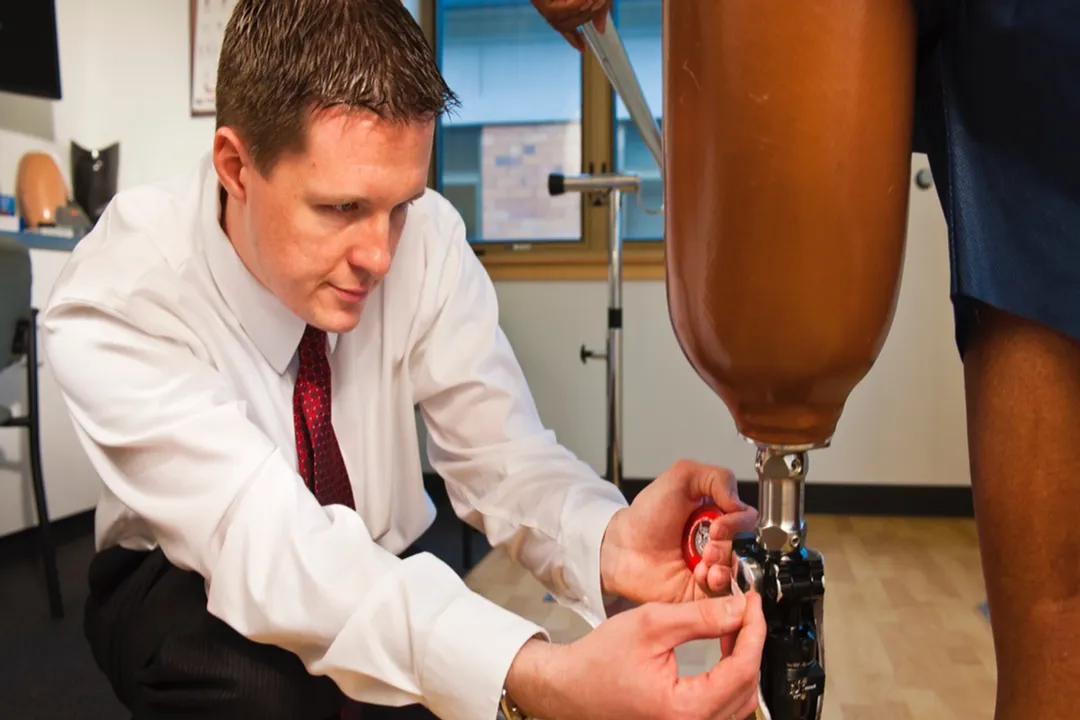
Orthotic and Prosthetic Technicians occupy a specialized area within the field, focusing on the physical manufacturing and assembly of devices based on established specifications. A key defining aspect of their role is the level of oversight required in their work. Technicians operate under the direct supervision of practitioners who hold the certification and clinical authority—namely, certified prosthetists or orthotists. While instrumental in transforming the design into a physical reality, technicians generally do not assume responsibility for patient evaluations, diagnoses, or making the final adjustments to the device once it is being fitted to the individual patient.
Related Questions
What is the required post-bachelor's degree for clinical O&P practice entry?Which engineering discipline is frequently cited as a strong entry degree for prosthetic R&D?What is the general baseline entry requirement for an Orthotic and Prosthetic Technician?Which body administers the rigorous certification examinations for aspiring O&Ps?What is the typical post-secondary time commitment until full clinical licensure for an O&P?What specific daily output is cited as characteristic of an engineer focused on prosthetic R&D?Under whose direct supervision must Orthotic and Prosthetic Technicians operate?What is the function of the NCOPE regarding Orthotics and Prosthetics education?What core knowledge areas define the focus of the clinical pathway for O&P practitioners?What advantage does a Biomedical Engineering degree specifically offer for roles in prosthetic R&D?Where does the text suggest the most effective and innovative prosthetic design work frequently occurs?