What qualifications do you need to design prosthetics?
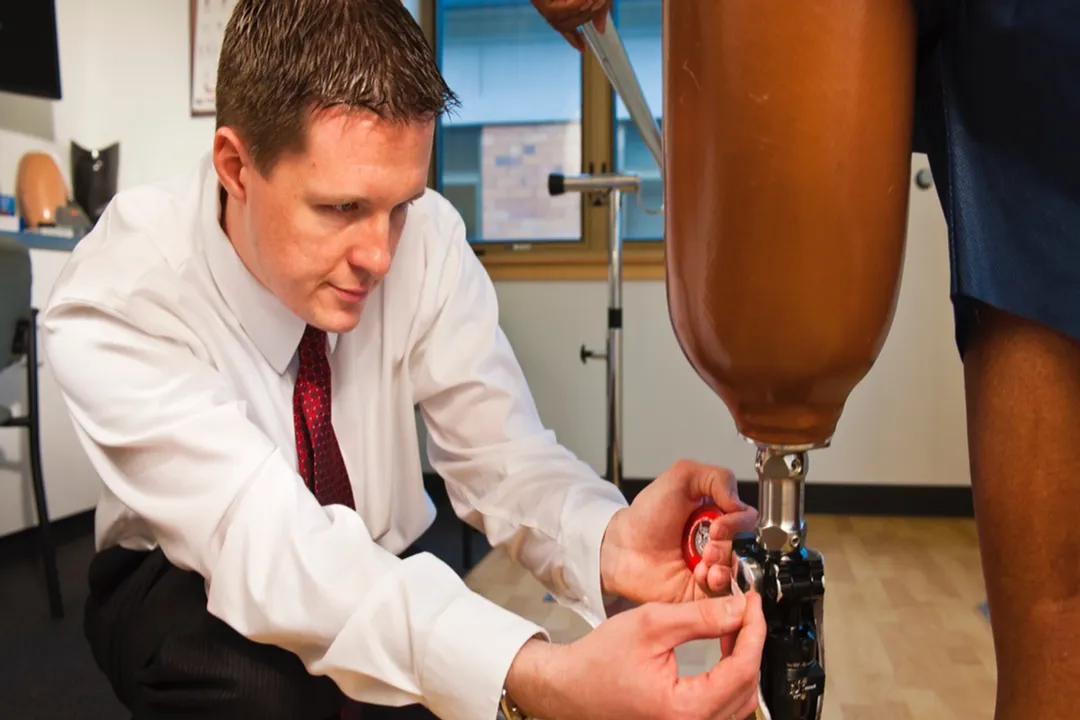
Designing sophisticated medical aids like prosthetics is a fascinating intersection of art, engineering, and direct patient care, meaning the required qualifications are not singular but depend entirely on the specific role you wish to occupy within the field. Whether your ambition leans toward the rigorous technical development of new materials and mechanisms or the hands-on assessment and fitting of devices for individuals, the educational pathways diverge significantly.
# Clinical Practice Path
The most direct route to working with patients and creating custom-fit devices involves becoming a certified Orthotist and Prosthetist (O&P). This is a specialized allied health profession where the practitioner is responsible for the assessment, design, fabrication, fitting, and adjustment of custom orthotic and prosthetic devices.
# Academic Prerequisites
To enter this clinical stream, specific academic rigor is mandatory. Generally, an individual must first obtain a bachelor’s degree. This foundational degree should include prerequisite coursework in the sciences, which prepares the candidate for advanced study. Following the bachelor's degree, the next essential step is earning a master's degree in Orthotics and Prosthetics from a program accredited by the National Commission on Orthotic and Prosthetic Education (NCOPE). For instance, the typical pathway involves completing a master's program which often lasts around two academic years.
# Certification and Residency
Education alone is insufficient for independent practice. Aspiring O&Ps must complete significant supervised training and pass rigorous examinations administered by certifying bodies, such as the American Board for Certification in Orthotics and Prosthetics (ABC). The requirements for eligibility for ABC certification typically involve:
- Completing an NCOPE-accredited post-bachelor's degree program.
- Successfully completing a residency or fellowship program in the specialty (orthotics, prosthetics, or both). These residencies are crucial for gaining practical, supervised experience that bridges academic knowledge with real-world application.
- Passing the requisite certification examinations.
The clinical pathway emphasizes understanding human anatomy, biomechanics, and patient pathology to ensure the devices function correctly within the patient's unique physical context.
# Engineering Design Focus
If the goal is less about the direct patient fitting and more about innovating the actual components, materials, and mechanics of the prosthetic limb—the research and development (R&D) aspect—the required qualifications shift toward traditional engineering disciplines. This path focuses on how the device is manufactured and how it functions mechanically.
# Engineering Degrees
For those wanting to design artificial limbs from a development standpoint, a degree in engineering is the standard entry point. Mechanical Engineering is frequently cited as a strong and adaptable degree for prosthetic R&D because it provides deep expertise in statics, dynamics, materials science, and manufacturing processes.
Alternatively, a degree in Biomedical Engineering can be highly advantageous. This field specifically applies engineering principles to biological systems, offering a more direct overlap with human physiology and biomechanics right from the undergraduate level. Individuals with this background may find themselves better prepared for roles involving sophisticated sensor integration or advanced material testing.
# Career Trajectory in R&D
While a bachelor’s degree in engineering gets you into the field, advanced degrees, such as a Master's or Ph.D., are often pursued for senior design roles or fundamental research positions within prosthetic companies. Those working in R&D are typically employed by manufacturers and are focused on product improvement, material testing, and prototyping new concepts, rather than direct patient interaction. They may spend time learning about the clinical needs through collaboration, but their core output is the engineered design.
It is useful to recognize the inherent difference in daily tasks: the engineer calculates stress tolerances and models CAD files, while the clinician measures limb volume changes and adjusts socket suspension methods. Understanding this difference early can save years of redirection in your schooling. When you look at educational requirements, think about which environment—the lab bench or the patient clinic—better suits your temperament.

# Technical Fabrication Support
A third area of qualification exists for those who specialize in the making of the prescribed device, often termed Orthotic and Prosthetic Technicians. These individuals work under the direct supervision of certified prosthetists or orthotists.
# Technician Requirements
The entry requirements for technicians are generally less intensive than for the clinical practitioners or the design engineers. A high school diploma or equivalent is usually the baseline. Formal training can be obtained through certificate programs or Associate's Degree programs specifically in O&P technology. Often, the most critical training for technicians is on-the-job, where they learn the specific fabrication techniques for sockets, check joints, and aligning components according to the practitioner's specifications. While they are instrumental in the physical realization of the design, they generally do not handle patient evaluations or final adjustments.
# Blending Expertise
The most effective advances in prosthetics often occur where these disciplines overlap. An engineer focused purely on materials science might overlook critical biomechanical feedback that a clinician gathers daily from repeated patient fittings. Conversely, a clinician might propose a functional change that is physically impossible to manufacture economically without an engineer’s input on material limits.
The most innovative design work frequently happens when engineers collaborate directly with clinicians who have logged hundreds of patient fittings. This clinical exposure, even for an engineer, accelerates effective design iteration far more rapidly than theoretical study alone. If you are an engineer, seeking opportunities to shadow an O&P clinic, even briefly, can profoundly shape your design philosophy towards practical usability.
# Navigating the Educational Commitment
Choosing your path involves a substantial time and financial commitment, and it is important to compare the expected duration for each track.
If you pursue the clinical route, the time investment post-high school is considerable: a minimum of four years for a bachelor's degree, followed by approximately two years for the master's degree, and then a mandatory one-year residency period before you can sit for the major board exams for independent practice. This totals a minimum of about seven years post-secondary education before you are fully licensed. In contrast, the direct engineering route often requires four years for a bachelor's degree, which places you into the design or R&D side much faster, though advanced specialization may require further graduate study. Knowing this upfront helps manage career expectations based on whether your primary passion is the direct patient outcome or the device creation itself.
Regardless of whether you are designing materials in a lab or custom-molding a socket in a clinic, success in this field requires more than just technical knowledge. Understanding human motivation, dealing with sensitive patient interactions, and possessing problem-solving skills applicable to unique, non-standardized human bodies are vital assets for anyone involved in the creation and application of prosthetic technology.
Related Questions
#Citations
What kind of degree do you need to work with prosthetics? - Reddit
Prosthetics Engineer: What Is It? and How to Become One?
Orthotist & Prosthetist - Eligibility - abcop.org
How to Become an Orthotist or Prosthetist - Explore Health Careers
Orthotists and Prosthetists : Occupational Outlook Handbook
Orthotic and prosthetic technicians:Requirements - Herzing University
Our Profession - The National Commission on Orthotic and ...
What course would I do if I would like to design artificial limbs ...
How do I get started in the R&D of prosthetics? What job will help me ...