How does the Jaipur Foot differ from the SACH foot regarding ankle movement?
Answer
It offers multi-axial movement
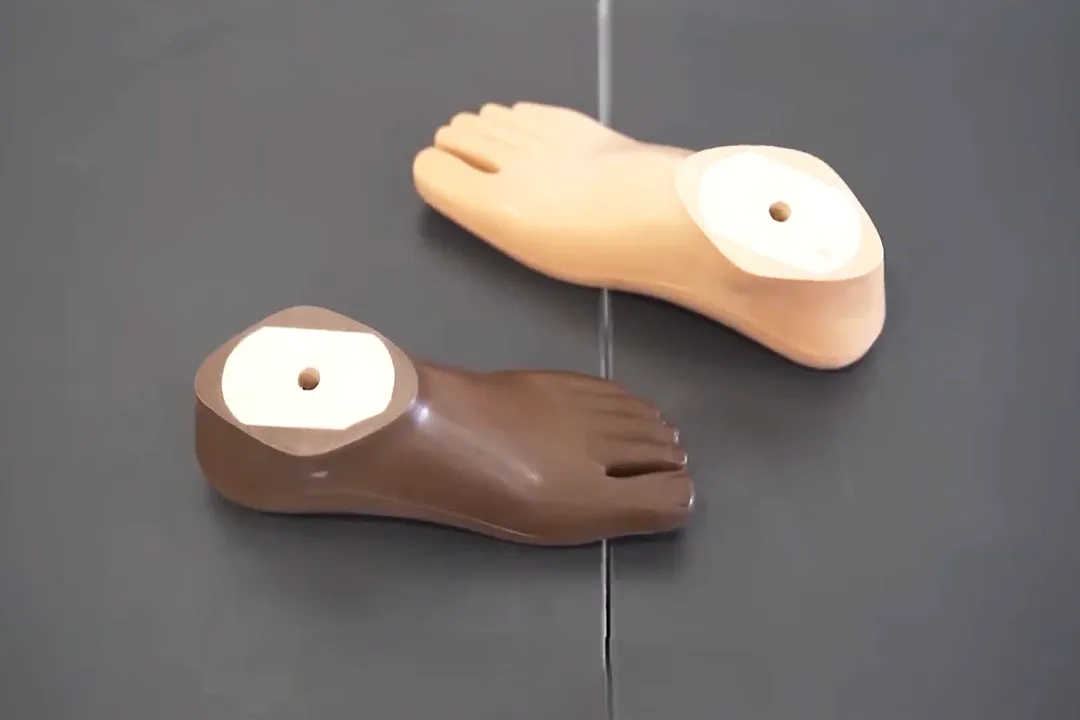
The Jaipur Foot is uniquely designed to permit multi-axial movement, allowing the foot to rotate and flex in multiple directions. This design allows the prosthetic to adapt its shape to the terrain, which is essential when traversing rocky or irregular ground. In contrast, the SACH foot has a locked ankle joint that forces the user to rely on a lever effect, which is predictable on flat ground but ineffective and potentially unstable when the ground surface changes unpredictably.
#Videos
Prosthetics vs Orthotics| Jaipur foot | SACH foot| NEET PG| NExT
Related Questions
What primary material is used to construct the Jaipur Foot?How does the Jaipur Foot differ from the SACH foot regarding ankle movement?Why is the Jaipur Foot better suited for squatting than a SACH foot?In what specific environment does the SACH foot experience the most difficulty?How does the Jaipur Foot influence the biomechanics of the user?What contributes to the long-term durability of the Jaipur Foot?What is the core design philosophy of the Jaipur Foot?Why is the natural aesthetic of the Jaipur Foot socially beneficial?What are the core components of a standard SACH foot?How does the Jaipur Foot handle movement on sloped ground?