Which terrestrial insect acts as the specific second intermediate host for *Dicrocoelium dendriticum*?
Answer
Ant
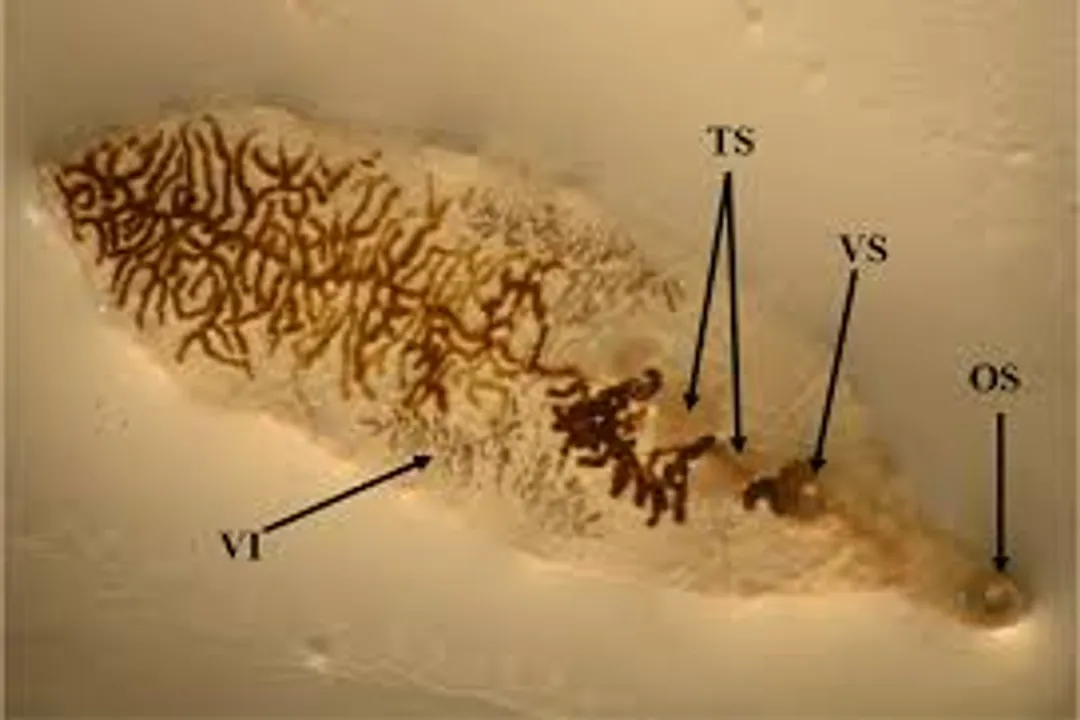
The life cycle of *Dicrocoelium dendriticum* is unique among many trematodes because it requires a terrestrial insect, specifically an ant, as its second intermediate host. The cercariae released from the first intermediate host (a snail) actively penetrate the body cavity of this ant, commonly identified as *Formica fusca*. Inside the ant, the parasite develops into the infective metacercariae stage. This reliance on an ant, rather than aquatic snails or crustaceans common in other fluke infections, fundamentally defines its transmission ecology and differentiates it epidemiologically.
Related Questions
What common name is used for *Dicrocoelium dendriticum* due to its characteristic shape?What is the cornerstone technique for diagnosing dicrocoeliasis in patients?Which terrestrial insect acts as the specific second intermediate host for *Dicrocoelium dendriticum*?Which anthelmintic drug is considered the preferred agent for treating symptomatic Dicrocoeliasis?What key morphological feature characterizes the eggs of *Dicrocoelium dendriticum* allowing them to exit the host?What rare, severe complication is linked to long-standing, heavy infestation of *D. dendriticum* in the biliary tree?What behavioral alteration is induced in the ant by *D. dendriticum* metacercariae to facilitate transmission?Approximately what is the length range of the adult *Dicrocoelium dendriticum* fluke found in the bile ducts?Which domestic ruminants are cited as the principal hosts responsible for shedding eggs into the environment?What is the estimated prepatent period for *Dicrocoelium dendriticum* until eggs appear in feces?How does the pathology of *D. dendriticum* generally compare to *Fasciola hepatica* concerning tissue involvement?