What common name is used for *Dicrocoelium dendriticum* due to its characteristic shape?
Answer
Lancet liver fluke
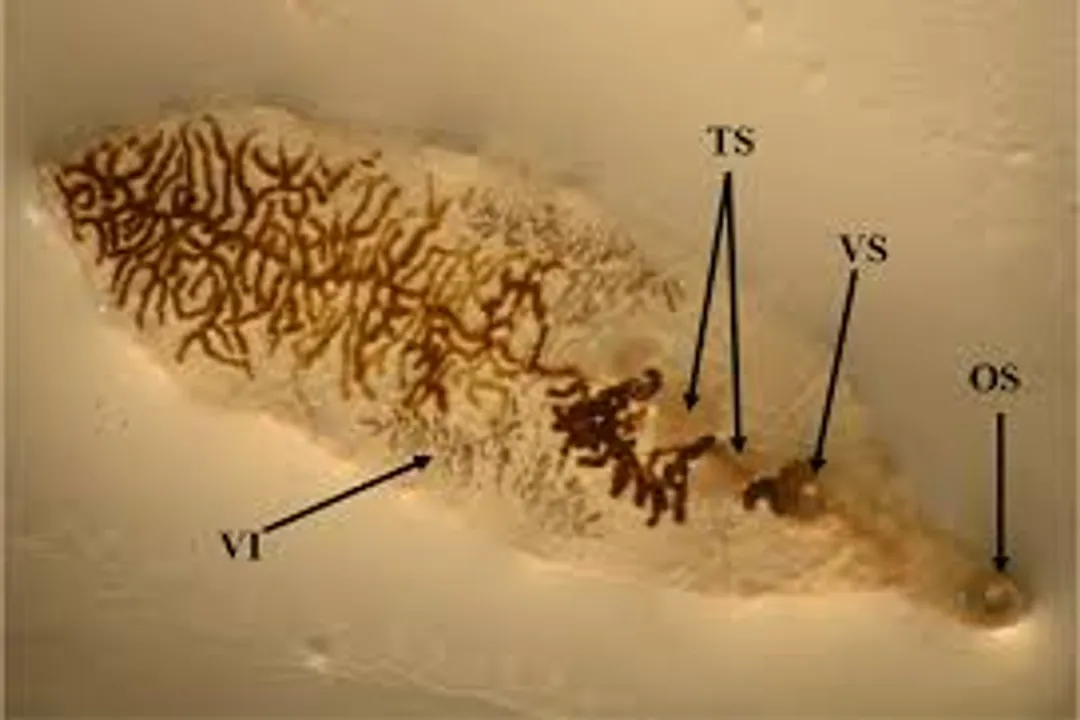
The parasite *Dicrocoelium dendriticum* is specifically referred to as the lancet liver fluke. This common nomenclature is derived directly from its physical appearance; the adult flukes residing within the host's biliary system are described as being small, flat, and lance-shaped. This description directly relates to the terminology used to identify this specific trematode infection in veterinary and human medicine contexts.
Related Questions
What common name is used for *Dicrocoelium dendriticum* due to its characteristic shape?What is the cornerstone technique for diagnosing dicrocoeliasis in patients?Which terrestrial insect acts as the specific second intermediate host for *Dicrocoelium dendriticum*?Which anthelmintic drug is considered the preferred agent for treating symptomatic Dicrocoeliasis?What key morphological feature characterizes the eggs of *Dicrocoelium dendriticum* allowing them to exit the host?What rare, severe complication is linked to long-standing, heavy infestation of *D. dendriticum* in the biliary tree?What behavioral alteration is induced in the ant by *D. dendriticum* metacercariae to facilitate transmission?Approximately what is the length range of the adult *Dicrocoelium dendriticum* fluke found in the bile ducts?Which domestic ruminants are cited as the principal hosts responsible for shedding eggs into the environment?What is the estimated prepatent period for *Dicrocoelium dendriticum* until eggs appear in feces?How does the pathology of *D. dendriticum* generally compare to *Fasciola hepatica* concerning tissue involvement?