How does the pathology of *D. dendriticum* generally compare to *Fasciola hepatica* concerning tissue involvement?
Answer
*D. dendriticum* tends to remain confined within the bile ducts.
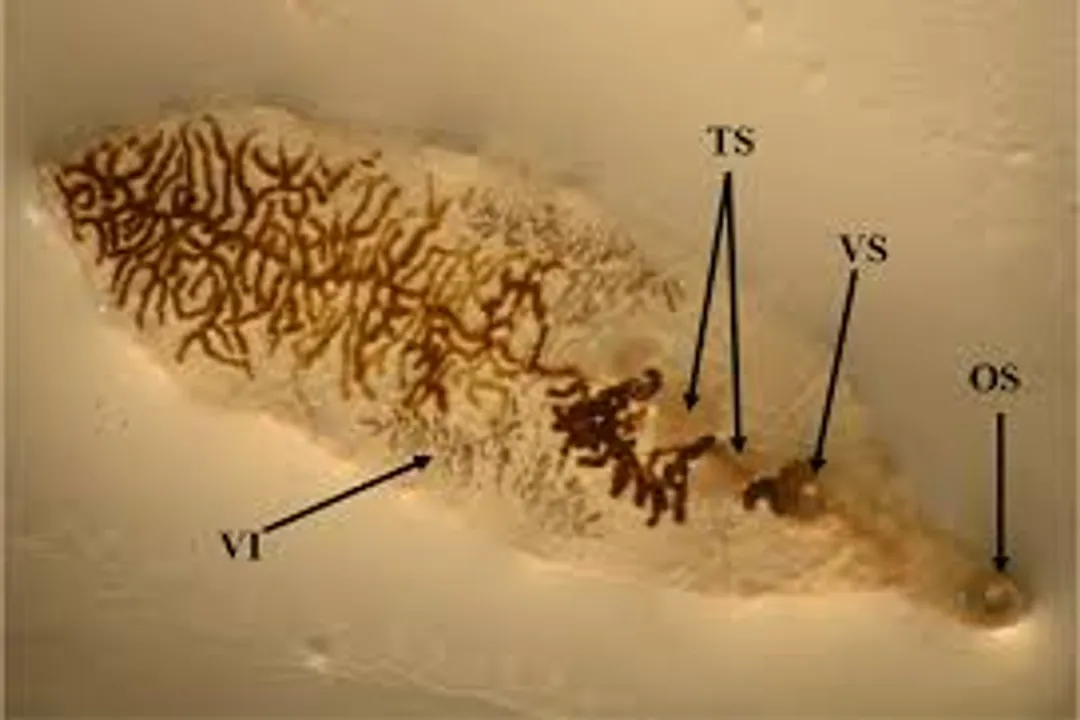
A key distinction in the clinical presentation and pathology between dicrocoeliasis and infection with *Fasciola hepatica* lies in the migratory behavior of the adult worms. While *Fasciola hepatica* infection is associated with an acute systemic illness due to significant migration through the liver tissue (parenchyma), adult *Dicrocoelium dendriticum* tends to remain localized and confined within the biliary tract once they reach the liver via the portal veins. This confined nature means the resulting pathology is typically restricted to the bile ducts, manifesting as cholangitis and fibrosis, rather than widespread parenchymal damage.
Related Questions
What common name is used for *Dicrocoelium dendriticum* due to its characteristic shape?What is the cornerstone technique for diagnosing dicrocoeliasis in patients?Which terrestrial insect acts as the specific second intermediate host for *Dicrocoelium dendriticum*?Which anthelmintic drug is considered the preferred agent for treating symptomatic Dicrocoeliasis?What key morphological feature characterizes the eggs of *Dicrocoelium dendriticum* allowing them to exit the host?What rare, severe complication is linked to long-standing, heavy infestation of *D. dendriticum* in the biliary tree?What behavioral alteration is induced in the ant by *D. dendriticum* metacercariae to facilitate transmission?Approximately what is the length range of the adult *Dicrocoelium dendriticum* fluke found in the bile ducts?Which domestic ruminants are cited as the principal hosts responsible for shedding eggs into the environment?What is the estimated prepatent period for *Dicrocoelium dendriticum* until eggs appear in feces?How does the pathology of *D. dendriticum* generally compare to *Fasciola hepatica* concerning tissue involvement?