What key morphological feature characterizes the eggs of *Dicrocoelium dendriticum* allowing them to exit the host?
Answer
Being operculated (having a lid)
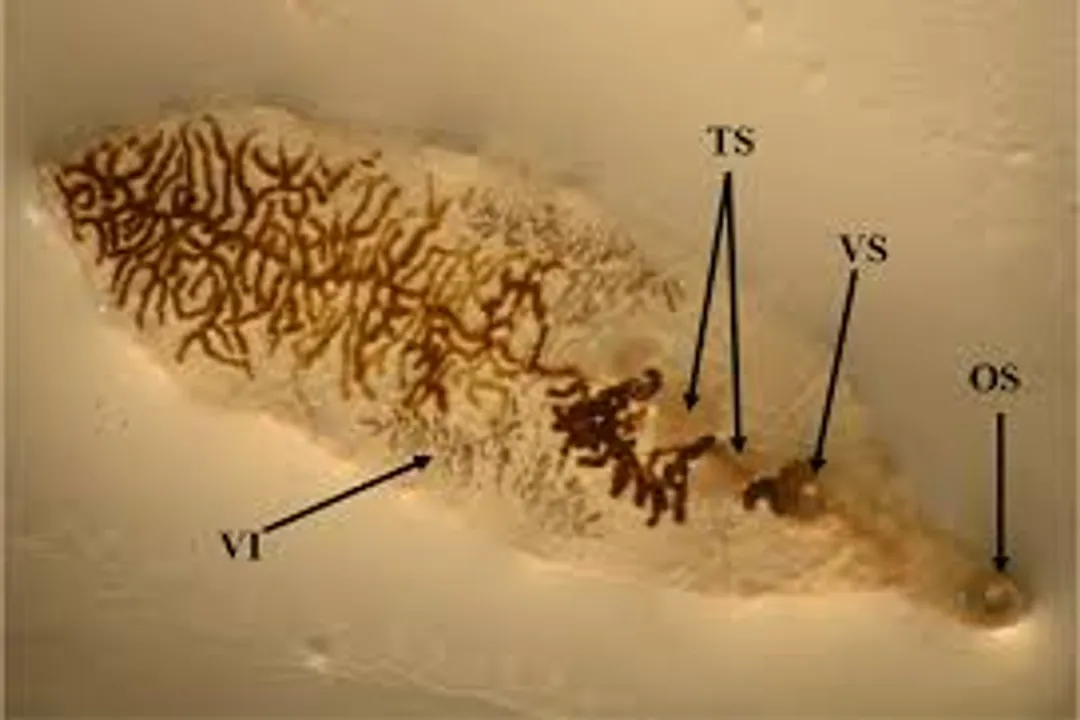
A defining characteristic of the eggs produced by adult *Dicrocoelium dendriticum* flukes is that they are operculated, meaning they possess a lid. This operculum is crucial because it enables the small, thin-shelled eggs to exit the infected definitive host efficiently via the feces into the external environment, where they can then be ingested by the first intermediate host (the terrestrial snail). The presence of this operculum, along with their ellipsoidal shape, is a key feature used in laboratory differentiation from other liver flukes like *Fasciola hepatica*.
Related Questions
What common name is used for *Dicrocoelium dendriticum* due to its characteristic shape?What is the cornerstone technique for diagnosing dicrocoeliasis in patients?Which terrestrial insect acts as the specific second intermediate host for *Dicrocoelium dendriticum*?Which anthelmintic drug is considered the preferred agent for treating symptomatic Dicrocoeliasis?What key morphological feature characterizes the eggs of *Dicrocoelium dendriticum* allowing them to exit the host?What rare, severe complication is linked to long-standing, heavy infestation of *D. dendriticum* in the biliary tree?What behavioral alteration is induced in the ant by *D. dendriticum* metacercariae to facilitate transmission?Approximately what is the length range of the adult *Dicrocoelium dendriticum* fluke found in the bile ducts?Which domestic ruminants are cited as the principal hosts responsible for shedding eggs into the environment?What is the estimated prepatent period for *Dicrocoelium dendriticum* until eggs appear in feces?How does the pathology of *D. dendriticum* generally compare to *Fasciola hepatica* concerning tissue involvement?