What group of organisms frequently serves as the intermediate host for Acanthocephala?
Answer
Arthropods, such as crustaceans or insects.
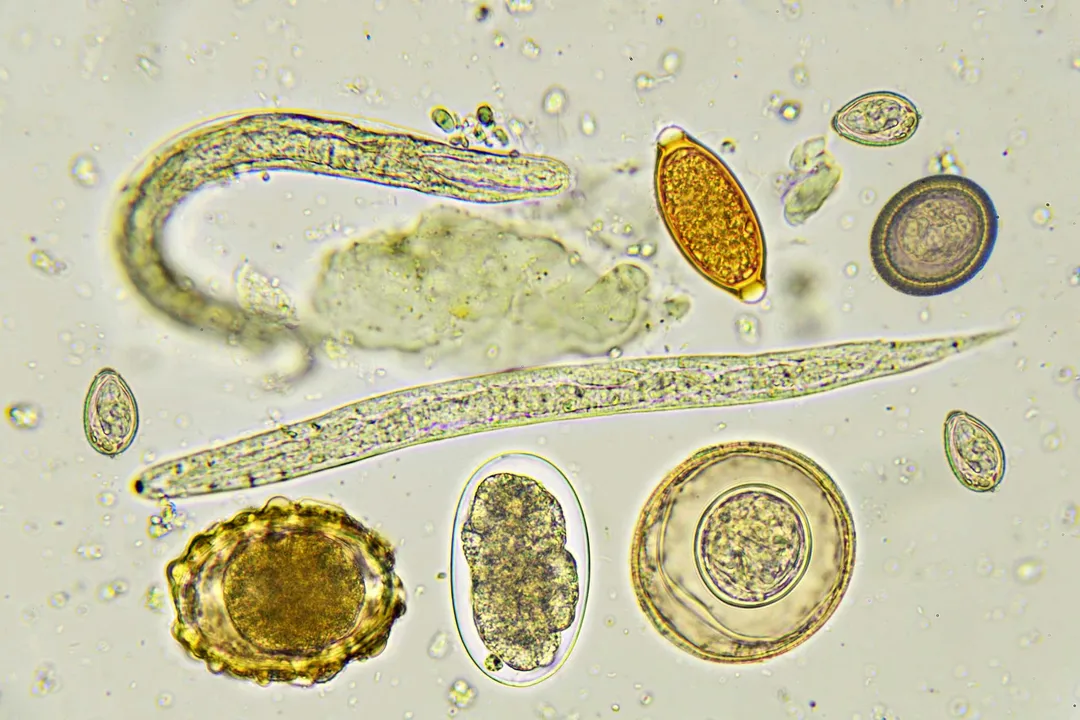
The life cycle of the thorny-headed worms is indirect, mandating the involvement of an intermediate host for development from egg to the infective stage. For many species within the Acanthocephala phylum, the appropriate intermediate hosts are categorized as arthropods. This commonly includes various crustaceans or insects that ingest the eggs shed in the definitive host's feces. Once inside these arthropods, the parasites undergo necessary larval development to reach the cystacanth stage, making them infective to the next host.
Related Questions
What feature armed with hooks distinguishes Acanthocephala worms?How do Acanthocephala worms obtain necessary nutrients?What is the larval form of the acanthocephalan called within the intermediate host?Why is definitive diagnosis of acanthocephaliasis challenging pre-expulsion?What group of organisms frequently serves as the intermediate host for Acanthocephala?What pathological complication can result from the worm's firm anchoring mechanism in the intestine?What is the primary role of a paratenic host in the Acanthocephala life cycle?Which Acanthocephala species is often a primary concern for parasitizing swine?What happens when a definitive host consumes an intermediate host carrying the cystacanth?What is the most effective strategy for preventing acanthocephaliasis?