Why is definitive diagnosis of acanthocephaliasis challenging pre-expulsion?
Answer
Eggs are not commonly found in fecal samples like nematodes or cestodes.
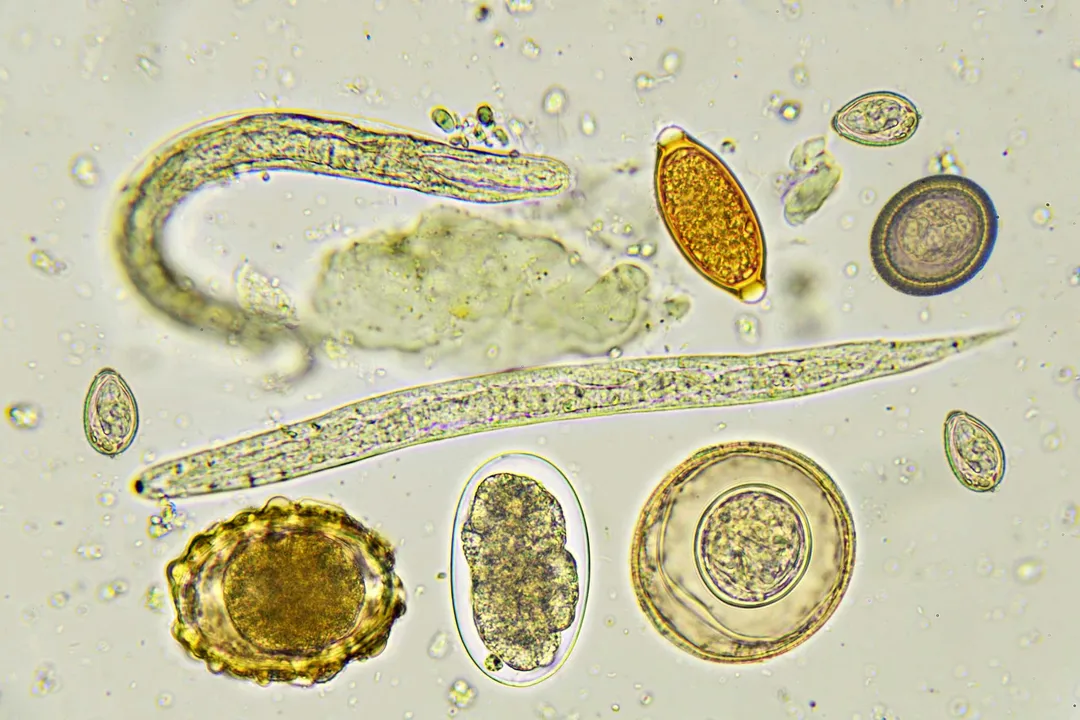
A significant diagnostic hurdle for acanthocephaliasis, especially when compared to other helminth infections, is the lack of reliable detection methods via routine fecal analysis. Unlike nematodes or cestodes, where eggs are frequently abundant in stool samples, acanthocephalans do not readily yield eggs for examination. Therefore, definitive diagnosis often requires direct observation of the adult worm or larval stages, which usually occurs only after the parasite is expelled, perhaps following anthelmintic treatment, or during invasive procedures like surgery or endoscopy.
Related Questions
What feature armed with hooks distinguishes Acanthocephala worms?How do Acanthocephala worms obtain necessary nutrients?What is the larval form of the acanthocephalan called within the intermediate host?Why is definitive diagnosis of acanthocephaliasis challenging pre-expulsion?What group of organisms frequently serves as the intermediate host for Acanthocephala?What pathological complication can result from the worm's firm anchoring mechanism in the intestine?What is the primary role of a paratenic host in the Acanthocephala life cycle?Which Acanthocephala species is often a primary concern for parasitizing swine?What happens when a definitive host consumes an intermediate host carrying the cystacanth?What is the most effective strategy for preventing acanthocephaliasis?